A Generation in Revolt and the Problem of Political Form
Gen Z is often treated as a demographic fact or a media category. From protests against examination irregularities in India and lycée revolts in France to Bangladesh and the American university, young people have challenged institutions that govern their futures and determine the terms of their participation in public life. Yet a common grievance does not necessarily produce a common politics. Under what conditions do those who act together become political subjects, rather than merely representatives of an injured generation? And what becomes of their collective thinking when parties, leaders and institutions begin to speak in their name?
B
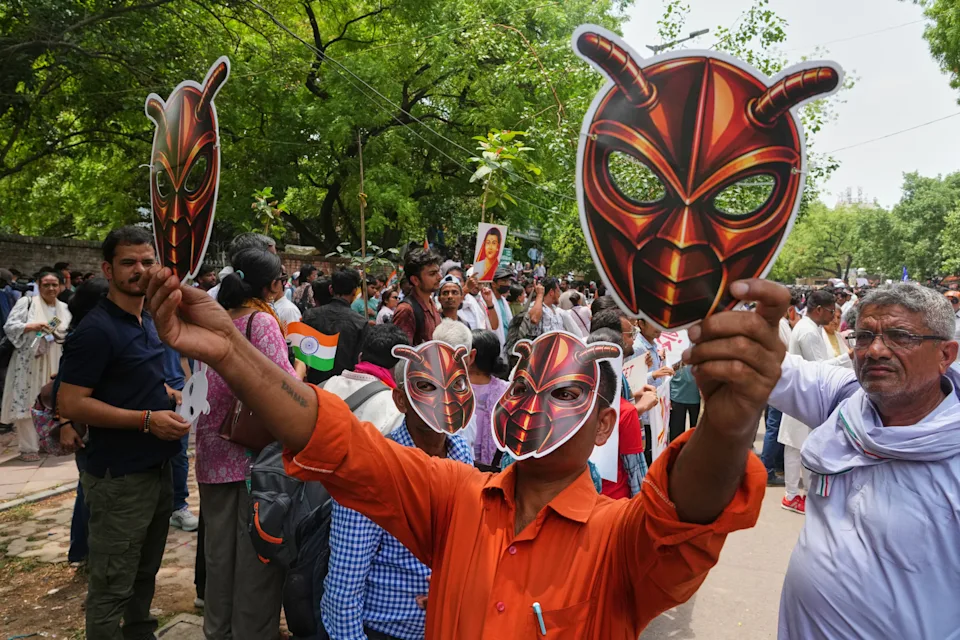
The Cockroach Janta Party (CJP) emerged as a recognisable political formation without becoming a party in any formal sense, operating instead through a loose, decentralised and rhizomatic network of participants and initiatives. It began in 2026 in satire and insult. The cockroach, meant as an insult, was taken up and turned around. What might have remained another episode of digital mockery found a constituency among young Indians already living with unemployment, examination scandals, delayed recruitment and the increasingly uncertain passage from education into work. By the summer, the movement was on the streets over the examination system. As Reuters reported on 2 October, CJP supporters were demonstrating against the Election Commission and demanding the resignation of Chief Election Commissioner Gyanesh Kumar over allegations concerning electoral-roll revisions.
The latter dispute is much harder to read than the examination protests through which CJP first became nationally visible. An investigation published by The Indian Express found that Kumar’s two fellow commissioners had formally recorded objections at least fourteen times over ten months to aspects of voter registration, deletion procedures and the Commission’s digital systems. The Election Commission has said that differences among commissioners belong to ordinary institutional deliberation; it has also ordered a review of its voter-roll software and altered some verification procedures. CJP and opposition parties have made the larger allegation that electoral-roll changes were politically manipulated. The Commission denies this. It would be too quick to make these different facts say the same thing. Internal disagreement is significant, especially in an institution on which electoral legitimacy depends. It does not, by itself, settle the larger accusation.
The examination grievance was easier to grasp because its effects were more immediate. An examination candidate occupies an unusually regulated position. There is a form, a date, a syllabus, an admit card, an answer sheet, a ranking, an age limit and a deadline for objection. A candidate’s mistake can cost a year. Almost everything on the candidate’s side is governed by exactitude. Yet the institutions administering the process possess time rather differently. An examination can be cancelled, a result delayed, recruitment suspended, a vacancy carried forward. The institution can reschedule the examination, but the candidate cannot recover the year lost in the process.
In an earlier Naked Punch essay I described this as a state of waiting. I meant something more than bureaucratic delay. Waiting is lived differently depending on who has the resources to endure it. Some families can finance another year of coaching, rent and preparation; some cannot. Some candidates can remain dependent on parents; others have to take whatever work is available. An age limit comes closer. A marriage is postponed. A parent grows older. What appears in an official notice as a revised date can amount to something rather different in a life organised around that date.
None of this automatically makes the candidate political. People can endure the same institutional failure and remain separate from one another. The movement begins elsewhere, perhaps when what has been lived privately becomes comparable with what others have lived, and the comparison acquires an address. The candidate asking for a corrected mark is still making a claim from within the position assigned to the candidate. Something changes when candidates begin asking why exactitude operates so relentlessly in one direction: why their futures can be exposed to institutional failure while the failure itself disperses through committees, technical explanations, inquiries and administrative time.
The examination candidates have not stopped being examination candidates. Their social location persists. It no longer tells us enough about what they have begun to think.
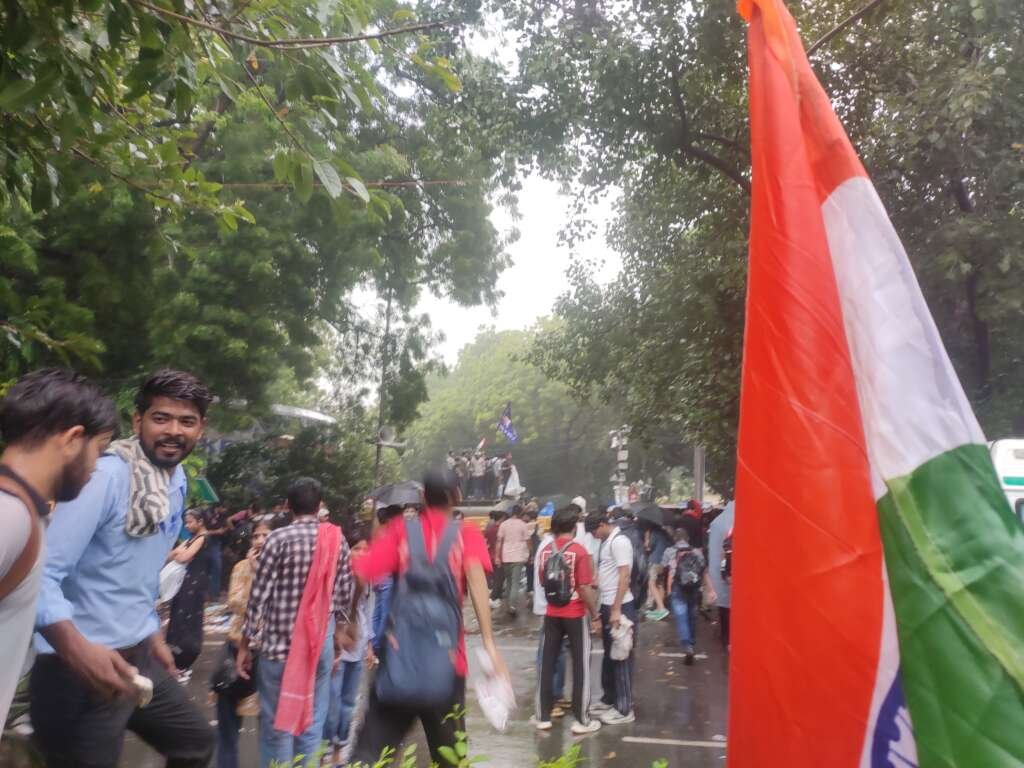
There is no guarantee that the moment in which people exceed an assigned identity is emancipatory. A group can recognise an injustice done to itself and remain indifferent to another, or construct an exclusion of its own. People can refuse the political place allotted to them without producing a more equal relation to anyone else. Political subjectivity opens a question; it does not settle what the answers will be.
What I mean by political form is not simply the choice between becoming a party and remaining a protest. It includes who can speak in a movement’s name, how decisions are made and challenged, what counts as evidence, and whether knowledge and authority stay open to those whose activity gives the movement its force. These questions begin before the first victory. They become harder as a movement discovers how much institutional power it needs to contest institutions.
A Generation in the Making
What, then, do we mean when we call CJP a Gen Z movement?
The term seems to identify a political subject before anyone has acted. Gen Z is a demographic category familiar from market research and surveys of employment, consumption and voting. A birth date places someone in a cohort. It does not tell us what that person thinks politically, or what relation exists among millions born within much the same interval.
And yet the term has travelled. Kenya’s mobilisation against the Finance Bill in 2024 was repeatedly described in Reuters coverage as a Gen Z protest. The same designation became prominent during Nepal’s upheaval the following year. Morocco’s GenZ 212 placed the generational term in the movement’s own name. Bangladesh’s quota protests began as a student movement rather than a Gen Z movement, though they were soon folded into the same wider discussion of youth politics. CJP has made the generational description particularly conspicuous in India.
These movements confronted different states, and their outcomes have not been alike. Sometimes ‘Gen Z’ is a name participants use for themselves; elsewhere it is applied by journalists grouping events that share little beyond the age of some protesters. Its recurrence is not evidence of a common global ideology.
Nor is it merely media shorthand. The name ‘Gen Z’ is itself one of the things being politically made in these struggles.
This does not mean that a generation discovers a politics latent in its age. Rather, experiences lived separately begin to appear connected. People find language and images through which a category supplied by demographers and marketers acquires uses its inventors did not anticipate.
CJP offers a compressed example, one I have discussed in earlier reporting for The Wire. A reclaimed insult gathered recognition before a durable organisation had appeared. Its memes, code-switching and irreverence towards inherited political authority mattered. They did not create a constituency from nothing, but helped examination candidates, unemployed graduates and disappointed citizens see a relation among experiences that had seemed separate.
The looseness of CJP’s organisation is not an absence of form. Digital interfaces perform some of the work once assigned to committees and party branches: assembling dispersed participants, circulating a shared language and making calls to action visible at speed. In The Logic of Connective Action, W. Lance Bennett and Alexandra Segerberg describe connective action, in which communication itself can organise participation. But these platforms also carry the logic of markets for attention. Slogans compete for circulation, audiences accumulate around particular accounts, and reach can become a measure of authority without anybody having delegated it. A network may therefore be dispersed in its capacity to participate and highly unequal in its capacity to speak. Zeynep Tufekci, in Twitter and Tear Gas, points to another difference: the speed of mobilisation need not produce equivalent capacities for deliberation, strategic decision or negotiation. This does not make such movements ineffective. It asks whether people assembled through platforms that reward visibility can still decide together what is being demanded, who may negotiate and how that person can be challenged.
The Indian electoral-roll dispute already shows how misleading a single generational label can be. As The News Minute documented on 8 October, the organisations contesting it did not all approach the Election Commission with identical demands. The Cockroach Janta Party, the All India Students’ Association (AISA) and Congress figures, including the Leader of Opposition Rahul Gandhi, have protested against the Election Commission; CJP and AISA have also jointly called for a demonstration in Delhi on 10 October. But they come to the dispute with different histories and capacities. AISA belongs to an established tradition of organised student politics, Congress acts as a parliamentary opposition, and CJP’s public identity emerged through satire, digital circulation and grievances over recruitment and examinations. They share objections to voter-roll revisions, but their demands and routes into the conflict are not interchangeable. Agreement about the institution being challenged is not agreement about who should represent the challenge.
CJP’s political independence has itself become an object of dispute. India Today reported on 8 October that its founder, Abhijeet Dipke, previously worked in AAP’s social-media team and that other CJP organisers have also had AAP associations. AAP politicians have supported and amplified CJP campaigns. Such connections have fed the description of CJP as an AAP ‘B-team’, which Dipke rejects; Punjab Chief Minister Bhagwant Mann acknowledged Dipke’s earlier work for AAP while denying that his party directs CJP. The evidence establishes previous affiliations and public support, not organisational control. Still less does it establish a coordinated AAP–BJP or RSS effort to marginalise Congress within the present electoral-roll agitation. That stronger allegation must remain an allegation unless evidence of such coordination emerges.
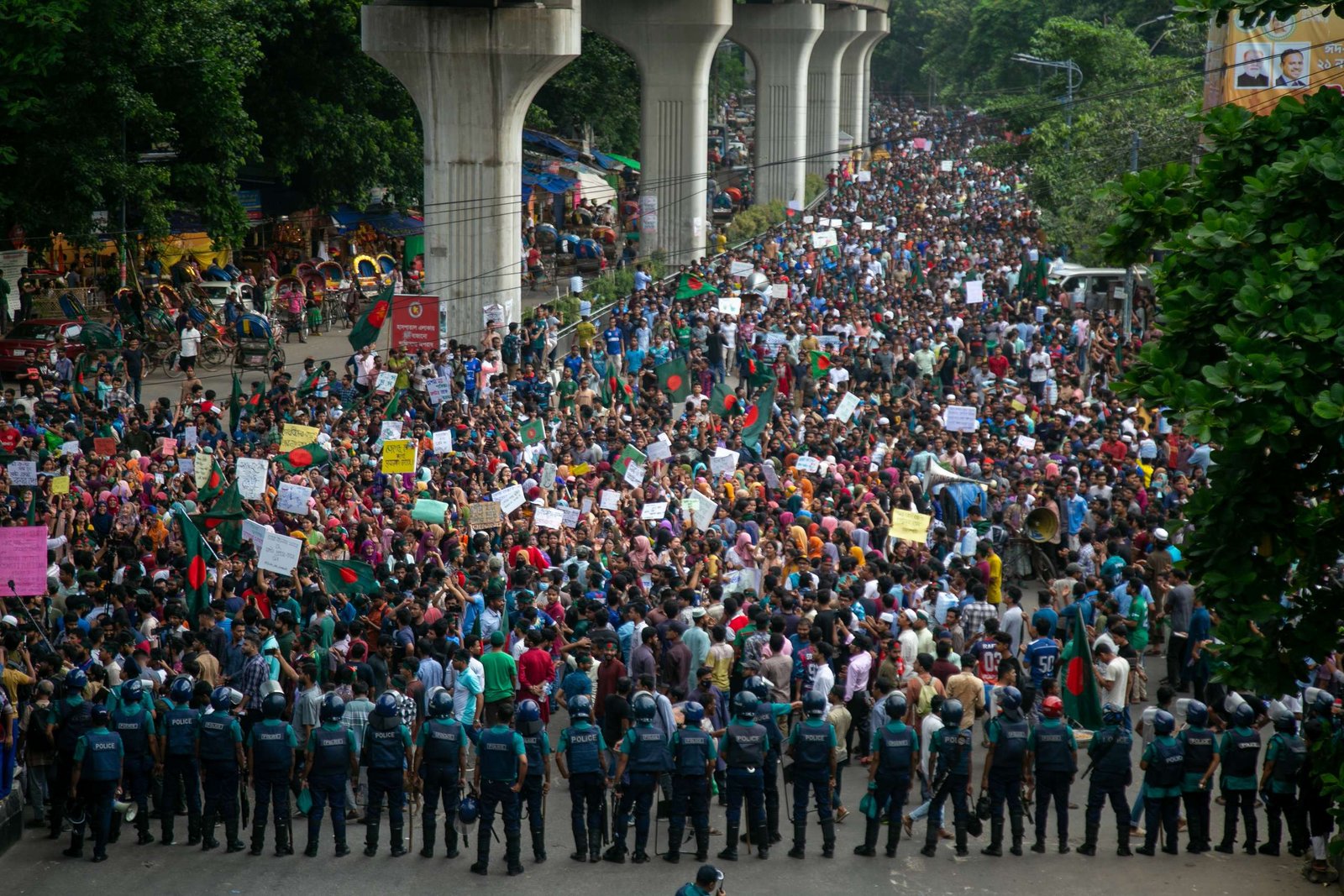
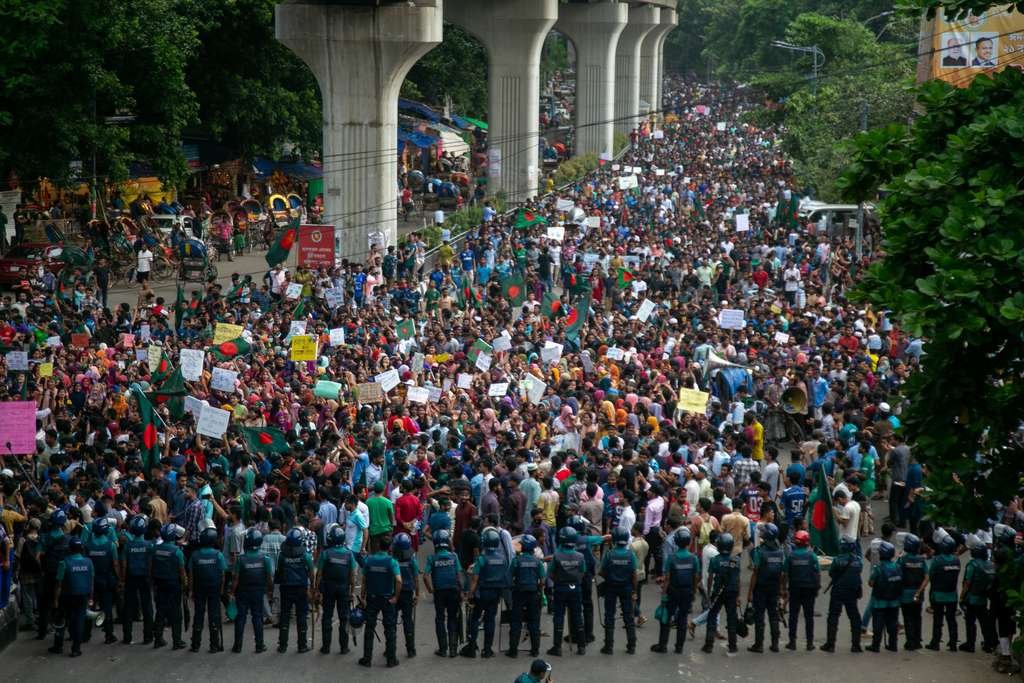
The movements elsewhere have often begun around institutions that govern access to a future. In Bangladesh, the immediate dispute concerned quotas in public employment. After repression, arrests and deaths, the protests widened into a confrontation with Sheikh Hasina’s government. Nahid Islam, whom Reuters profiled in August 2024 as a sociology student at Dhaka University and one of the movement’s best-known organisers, later spoke of democratic change and social justice. It is difficult to describe what happened simply as an enlargement of the original demand. The demand itself had changed because the political relation around it had changed.
Kenya’s Finance Bill produced a different sequence. Opposition to proposed taxes broadened into anger over public expenditure, corruption and the privileges of legislators. As Reuters reported at the time, images of politicians’ wealth circulated alongside accounts of the additional burdens being proposed for households under pressure. The bill could be withdrawn; the comparison between private hardship and public privilege could not so easily be withdrawn with it.
In Nepal, where Reuters reported on the upheaval in September 2025, restrictions on major social-media platforms helped precipitate protests, but those platforms were already carrying arguments about corruption, unemployment and political privilege. Morocco’s GenZ 212 mobilised around public hospitals, education, unemployment and the allocation of public money. The resemblances are suggestive; they do not abolish the differences between the societies or the political futures opened by their protests.
There is no common programme in this. Even ‘social justice’, a phrase that recurs in these movements, is unstable. It can mean equality of opportunity, public provision, meritocratic fairness, redistribution, action against corruption or equal treatment by public institutions. These meanings can sit together for a time, but they can also come apart.
What seems more interesting is the movement from a particular institutional injury towards a larger comparison. The examination paper is no longer only about the examination. The tax opens onto expenditure and political privilege. A hospital failure becomes a question about public priorities. The institution in which the grievance is first encountered gives people something concrete through which a larger arrangement can be seen.
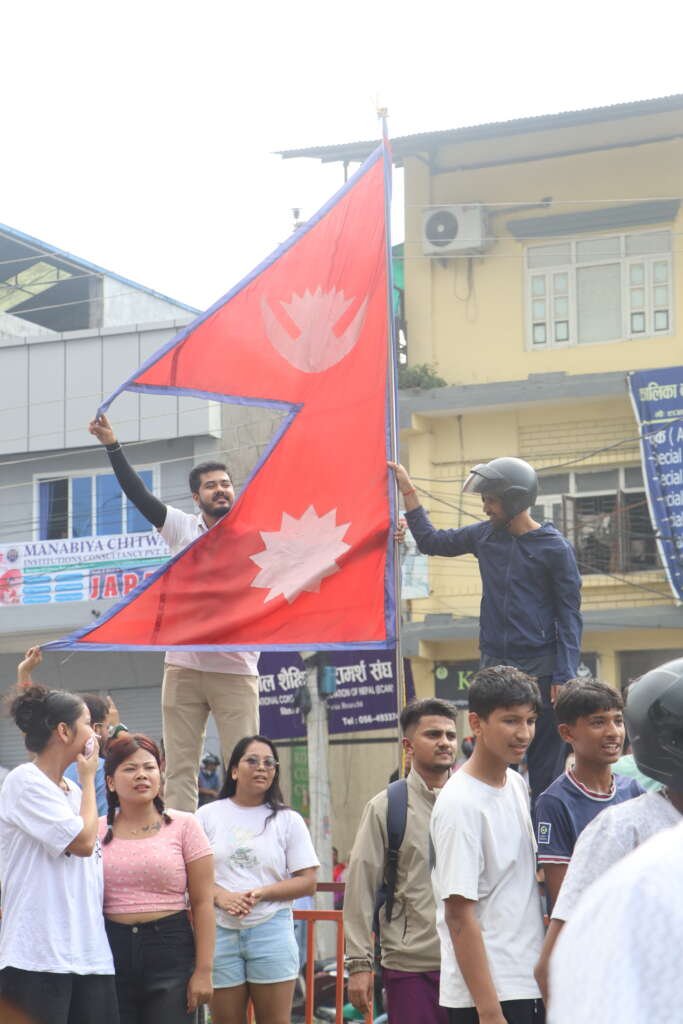
The French lycée revolt of September and October 2026 offers a useful qualification. Reporting in Le Monde traced the early mobilisation to neglected schools in and around Paris. Its pupils did not first identify themselves as ‘Gen Z’ and then discover a cause. Their common argument emerged from schools where teachers were missing, classes overcrowded and buildings neglected. A political relation can take shape without a generation supplying its name. At the Bastille demonstration on 8 October, Le Monde recorded a large ‘GEN Z’ banner; the label had acquired a place in the protest, but it had not supplied its original grievance. Indeed, the generational label can obscure differences of class and geography that give the grievance its force. The question is not whether young people have found a common identity but what they come to think and demand together, including on behalf of others who are not present.
A generation acquires political content, if it does, when such experiences can be read beside one another. The examination candidate, unemployed graduate, patient’s family and taxpayer do not occupy one social position. They may come to see a relation between their different encounters with public authority. That is less dramatic than saying a generation has awakened, but closer to what may be happening.
A politics of youth concerned only with injuries to young people remains cohort interest. Its judgment becomes more difficult when it turns towards what the same institutions do to people outside the generation, including those whom the movement cannot readily claim to represent.
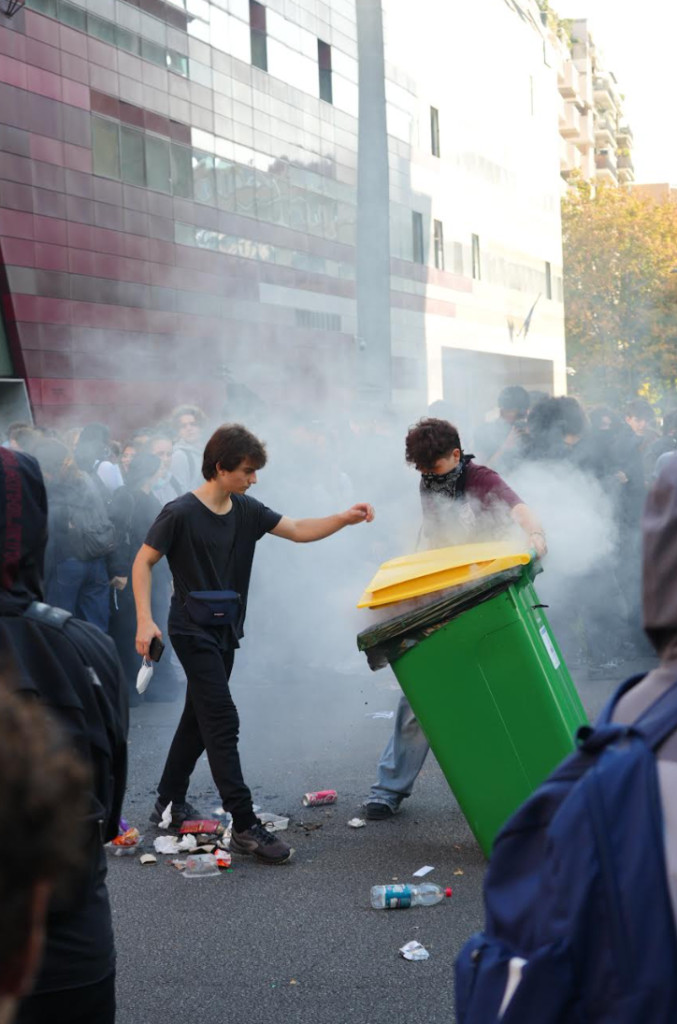
Historical analogy is helpful and dangerous here. In an earlier Naked Punch essay, I called this the theft of the present: an earlier sequence begins narrating a contemporary movement before that movement has disclosed much about itself. In India, Navnirman, Jayaprakash Narayan and the Emergency are tempting reference points for good reason; student anger did enter a national political crisis. But we inherit that history with its ending already attached. We know who became its leaders and which events followed. A present political question can quietly become a search for a familiar sequence.
I am less interested in deciding whether a global Gen Z political subject exists than in what people can do together under that name, and which capacities remain once the grievance that first assembled them has passed.
Organisation begins before a movement has decided what to call itself. Someone has to arrange a meeting, hold information, decide who will negotiate and answer for a statement made in public. These are already decisions about political form: how collective activity is given continuity without allowing those empowered to carry it forward to replace the people engaged in it.
Sartre, in a 1969 interview with the editors of Il Manifesto following May 1968, refused the familiar opposition between spontaneity and organisation. Political eruption could break through ordinary patterns of passivity and separation and still remain episodic. Organisation offered coordination, memory, continuity. But the institution created to preserve an activity could acquire routines and interests increasingly distant from the activity that had produced it.
Parties and unions once possessed resources movements could not easily improvise: organisers, meeting places, legal knowledge, publications and political memory. In Ruling the Void, Peter Mair described the opposite difficulty in established party democracy: parties retained offices of government even as their social rootedness weakened. Politics was increasingly pursued in campaigns and occupations, often without comparable means of carrying experience from one mobilisation to the next.
Bernard Crick approached the matter from a different starting point. In Defence of Politics begins with durable disagreement: claims and interests must remain in relation because none can eliminate the others without abolishing politics with them. That defence of accommodation does not answer the further question of how people denied an effective place in existing arrangements first come to contest them. Yet Crick’s problem returns as soon as a movement succeeds in acting together. Those who agree on what they oppose may disagree over what follows, whose judgment is binding and which compromises can be accepted. Mobilisation does not supply the means of remaining political together through disagreement.
Occupy exposed the danger of presuming that the refusal of formal leadership eliminates power. Jo Freeman’s argument in The Tyranny of Structurelessness remained difficult to escape: unequal access to time, confidence, information, friendships and networks can establish informal leadership even where nobody holds office.
The digital public may be assembled before anyone has agreed who can speak for it. An account acquires followers; an interview turns an organiser into a representative; a negotiator may discover that access itself has given them authority. Recognition can arrive before the means of contesting it.
Mahmood Mamdani in Citizen and Subject, and Partha Chatterjee in The Politics of the Governed, show how the classifications through which the state governs can also delimit political claims. Citizen, subject, native, migrant, squatter or beneficiary may be the category in which a demand becomes recognisable to those in authority, even when that category restricts what the person making the demand can be recognised as.
Neocosmos approaches the question at another point: not how already recognised interests can be accommodated, but how people come to think politically beyond the positions assigned to them. ‘People think’ is a deceptively simple proposition. Worker, migrant, shack dweller and examination candidate identify material circumstances, not the politics of those who inhabit them. In Beyond the Neocolonial he writes that ‘Politics makes History and not the reverse.’
The position does not disappear when people think beyond it. A migrant can reject citizenship as a measure of political humanity and still be stopped at a border; examination candidates still need their results. The point is not that social location ceases to matter, but that it ceases to determine in advance what people can demand.
Neocosmos’s discussion of Abahlali baseMjondolo during xenophobic violence in South Africa is helpful here. Shack dwellers living under acute scarcity might have converted scarcity into an argument against foreign migrants. Abahlali instead opposed the category of the ‘illegal’ person and insisted upon political belonging that was not determined by birthplace. Poverty did not dictate the politics. Something had to be thought that exceeded it.
Crick and Neocosmos leave a difficulty that cannot be resolved by choosing one against the other. Crick asks how conflicting claims can remain in political relation; Neocosmos asks what happens when the available terms of accommodation already decide who may be heard, and in what capacity. An authority may agree to correct examination results while refusing to address the unequal conditions under which candidates were examined. The concession would matter; it might also narrow a political argument back into an administrative grievance. Yet a movement that rejects every partial remedy in the name of emancipation risks asking those who have suffered the injury to wait indefinitely. The question is whether a settlement can answer an injury without giving representatives the final authority to decide what the movement was about.
When the Student Is No Longer Only a Student
Why do universities recur in these histories? Not simply because students are young or inclined to dissent, and not because the university stands outside the state. Universities train officials and elites, receive public money, conduct research for governments and militaries, own property, issue credentials and discipline their members. They are implicated in the powers their students may challenge.
Yet universities claim an autonomy through which their own relationships with power can be questioned. Clark Kerr described the modern university’s dependence on government, industry and research; Bill Readings examined the weakening of its older connection to the nation-state; Derrida defended a university in which nothing should be beyond questioning. None of these accounts allows us to imagine a campus standing innocently outside political and economic power.
Debaditya Bhattacharya’s recent work brings the question into the contemporary Indian public university and does so in a way I find more useful here. Making Sense of the University is organised not simply around academic freedom but around ‘publicness’: who constitutes the public of a public university; how far its obligations reach beyond those admitted to it; what solidarity might mean with people who never acquire membership within it. His discussions of Jamia, JNU and the Karnataka hijab controversy make it difficult to preserve a clean distinction between something internal to the university and politics supposedly outside it.
That is one reason campuses become politically charged. The state appears as a disciplinary rule, police presence or public grant; markets through endowments and partnerships. Distant relations of war, class and policy can become visible in the administration of a particular institution.
Dhaka University’s students and teachers were central to the Bengali Language Movement of 1952, when the proposal that Urdu should be Pakistan’s sole state language became a struggle over recognition in East Pakistan. The campus remained important in later movements for autonomy and in the history preceding Bangladesh’s independence. Students did not cease to be students when they challenged state language policy. The question itself, however, was no longer adequately described as a student grievance.
Paris in 1968 gives us another version of this. The revolt gathered force at Nanterre, where resentment of university discipline and authority intersected with opposition to the Vietnam War and wider discontent with French society. The closure of Nanterre and subsequent police intervention at the Sorbonne in early May turned the student agitation into a much larger confrontation, eventually drawing millions of workers into strikes that tested the authority of the Gaullist state. There is a tendency to romanticise this as the moment when students set society alight. The more useful point is quieter: the institution in which the conflict began could no longer contain the relations the conflict had opened.
The current lycée revolt gives that older history an uncomfortable contemporary neighbour. In September 2026 pupils began blockading schools in Créteil and other poorer suburbs of Paris over unfilled teaching posts, overcrowding and buildings in disrepair. Their action drew parents, teachers, unions and university students into a wider mobilisation. It began where the Republic’s promise of equal schooling was plainly difficult to square with the conditions of particular classrooms.
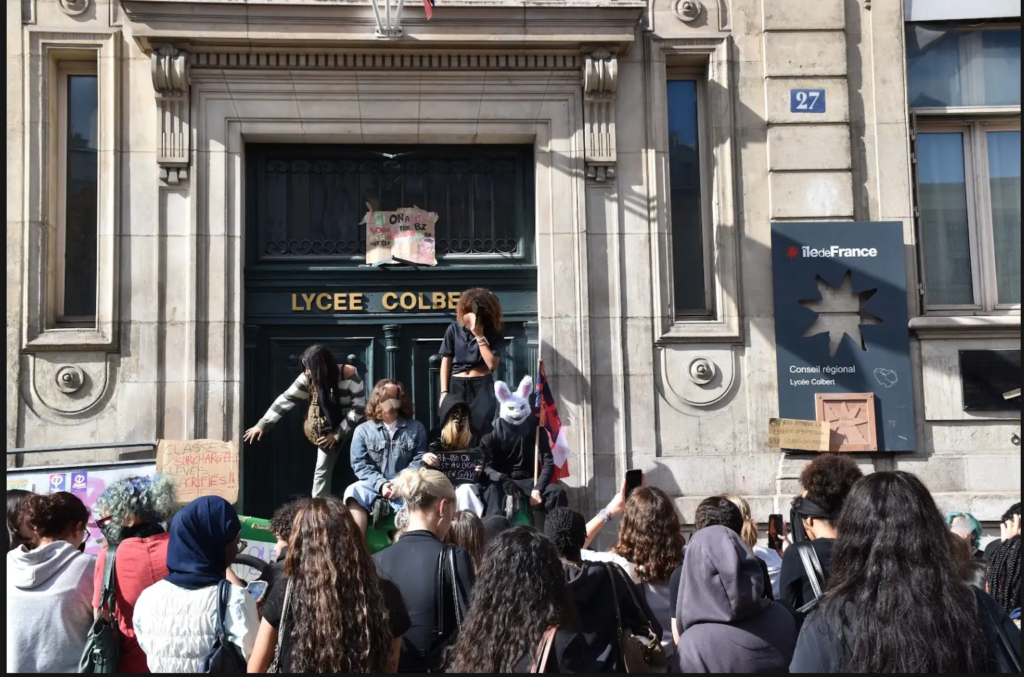
There is a difference here from the Indian examination protests. CJP’s initial mobilisation around the integrity of examinations asked whether selection could be trusted. Its subsequent School Theek Karo campaign turned towards the unequal conditions preceding selection: the classrooms, teachers, drinking water and other provisions upon which preparation depends. The French pupils began with those conditions. A fair examination does not itself equalise the resources with which candidates arrive at it. Nor, in France, does the republican language of common citizenship abolish the unequal circumstances in which children encounter the public school.
Police intervention altered the French dispute without explaining its origins. That enlargement should not be mistaken for a necessary advance in political thought. The question is what the participants make politically of an altered situation, not whether confrontation has made them more radical.
The entrance of established parties sharpens the point. Jean-Luc Mélenchon and La France Insoumise publicly supported the protests after the first school actions were already underway. Their involvement may bring organisational knowledge, publicity and parliamentary leverage; it may also translate a dispersed educational struggle into the party’s own electoral vocabulary. Equally, the party’s declared solidarity does not make it the authorised interpreter of what the pupils think. Political representation of a movement, even sympathetic representation, remains distinct from the political thinking occurring within it.
Nor is there a single measure whose withdrawal could settle the dispute. Teachers are employed through one administrative chain, major repairs to lycées pass through another, while admissions procedures raise still other questions. The pupil experiences these divisions as one school day. This is an institutional difficulty for the movement, not only a technical complication for the government: a common grievance must be pursued through authorities that do not necessarily act together.
As Columbia University Libraries’ archive of 1968 makes clear, what appeared external to the university was already inside it. Vietnam entered campus politics through Columbia’s relationship with the Institute for Defense Analyses and through military recruitment; the proposed gymnasium in Morningside Park brought the university’s relationship with Harlem into the dispute. The war and Harlem were not simply causes carried onto campus by political students. Columbia’s institutional relationships made them questions about Columbia.
The Navnirman movement in Gujarat in 1974 makes the change of scale particularly clear. It began among students over rising mess charges and widened rapidly into an agitation over inflation, scarcity, corruption and the legitimacy of the state government. Chief Minister Chimanbhai Patel resigned, and the Gujarat Assembly was later dissolved. The agitation did not simply turn into the Bihar movement, but the Gujarat experience mattered as student unrest developed there and Jayaprakash Narayan entered it.
The point is not that students alone produced the later national crisis. It is that the student becomes an initiating political subject, but the politics ceases to be ‘student politics’. In Bihar the constituency and object of struggle moved beyond the university, through corruption and governmental legitimacy towards a much wider confrontation with Indira Gandhi’s government.
I would stop the analogy there. CJP is not Navnirman waiting for another JP, and Gen Z is not an Emergency generation returning fifty years later. Navnirman tells us that the scale of a struggle can change. It cannot tell us what form a contemporary movement must take. There is another warning in the comparison as well. A movement initiated by students is now remembered largely through the name of the older political figure who eventually came to lead it. Political memory tends to like a face. Collective activity becomes easier to narrate once it has been condensed into a person.
Columbia offers another kind of recurrence. Hamilton Hall was occupied in 1968. In 1985 students blockaded it for about three weeks during the campaign for divestment from companies doing business in apartheid South Africa. Columbia subsequently agreed to divest from South Africa-related companies, as the university’s protest archives record. In 2024 the Gaza Solidarity Encampment again made investment and institutional responsibility the objects of a dispute whose primary political referent lay far outside New York.
The protesters demanded divestment, financial transparency and amnesty for those disciplined by the university. They described Israel’s military campaign in Gaza as genocide and argued that Columbia’s investments and institutional relationships connected the university to the violence they opposed. The administration did not accept that account of its obligations. It rejected the divestment demand and treated the encampment, and later the occupation of Hamilton Hall, as violations of university rules and threats to institutional functioning. In her 30 April 2024 letter requesting NYPD intervention, President Minouche Shafik described the occupation, encampments and associated disruption as a ‘clear and present danger to persons, property, and the substantial functioning of the University’.
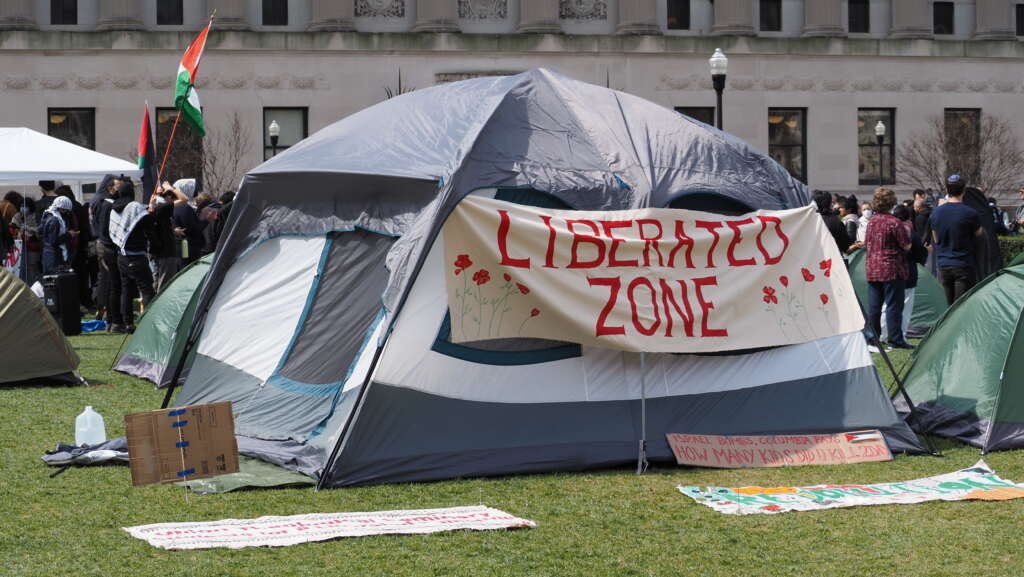
The dispute was not only about Gaza, though unmistakably it was about Gaza. It also concerned the university’s account of its own boundaries. When does a war elsewhere become university business? Does an investment create an obligation, a research contract another? Such questions demand distinctions; not every institutional connection carries the same ethical weight.
Occupation differs from expression. A petition addresses the university without necessarily interrupting daily life; an encampment changes the use of campus space and time, making the argument about the institution’s responsibilities part of its ordinary conduct.
The campus is not only a stage on which an already formed political subject arrives. ‘Student’ names enrolment, examination, credential and discipline; it does not adequately describe the activity of people who begin to think together about war, language, corruption or institutional responsibility. The university can be one of the places in which such a political subject takes shape.
Who Judges the Claim?
This still leaves the harder matter. The enlargement of a claim does not make the claim just.
Neocosmos gets to justice by a route rather different from the familiar liberal one. In Beyond the Neocolonial he turns to the ancient Egyptian conception of Ma’at and resists translations that separate truth from justice. ‘Justice and truth arguably must be thought together,’ he writes, because both belong to emancipatory thought and equality. I take the importance of this less to be the recovery of an ancient concept than his refusal to make justice compatible with simply leaving everyone in their assigned place.
His reading of the Tale of the Eloquent Peasant begins with a concrete injury: property is seized. Through repeated attempts to obtain redress, the injury becomes an argument about authority. The particular wrong opens a larger question, but it does not contain a complete theory of what justice requires.
The examination paper, the tax and the hospital work in something like this way. They provide the experience through which an institutional arrangement becomes visible. Once the claim moves from ‘this happened to us’ towards ‘this arrangement is unjust’, it has already begun to involve people who were not part of the original grievance.
Bangladesh makes the difficulty harder to evade. The 2024 quota protests challenged the allocation of government posts to descendants of those who fought in the 1971 independence war, a preference critics argued favoured the governing party’s constituency. The demand for wider merit-based recruitment spoke to applicants who felt unjustly excluded. Yet ‘merit’ does not settle every question of equal treatment. As Reuters reported in July 2024, the Supreme Court’s settlement opened 93 per cent of posts to merit-based selection while retaining five per cent for independence fighters’ families and two per cent for disadvantaged groups and disabled applicants. These different claims had to be judged, not simply absorbed into the assertion that the movement represented the young. Nor did its later confrontation with an authoritarian government mean that the original distributive question had become straightforward.
Justice is not already contained in the grievance through which people first come together. It becomes operative when competing claims can be argued, justified and reconsidered, including by those whom the movement claims to represent. Whether a demand is just cannot be settled merely by invoking the collective identity in whose name it is made.
John Rawls, in A Theory of Justice, remains useful for insisting that major institutions themselves belong within the field of justice, though his account of civil disobedience assumes a society that is already ‘nearly just’. Amartya Sen, The Idea of Justice, provides another entry point: people can compare actual injustices and available alternatives without first agreeing on a perfectly just order. Knowing that an arrangement is indefensible does not require knowing in advance the complete institutional design that should replace it.
The harder issue is how far responsibility extends. Iris Marion Young’s social-connection account of responsibility is relevant because it refuses to restrict justice to situations in which a single wrongdoer can be identified or everyone affected belongs to the same political community. Social and economic processes connect people across institutions and borders, and those connections can produce responsibilities that are not well captured by a simple search for liability.
This makes the campus solidarity argument more exact. A Columbia student demanding divestment is asking an American university to alter its conduct because of consequences borne by people who have no membership in Columbia and no standing in its governance. The force of the claim depends partly on what the connection actually is. A direct investment, an indirect holding, a research contract and a symbolic association do not create the same relationship. Establishing what the university does is not a technical distraction from politics. It is part of deciding what kind of responsibility exists.
Solidarity can enlarge responsibility without conferring representation. Students can argue that their university owes something to Palestinians without thereby acquiring authority to speak for Palestinians. I think this distinction matters especially when movements act politically in relation to people who are absent from their own deliberations.
Justice also has to return to the movement itself. What evidence supports the connection it asserts? Who carries the costs of a tactic? Which injuries appear in its account and which disappear? What happens when a factual claim turns out to be wrong? If a movement demands that institutions be answerable, it cannot completely avoid the question of what answerability looks like within its own practice.
And rather quickly this becomes a question of knowledge.
An electoral roll is technically complicated. So is an endowment, a public budget, an examination system or a housing statute. Movements confronting institutions become dependent on people who understand how those institutions work. ‘People think’ cannot mean that everybody knows the same things.
Stuart Hall confronted something close to this distinction in a 1974 intervention later published by Boston Review when the Guyanese government blocked Walter Rodney’s appointment at the University of Guyana. For Hall, Rodney became politically dangerous partly because intellectual work travelled beyond its academic location. His ideas entered discussion with people outside the university. The point was not that expertise should disappear into popular opinion. Rodney’s seriousness about knowledge was precisely what made the movement across that boundary consequential.
In Gujarat, student activity exceeded the campus. With Rodney, knowledge authorised in the university acquired a different political life in conversations beyond it. Neither crossing was accomplished merely by changing the name of the participant; both altered who could take part in political judgment.
Neocosmos finds the danger that follows in the history of revolutionary organisation, as he writes in Beyond the Neocolonial. Popular revolutions can politicise people to the point that they ‘think and act for themselves’, yet such activity has repeatedly been difficult to sustain independently of organisations that begin to see themselves as the representatives of the people and the ‘exclusive bearer of political knowledge’. Once the organisation becomes the state, the claim can harden into a ‘monopoly of political knowledge and power’.
The problem is not simply bureaucracy. Political activity itself creates inequalities of knowledge. Some participants have attended every negotiation. Some know the history of an earlier settlement. Some have relationships with lawyers, journalists and officials. Others understand the technical machinery being challenged. The movement needs at least some of this accumulation if every campaign is not to begin again from zero. But the accumulation alters relations within the movement. Someone who remembers everything is not in the same position as someone who arrived yesterday.
This is part of what makes the United Democratic Front (UDF) interesting in Neocosmos’s account. He does not oppose organisation to popular politics. Political organisation, he writes, ‘in both its form and content’, should be the product of politics rather than the other way round.
The UDF brought civic associations, trade unions, churches, student and youth formations, women’s organisations and other groups into a common structure while leaving substantial organisational life with its affiliates. Its language around leadership was unusually explicit. No individual should make proposals on the people’s behalf without a mandate. Delegates were expected to report back. Translation and consultation mattered. Murphy Morobe’s remark that ‘information is a form of power’ goes to the heart of the matter. A meeting can be formally open while the knowledge on which decisions depend remains elsewhere.
These arrangements did not prevent hierarchy from returning. Repression constrained local initiative and shifted decision-making towards the centre, despite the UDF’s commitments to mandates and reporting back.
Nor can the problem be solved by becoming suspicious of specialists. A movement that refuses inconvenient technical knowledge because it comes from an expert can become as closed as one governed by experts. An electoral database cannot be understood by conviction. Neither can a balance sheet. The difficulty is to keep specialised knowledge specialised without allowing it to become a warrant for political substitution.
A political subject can emerge beyond an assigned identity without necessarily developing a just politics. Equally, the forms established to sustain collective political action may themselves limit the capacity for political judgment through which that subject first emerged.
What Can Be Carried Forward?
Memory, delegated authority, money, expertise, procedures and leadership make collective activity durable. They can also place distance between an organisation and those whose action created it. Avoiding formal structures will not, by itself, prevent that distance.
Governments withdraw bills, universities revise procedures and chief ministers resign. These are achievements; they do not tell us whether the relations formed while pursuing them can continue once the immediate dispute ends. A movement can become visible without acquiring much capacity to retain what it has learned.
An organisation can also outlast the politics that animated it. With staff, accounts, lawyers, offices and recognised representatives it can do things an improvised movement could not. But new participants may arrive after the formative disagreements have been forgotten, when the rules already feel beyond question.
France gives the institutional difficulty an ethical consequence. One lycée may obtain the missing teachers while another continues without them; repairing a roof does not settle an admissions dispute. The state can address each complaint separately even as pupils learn to recognise the injuries as connected. Here political subjectivity encounters an ethics of solidarity inside the institutional problem itself. Will those whose demand has been met continue with those still waiting, and who can commit them to doing so? Neither a militant slogan nor a party’s endorsement settles these questions. Participants need ways to disagree over priorities, reconsider mandates and remain answerable to people whose immediate interests may no longer coincide.
CJP’s journey from examination grievances to challenges over national electoral registration compresses the difficulty. The institutions are different, as are the standards of evidence required. A movement mobilised around administrative failure now seeks to establish responsibility for contested alterations to voter rolls.
There is a relation between the two moments: citizens encounter large administrative systems whose errors or delays may cost them dearly. But a leaked examination paper and the alleged manipulation of a voter roll are not the same kind of claim. The second involves law, verification, software, deletion procedures and complex bodies of data.
For a movement formed through anger at institutional failure, this distinction cannot be merely tactical. If public institutions are being challenged because the standards they impose on citizens are not matched by their own standards of accountability, then evidence, inference and accusation have to remain distinguishable inside the movement as well. Otherwise the criticism begins to lose part of its force.
The demonstration called for 10 October in Delhi sharpens the question of representation. CJP and AISA can act together without sharing one mandate, while Congress with other political parties engages the dispute through parliamentary opposition alliance. Their demands over appointments to the Election Commission, the Special Intensive Revision and electronic voting machines are not identical. CJP’s loose, non-party organisational structure does not settle who may speak on its behalf, conduct negotiations or be held answerable to participants. Agreement on an immediate demand is not the same as agreement on who may carry it forward.
The speed with which people recognise relations among their grievances remains striking. An examination failure, an electoral deletion and an unequal school day become occasions for asking what public institutions owe those subject to their decisions. Yet recognising a relation among injuries is not the same as judging what is owed to whom. Whether the recognition of shared injuries also becomes an enlargement of political responsibility depends on how participants address claims that disturb their first agreement, including claims made by people who never joined the mobilisation.
Such judgments cannot be carried forward by the energy of mobilisation alone. Evidence must be examined, negotiations remembered, decisions made and sometimes reopened. These tasks require specialised knowledge and delegated authority, and they distribute power unevenly. Those who acquire that authority may come to determine not only what a movement demands, but which questions remain political, which are returned to administration and when a dispute is said to be over. The problem of political form cannot therefore be reduced to a choice between spontaneity and organisation. It is whether the capacities needed to sustain collective action remain available to collective judgment, rather than becoming the exclusive possession of those empowered to represent it. Even arrangements that permit disagreement cannot guarantee that the claims made will be just.
A settlement can relieve an injury without answering everything the injury has disclosed. Such relief matters, but it can alter the relations among those who acted together: some have obtained what they sought, while others remain waiting. At that point solidarity cannot be presumed from the first moment of agreement. Its obligations must be argued among people whose immediate interests may no longer coincide. ‘Gen Z’ may endure as a political name or become dated surprisingly quickly. A school may receive its teachers, an examination result may at last be issued and an institution may announce that a dispute is settled. None of those events decides whether people whose claims remain unanswered can still enter the conversation, challenge the account being given of their injury and affect what is done in their name.