Paper Leaks, Hunger Strikes, and the Politics of Exhaustion
“This ‘Wait’ has almost always meant ‘Never.’”
—Martin Luther King Jr., Letter from Birmingham Jail, April 16, 1963
I. The Temporal Constitution
Every democracy possesses a temporal constitution. Like every political order, it distributes time before it distributes resources: deciding who must wait, for how long, and at what cost. Democracy is revealed not only by the rights it grants, but by how it apportions that burden.
We rarely describe constitutions in these terms. They are understood to allocate powers, establish institutions and enumerate rights. Yet they also govern through schedules, deadlines, queues, adjournments and periods of sanctioned delay. They decide which claims demand an answer and which can be allowed to drift; whose future must remain open and whose may be held in suspension. Political authority operates through law, but it also operates through the unequal command of time.
This temporal constitution usually escapes notice because it is dispersed across the routines of administration. It can be found in court calendars and immigration backlogs, hospital lists and housing applications, pension files and recruitment cycles. Each institution possesses its own procedures, yet together they establish a political hierarchy of urgency. Some citizens move through the state with relative speed. Others encounter it principally as postponement.
The events unfolding at Delhi’s Jantar Mantar have made this ordinarily hidden constitution visible.
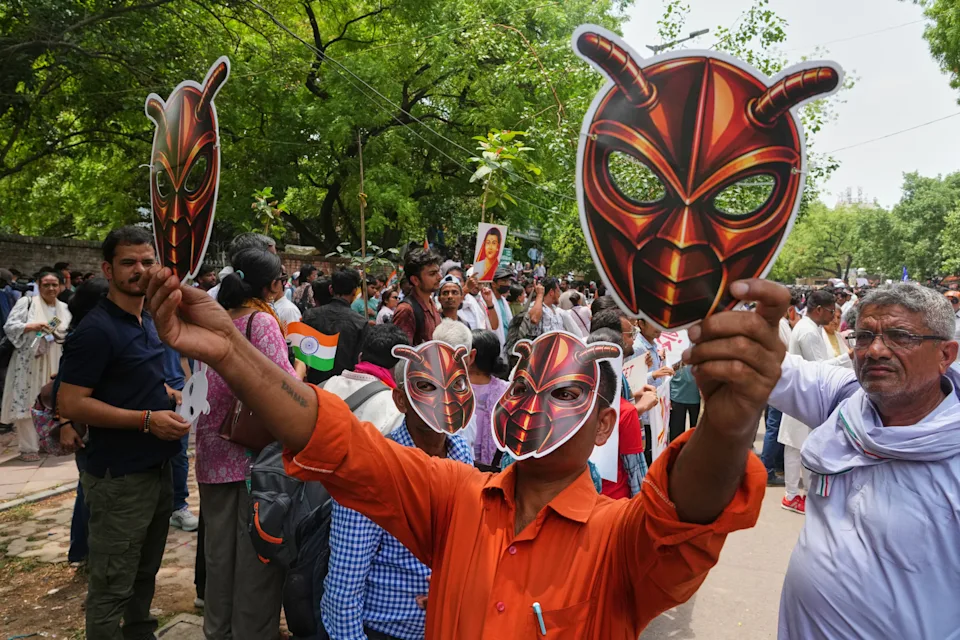
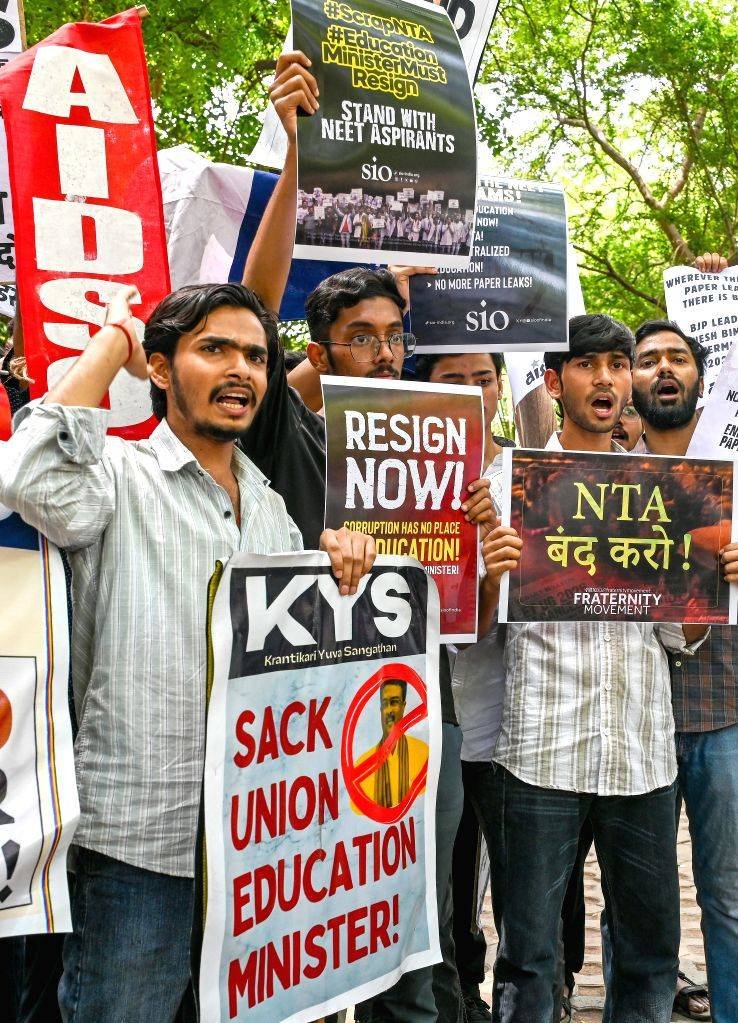
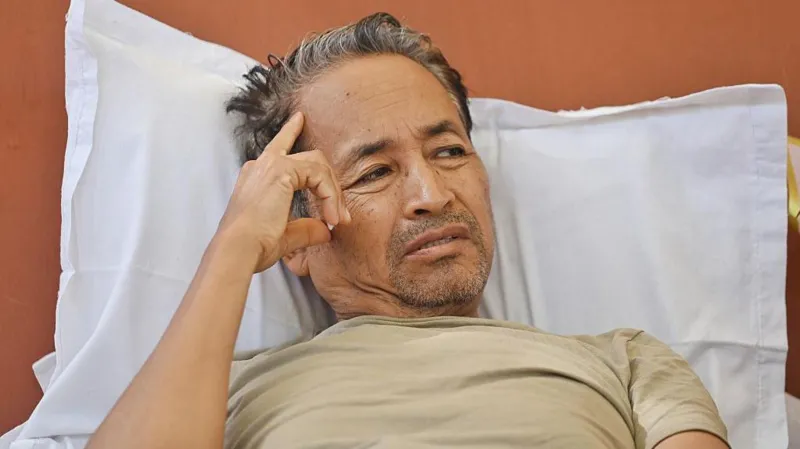
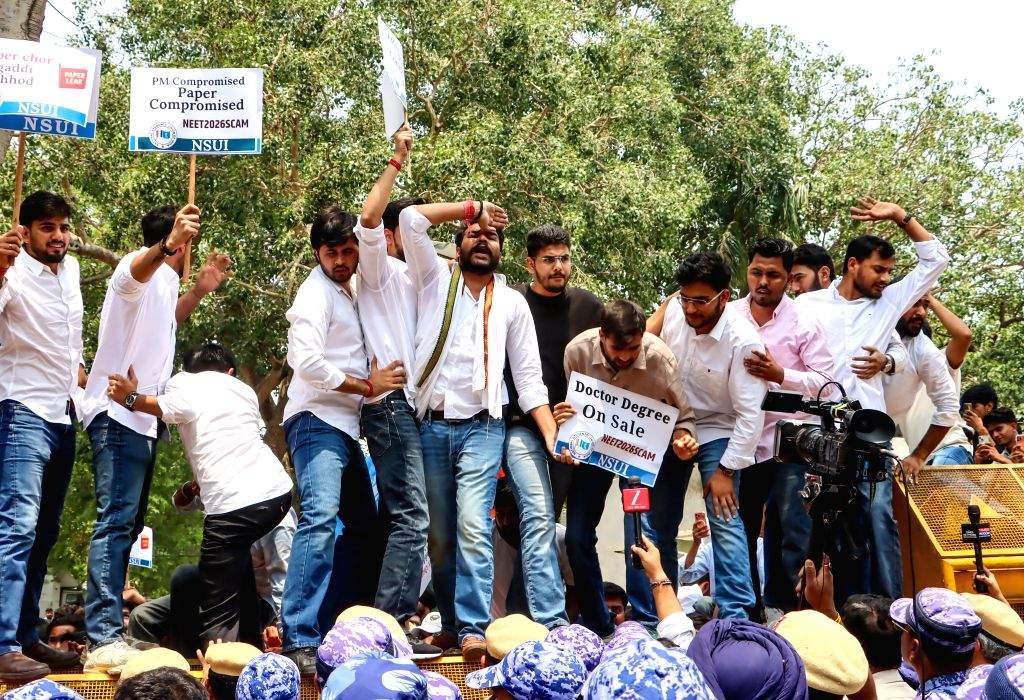
On 28 June 2026, the educator and environmental activist Sonam Wangchuk began an indefinite hunger strike in solidarity with the youth-led Cockroach Janta Party. The protest followed the cancellation and reconduct of NEET (UG) 2026, the national entrance examination for undergraduate medical education, after allegations of a paper leak engulfed the test taken by more than 2.2 million candidates. The movement has demanded examination reform, public accountability and the resignation of Education Minister Dharmendra Pradhan. On the nineteenth day of Wangchuk’s fast, the Delhi High Court ordered daily medical monitoring and intervention should his condition require it.
The immediate controversy concerns the integrity of an examination. Its political reach is wider. Around the leaked paper and the cancelled test has gathered a dispute over years: the years candidates devote to preparation, the years families finance uncertainty, the years an administrative failure can remove from a young person’s life, while describing the loss as rescheduling.
What, politically, is an examination?
It is plainly a device for ranking candidates and distributing scarce opportunities. It also organises expectation. It persuades students to accept an exacting present because effort is believed to retain some dependable relation to the future. The examination calendar gives this belief an institutional form. Preparation may be gruelling, competition severe and failure probable, but the process is accepted because the rules appear settled and the date appears to bind everyone.
An examination is, therefore, a public promise about time.
Reinhart Koselleck’s Futures Past offers a language for understanding this promise. Koselleck distinguished between the “space of experience” inherited from the past and the “horizon of expectation” directed towards what has not yet occurred. The two can never coincide. Political life nevertheless depends upon some credible passage between them: experience must still provide grounds upon which people can act towards a future they cannot know.
Competitive examinations construct such a passage with unusual intensity. They ask the candidate to live prospectively. Present life is arranged around a result that may be months or years away. Families divert income towards fees, coaching, travel and accommodation. Students defer employment, narrow their social lives and submit daily existence to the discipline of a timetable. Sleep, friendship, leisure and sometimes health are reorganised around a future opening whose probability may be low but whose promise remains powerful.
The labour involved is individual, but the expectation is institutionally produced. The candidate did not invent the examination calendar, the eligibility rules, the syllabus, the ranking system or the age limits. These are established by public authority, which then invites the student to make consequential choices in reliance upon them.
Wendy Brown’s Undoing the Demos helps locate this arrangement within a wider political rationality. Neoliberal reason, in her account, recasts the citizen as human capital: a bundle of capacities to be cultivated, enhanced and made competitive. Education ceases to appear primarily as a shared public good and becomes an investment whose risks are borne by the individual. The student learns to treat the self as a project, each qualification adding value and every unproductive interval appearing as depreciation.
Time, under these conditions, is experienced as capital. An additional year of preparation is not simply another year. It is foregone income, delayed independence, further expense and the possibility of crossing an eligibility threshold. This is why the administrative language surrounding a compromised examination can sound so inadequate. “Cancellation,” “re-examination,” “refund” and “revised date” describe what happens to the procedure. They say very little about what happens to a life.
From the institution’s perspective, the remedy has an intelligible sequence. The examination is cancelled. A fresh date is announced. Fees may be refunded. Security procedures are strengthened. Another paper is prepared. The administrative calendar repairs itself and resumes.
The candidate’s calendar cannot be restored in the same manner.
Money spent may sometimes be reimbursed, though rarely in full. Time already organised around the examination cannot. The months of preparation do not become available for another use merely because a new test has been scheduled. Nor does the emotional economy of anticipation return intact. A postponement alters the candidate’s relation to what has already been endured: labour once understood as progress begins to resemble time placed in custody.
The injury caused by a paper leak is therefore not exhausted by the possibility that some candidates received an unfair advantage. The leak violates the temporal compact on which the examination rests. Candidates were required to strictly adhere to the calendar. The institution proved unable to protect the conditions that made such respect meaningful.
Preparation remains real. The sacrificed income remains real. The years remain spent. What weakens is the expectation that these experiences still lead towards the future for which they were undertaken.
A stolen paper may be replaced. Confidence in institutional time is harder to recover.
The asymmetry is severe. Candidates are governed by deadlines with immediate consequences: application windows close, age limits apply, fees become due, and admission years are lost. The institution, by contrast, can extend an inquiry, alter a schedule or issue another notification. Both inhabit time, but only one possesses the authority to revise it.
That difference brings the examination controversy into political theory. The state has not simply failed to administer a test. It has exposed the unequal temporal terms upon which citizens are asked to trust it.
Every democracy asks people to wait. Democratic government would be impossible without procedure, deliberation and intervals between claim and decision. The question is how such waiting is distributed, what burdens it imposes, and whether the future offered in return remains believable.
The politics of exhaustion begins when a democracy’s temporal constitution can no longer sustain credible expectations linking present sacrifice to future possibility. It begins before citizens withdraw from elections or abandon institutions altogether. Its first signs appear in the altered meaning of effort: in the suspicion that patience is being mistaken for an indefinitely renewable resource and that the time surrendered to public authority may never be recognised as a political loss.
At Jantar Mantar, that suspicion has acquired a body.
II. The Social Distribution of Waiting
Waiting has a social history. It is rarely imposed upon everyone in the same form, and it does not cost everyone equally.
The language of administration conceals this. A revised date appears universal; every candidate receives the same notification. Yet equality of notice bears little relation to equality of consequence. One student can remain in coaching for another year. Another has reached the limit of what a family can borrow. A candidate of nineteen may absorb a postponement that closes an avenue for someone nearing an eligibility threshold. Those who live near examination centres lose less to travel than those crossing districts or states. Delay enters lives already divided by income, location, family obligation and access to institutional knowledge.
The same six months can be an inconvenience, a debt or the end of a possibility.
This unequal experience of time is central to Javier Auyero’s Patients of the State. His ethnography follows poor residents of Buenos Aires as they wait in welfare offices, immigration lines and precarious settlements for decisions governing assistance, legal status and housing. The state in these encounters is neither wholly absent nor straightforwardly repressive. It remains present through appointments, forms, instructions and promises. What it withholds is certainty. People are repeatedly required to return, to remain available, to accept that the timetable belongs elsewhere. Auyero describes how the poor are made into “patients of the state”: subjects trained to endure uncertainty because no other course appears open to them.
The significance of his account lies in the shift from waiting as a bureaucratic accident to waiting as a political relation. An institution need not issue a final refusal in order to exercise power. It can preserve dependency by postponing the moment at which refusal or recognition becomes definite. The citizen must continue arranging life around an answer that has not arrived.
Competitive examinations belong to a different institutional world, but they produce a related discipline. Candidates are required to remain prepared while the conditions under which preparation will acquire value remain beyond their control. A new date may be announced at short notice. Documentation must be current. Fees must be found. Study cannot safely cease. The future remains uncertain, yet the candidate must live as though the promise remains intact.
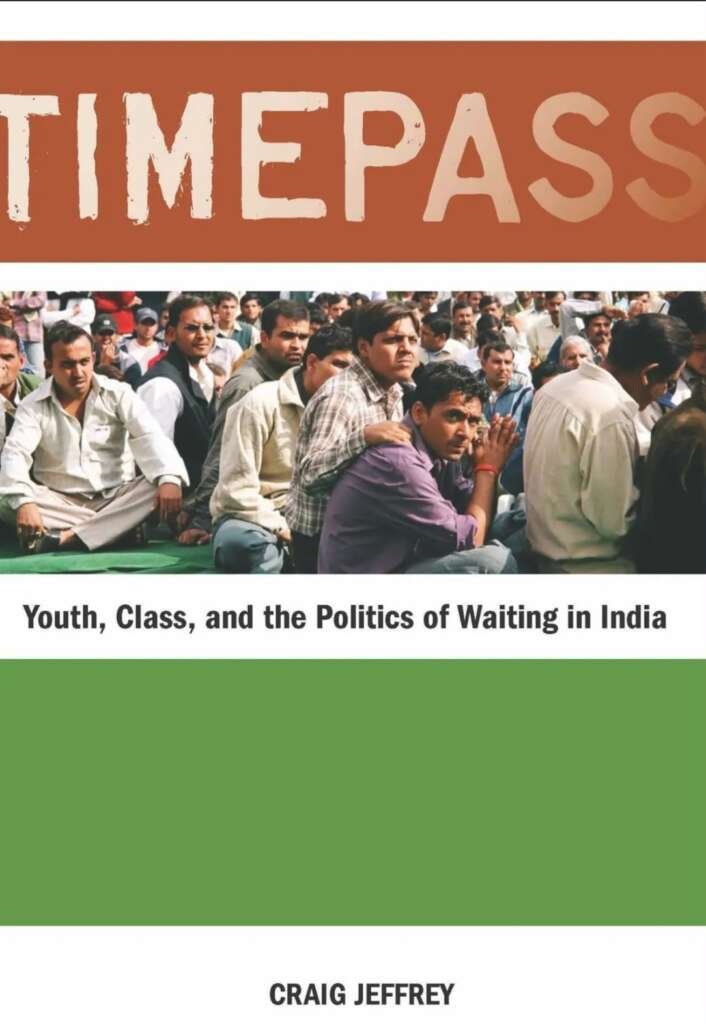
For educated young people, such suspension often extends beyond a single test. Craig Jeffrey’s Timepass: Youth, Class, and the Politics of Waiting in India examined lower-middle-class young men in and around Meerut whose education had raised expectations that the labour market could not fulfil. Their waiting was not idleness. It involved examination preparation, student politics, networking, small enterprises and repeated efforts to convert credentials into mobility. The term “timepass” named a condition in which adulthood, employment and social standing had been promised without becoming securely available. Jeffrey’s study is carefully situated; it is not an account of all Indian youth. Its wider importance lies in showing how waiting can generate its own practices, identities and forms of political action.
The examination aspirant occupies this interval between qualification and recognition. He or she may possess the required education, complete the prescribed preparation and comply with every procedural demand, yet remain unable to proceed because the institution controlling passage has failed, postponed or begun again. The candidate is neither simply excluded nor admitted. Life is held at the threshold.
Families are drawn into this suspension. The cost of waiting is distributed through the household: a sibling’s education may be deferred, savings redirected, marriage postponed, care work rearranged. The candidate’s apparent individualism—the solitary desk, the personal score, the ranked result—rests upon an often invisible collective economy. When the calendar is disrupted, the loss travels through that economy as well.
Nor is the burden confined to money. Prolonged uncertainty changes how people understand themselves. The candidate must remain committed enough to continue, but uncertain enough to contemplate failure; hopeful enough to invest another year, yet conscious that the investment may deepen the loss. The institution offers no stable point at which persistence becomes irrational. To stop may appear premature. To continue may become ruinous.
This is one of waiting’s harsher disciplines: it transfers the responsibility for deciding when hope has ended to those least able to know.
Administrative delay can therefore preserve the outward form of opportunity while steadily narrowing the lives organised around it. The examination remains open. Another date will come. No explicit decision has denied the candidate a future. Yet the capacity to reach that future is being consumed by the time required to wait for it.
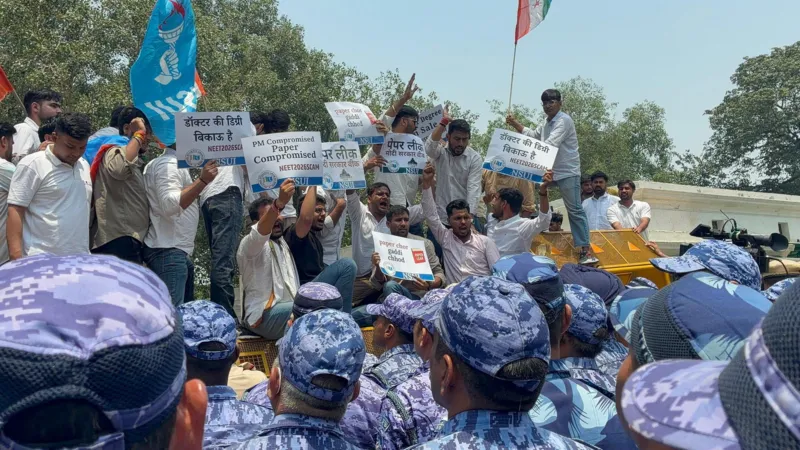
The paper leak did not create this condition. It concentrated it. What had previously been lived as private misfortune—another lost year, another failed attempt, another family expense—became recognisable as an institutional pattern. Students who had been taught to interpret delay individually began to see that they were waiting together.
That recognition does not yet constitute politics. It changes the ground from which politics can begin.
III. When Waiting Becomes a Claim
To recognise that others are waiting does not, by itself, create a political movement. Shared injury may produce sympathy, resentment or a temporary sense of fellowship and still leave the authority responsible for that injury untouched. Politics requires a further movement: experience must be translated into a claim that names an obligation, identifies an addressee and demands an answer.
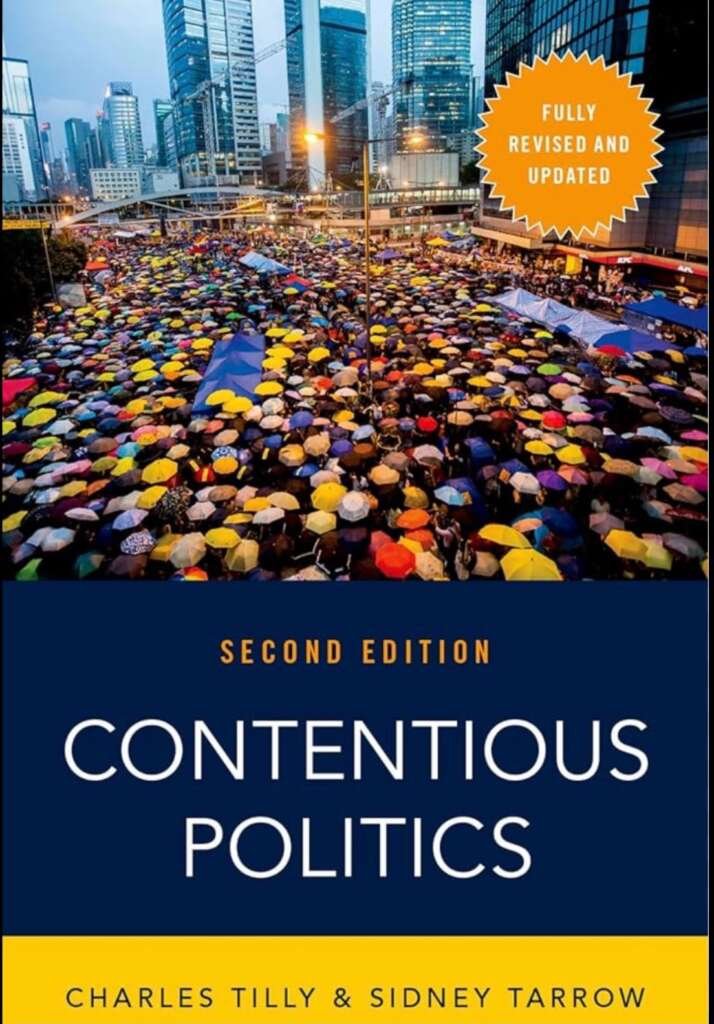
This distinction runs through Charles Tilly and Sidney Tarrow’s Contentious Politics. Grievance is common; contentious claim-making is not. People suffer privately, complain among themselves and adjust their lives to conditions they consider unjust without entering into sustained political action. Contention begins when actors direct claims towards others—often governments or public institutions—whose conduct affects their interests. The grievance acquires an address.
The distinction is especially important in a system of competitive examinations because its moral language is designed to return success and failure to the individual. The candidate receives a score, a rank and a result under a personal name. Preparation is presented as a test of discipline; success confirms effort, while failure invites the suspicion that greater concentration, better coaching or another year of study might have produced a different outcome. The institution appears only as an impartial stage upon which individual merit discloses itself.
Most candidates accept this arrangement even when they recognise that the contest is unequal. Some attend expensive coaching academies; others prepare from borrowed books. Some study in private rooms, others in crowded homes while working or caring for relatives. The promise of the examination does not depend upon abolishing those inequalities. It depends upon a narrower belief: whatever advantages precede the test, the paper itself will be secure, the rules stable, and the result connected to performance.
A leak destroys that limited assurance. It inserts an institutional failure into a system whose authority rests upon making outcomes appear personal.
The candidate who fails an honest examination may question the fairness of the wider society, but the result can still be understood as belonging to the contest. A compromised examination changes the object of judgment. It is no longer enough to ask whether a student studied hard enough. Attention turns towards those responsible for protecting the paper, administering the test, investigating the breach and deciding what remedy counts as adequate.
Failure travels back towards the institution.
That movement is politically consequential because the language of merit can privatise injuries that have public causes. When achievement is represented as the product of individual effort, those who do not advance are encouraged to search their own biographies for the explanation. They lacked preparation, discipline, information or resilience. The public structure that ranked them recedes behind the apparent precision of the result.
The protest interrupts this moral sequence. It does not deny that preparation or ability matters. Nor does it require the abandonment of examinations as instruments of selection. It asks whether an institution that demands discipline from candidates has met the obligations necessary to judge them. Merit cannot reside entirely within the individual when the conditions under which it is measured are publicly organised.
Understood in this way, merit is not a possession that an examination merely discovers. It is a relationship between effort and a credible procedure. Break the procedure, and the institution cannot continue speaking as though the resulting injury belongs to the candidate alone.
The demands emerging from Jantar Mantar therefore contain more than anger at a cancelled test. They seek to reassign responsibility. Years of preparation, household expenditure and deferred employment are placed before public authority as losses for which administration must account. The candidate appears not as a disappointed customer requesting another opportunity, but as a citizen asserting that an institutional promise has been broken.
A claim of this kind does several things at once. It converts separate disappointments into an intelligible pattern. It identifies an authority capable of being held responsible. It also proposes a different account of the claimant. The student ceases to appear solely as an aspirant competing against other aspirants and becomes part of a public whose confidence is necessary to the legitimacy of the examination itself.
This transformation does not abolish competition among candidates. It temporarily reveals the shared institutional ground on which that competition depends.
Albert O. Hirschman’s Exit, Voice, and Loyalty clarifies the democratic wager involved. Faced with decline in an organisation, people may leave, protest or remain loyal. These responses do not occur independently. Loyalty may postpone exit, giving voice time to operate; easy exit can weaken the pressure for repair. Voice arises when those affected by deterioration attempt to change an institution rather than simply abandon it.
For many examination candidates, exit is neither simple nor costless. Private education may be unaffordable. Alternative professions may require further years of training. Migration, another degree or a different career may be possible for some, but each demands resources already depleted by preparation. More importantly, the candidates protesting at Jantar Mantar have not declared public examinations irredeemable. Their demands remain addressed to the institutions that organise them.
They want the examination to deserve obedience again.
Their criticism therefore contains an element of attachment. One does not demand the reform of an institution that has ceased to hold any claim upon one’s future. The protest preserves a belief—strained, perhaps nearing exhaustion—that public authority can still distinguish between procedure and justice, between replacing a paper and answering for the time lost through its failure.
Hirschman’s “voice” is sometimes reduced to expression, as though speaking were sufficient. His argument is more exacting. Voice is an attempt to alter a deteriorating condition. Its success depends upon whether an institution possesses channels through which criticism can produce correction. Where such channels exist only formally, citizens may be permitted to speak while remaining unable to affect the terms of the decision.
The distinction between being heard and receiving an answer begins to matter here.
Petitions, demonstrations, court applications and public appeals can circulate without obliging any identifiable authority to assume responsibility for the whole claim. One agency investigates the leak, another schedules the examination, another considers compensation, another monitors the protest. Administration remains active, yet answerability is dispersed. Each institution can point to a procedure under way. The claimant continues to wait for a political response that no procedure alone is authorised to provide.
Contention develops within this interval. Protesters assemble, adopt common language and select forms of action capable of holding together people whose losses differ in degree. Their demands become public performances: addressed to the state, visible to other citizens and intended to test whether official silence can be made politically costly. The repertoire may include marches, occupations, petitions, litigation or refusal. Its forms are never neutral. Each carries an account of what has failed and of the audience that must now be compelled to attend.
The hunger strike appears late in such a sequence. It does not arise because a claim has not been formulated. The claim is already clear. Nor does it indicate that the protester has exited political life. The fast remains insistently addressed to public authority.
What has weakened is confidence in the ordinary interval between speaking and being answered.
Waiting has become a claim. The fast begins when that claim seeks another measure of time.
IV. The Moral Ambiguity of the Fast
India does not encounter fasting as an unfamiliar political language. It enters public life already burdened by Gandhi: by the authority he gave to self-suffering, the moral demands he placed upon those who witnessed it, and the unease that followed whenever an individual body acquired the power to alter a collective decision.
For Gandhi, the fast belonged to the discipline of satyagraha. It began with mastery of the self rather than punishment of an adversary. Suffering was to be borne, not inflicted; its purpose was to reach the conscience of another without reproducing the violence it opposed. Banu Bargu’s account of Gandhi’s fasts draws out both the ascetic and political character of this practice. The faster sought to convert rather than defeat, presenting bodily sacrifice as an “educative force” capable of moving an opponent away from error.
Gandhi was not unaware of the danger. He distinguished a legitimate fast from an attempt to extort a concession, and acknowledged that fasting could become coercive when moral proximity gave the sufferer disproportionate power over those required to respond. Yet the boundary could never be secured by intention alone. A fast may be undertaken as self-purification and still make refusal politically or morally unbearable for others.
The difficulty is clearest in the events surrounding the Poona Pact of 1932.
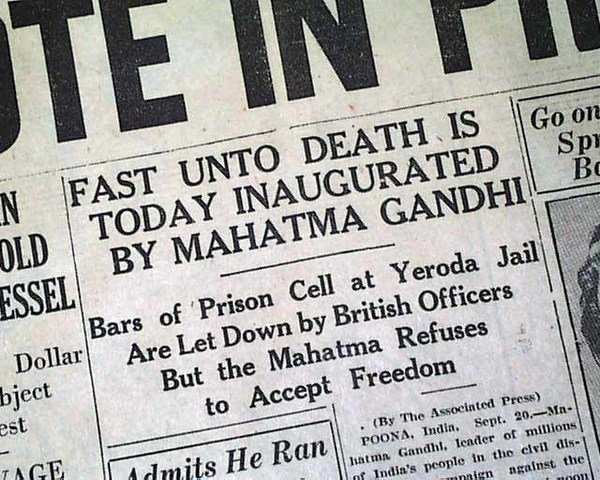
The British government’s Communal Award had granted the “Depressed Classes”—the colonial designation then used for communities now broadly identified as Dalits—separate electorates for legislative representation. Ambedkar supported the arrangement because it offered a measure of independent political power to a population otherwise subject to domination within the Hindu social order. Gandhi, imprisoned at Yerwada, believed separate electorates would detach the Depressed Classes from Hindu society and began a fast unto death on 20 September.
The fast immediately transformed a constitutional disagreement. The issue was no longer confined to the merits of separate electorates, the design of representation or the political autonomy of the oppressed. Gandhi’s survival became inseparable from the negotiations. Ambedkar confronted a choice formed under conditions he had not created: retain a safeguard he regarded as essential, or risk being held responsible for Gandhi’s death.
The Poona Pact, agreed four days later, abandoned separate electorates in favour of joint electorates with reserved seats. It increased the number of reserved provincial seats beyond those offered by the Communal Award, but removed the separate electorate and the additional vote that Ambedkar considered a vital political weapon. Gandhi ended his fast on 26 September. Ambedkar never ceased to regard the circumstances of the settlement as politically compromised. In What Congress and Gandhi Have Done to the Untouchables, he treated Gandhi’s intervention not as a neutral appeal to conscience but as an exercise of moral power directed against an already subordinated people.
The conflict cannot be reduced to the claim that Gandhi acted coercively and Ambedkar defended deliberation. Gandhi feared that separate electorates would confirm a social separation he wanted Hindu society to overcome; Ambedkar argued that a community denied equality could not depend upon the conscience of those who dominated it. Their disagreement concerned the location of political agency. Gandhi placed transformative force in ethical conversion. Ambedkar demanded institutions through which the oppressed could represent themselves without awaiting such conversion.
The fast sat uneasily between these positions. It exposed injustice through self-suffering, but it also changed the conditions under which others were required to decide. The body made delay impossible. It did not, for that reason, make the resulting decision free.
That history matters because the hunger strike is often treated as though vulnerability settles the justice of a cause. It does not. The body can clarify the stakes of a dispute; it can also concentrate public pressure around the faster while obscuring inequalities among those to whom the demand is addressed. The ethical seriousness of self-sacrifice cannot remove the need to ask who bears its consequences and whose political choices become narrower as the fast advances.
The contemporary state presents a different danger. It may refuse the moral encounter altogether.
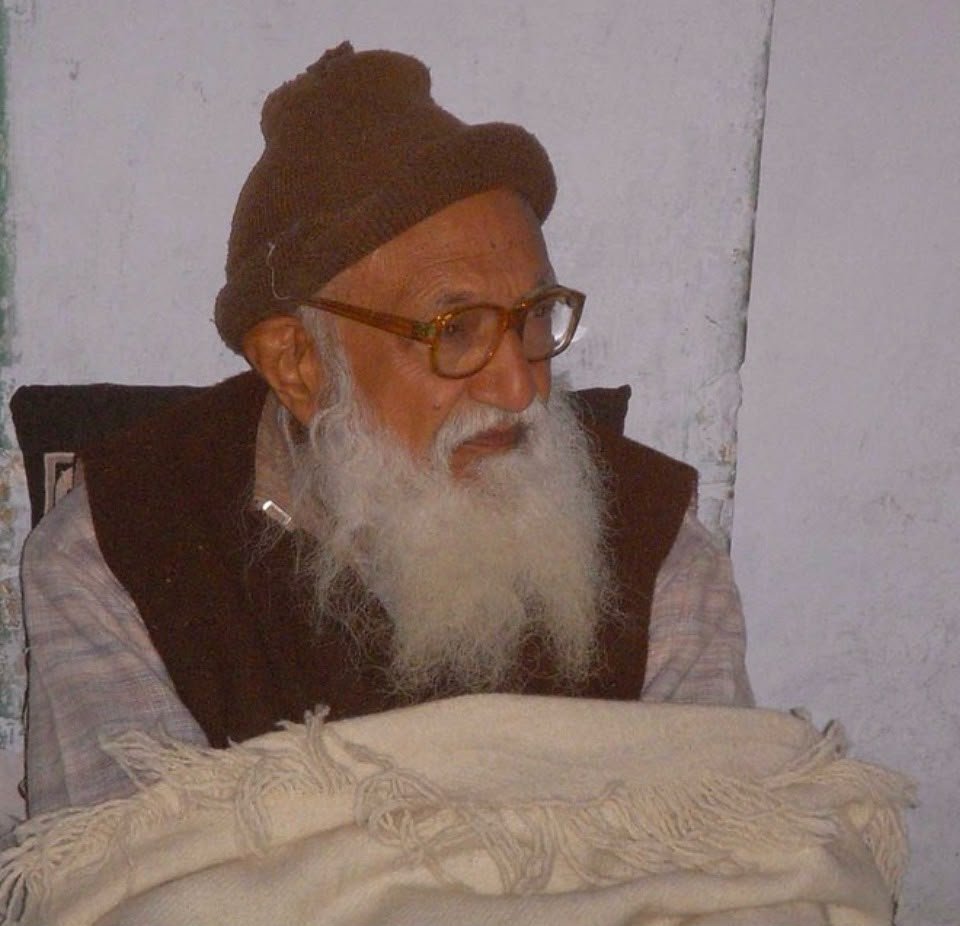
In June 2018, the environmental engineer and activist G. D. Agrawal, also known as Swami Gyan Swaroop Sanand, began a fast in Haridwar demanding legislation to protect the Ganga and an end to hydroelectric projects damaging its natural flow. He wrote to Prime Minister Narendra Modi in August, warning that he would fast unto death unless action followed. After more than fifteen weeks, Agrawal stopped drinking water. Police took him to hospital; he died of cardiac arrest on 11 October at the age of eighty-six.
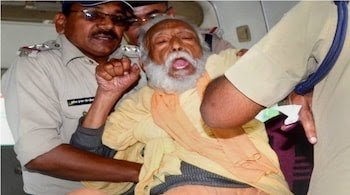
His death did not resolve the old argument between conscience and coercion. It disclosed another possibility: the state can outlast the moral urgency of the fast. It can monitor the body, issue statements, transfer the protester to hospital and allow administrative time to proceed until biological time has ended.
Gandhi’s fast placed immense pressure upon those around him. Agrawal’s revealed what happens when pressure no longer produces an answer.
The hunger strike may still compress a political claim into the finite duration of a body. It cannot ensure that the institution addressed will accept the same measure of time.
V. Biological Time
By the nineteenth day of Sonam Wangchuk’s fast, the Delhi High Court had entered the dispute through the question of his survival. It directed the authorities to arrange daily medical examinations and to intervene should his condition deteriorate. His doctor reported that he had lost more than nine kilograms, although he remained mentally alert. The court’s concern was immediate and intelligible: the life of a citizen could not be allowed to pass beyond the reach of medical care.
The order also disclosed the peculiar division produced by a hunger strike. The body may become urgent before the claim does.
One arm of the state monitors blood pressure, weight and organ function. Another continues to process the political demand according to no comparable deadline. Officials can be required to act if the faster’s vital signs cross a medical threshold, while no institution is compelled to explain when silence, referral or procedural activity has ceased to constitute an adequate public response.
The distinction is not between a caring state and an indifferent one. Care itself has been divided. The state may assume responsibility for keeping the protester alive without assuming responsibility for the conditions that led him to place his life in jeopardy.
A hunger strike brings this division into view because its calendar cannot be concealed. Each day is counted. The body changes in ways that can be examined, recorded and photographed. Administrative time is harder to see. Meetings may take place, files may move, advice may be sought, jurisdiction disputed. Delay is distributed across institutions until no single act appears to be a refusal. The fast gives that dispersed nonresponse a visible duration.
K. M. Fierke’s “The Warden’s Dilemma” offers a way of understanding the altered relation. Fierke developed the argument through the 1980–81 Irish republican hunger strikes, asking how self-sacrifice can exert political force in an encounter where one party possesses overwhelming material power. The prisoner cannot overpower the warden. By threatening his own life, however, he changes the field in which power is exercised. The stronger party must now decide whether maintaining its position is worth being seen to permit a death that it has the capacity to prevent.
The faster does not abolish the original asymmetry. The state still controls the prison, the examination system, the ministries, the police and the procedures through which demands are received. What changes is the structure of consequence. The protester’s vulnerability can draw third parties into an encounter that might otherwise remain confined to an unequal exchange. Supporters gather. Journalists report the number of days without food. Doctors describe the physical risks. Courts are petitioned. The state’s refusal—or its unwillingness to identify any decision as a refusal—becomes available to public judgment.
The audience matters. Without it, self-starvation might remain an isolated act of suffering. Political fasting is staged before a public capable of interpreting bodily decline as evidence about the relationship between claimant and authority. This does not guarantee sympathy, still less agreement. It means that the state can no longer govern the dispute exclusively through its own descriptions of procedure.
Amanda Machin’s study of the political hunger strike follows this movement from injury to performance. Drawing upon suffragette and Irish republican fasts, she describes how the hunger striker internalises the violence of the encounter: damage that might otherwise be inflicted upon an opponent is directed towards the self. The act is at once strategic and affective. It seeks an outcome, but its political force also depends upon the emotional and identificatory responses it produces among those who witness it.
In her later essay “Performances of Death”, Machin argues that hunger striking may help galvanise a political identity still in formation. The faster does not simply represent a fully constituted public waiting behind him. The performance can gather that public into existence, giving otherwise dispersed injuries a figure around which to organise.
Wangchuk’s fast performs this representative work for a movement whose constituency is extensive but socially fragmented. The students affected by examination failures are spread across regions, languages, institutions and stages of preparation. Their losses differ. Some sat the cancelled test; others recognise the scandal as one instance of a wider system in which recruitment delays, paper leaks and uncertain results have made planning a life increasingly precarious. The faster’s body cannot embody all those experiences. It can give them a common chronology.
The number of days without food becomes a counter-calendar.
This is not the calendar of the examination agency or the ministry. It does not measure the time required to complete an inquiry, draft a report or prepare another test. It measures how long a publicly articulated claim can remain without a political answer while the condition of the person making it becomes progressively less reversible.
The fast therefore contests more than the substance of a decision. It contests the state’s command over when a decision must be made.
Administrative procedure depends upon the possibility that time can be extended without changing the nature of the issue. Another week is another week; the claim remains available for later consideration. The body denies that continuity. After a certain point, another day is not an additional unit of the same process. It produces damage that cannot be undone by a subsequent meeting or eventual concession.
This is where biological time acquires constitutional significance. A democratic institution may possess legitimate reasons for refusing a demand. It may need to investigate disputed facts, protect other interests or avoid allowing public policy to be settled by the threat of self-harm. The moral ambiguity established by Gandhi and Ambedkar does not disappear. No faster acquires a right to dictate an outcome merely by placing his body at risk.
But a refusal is itself a political act. It can be stated, explained and defended before the public. Indefinite procedural motion is different. It leaves the claimant without either satisfaction or a decision against which further politics can be organised. The protest continues because there is no answer to accept, contest or overturn.
Pierre Rosanvallon’s Counter-Democracy describes the forms through which citizens exercise democratic power beyond elections: surveillance of authority, prevention of abuses and public judgment upon those who govern. Distrust, in this account, need not be democracy’s opposite. It can become a democratic activity when it subjects power to continuing scrutiny. Rosanvallon’s concern is not specifically the temporal burden of claims, but his argument helps clarify why periodic elections cannot exhaust the state’s obligation to remain exposed to public judgment.
Answerability adds a demand that scrutiny alone cannot meet. It requires an authority to acknowledge the claim, assume responsibility for its response and make that response available to contestation. It does not require agreement. It requires political presence.
The hunger strike tests whether that presence still exists.
The court can ask whether Wangchuk’s life is in immediate danger. Doctors can determine whether intervention has become necessary. Those questions have thresholds, evidence and identifiable authorities empowered to act. The examination controversy does not appear to possess an equivalent point at which delay becomes institutionally intolerable. Its costs accumulate elsewhere—in the candidates’ lost years, in family debts, in opportunities no longer available—and therefore rarely produce a single moment requiring official recognition.
The faster relocates those dispersed costs into one body. He gives postponement a pulse, a weight and a diminishing reserve. Yet even this may not be enough to force a political decision. The state may keep the body under observation and the claim under consideration, preserving life while preserving delay.
That possibility marks the limit of the hunger strike. The protester can make biological time visible. He cannot compel an institution to inhabit it.
By now, no one can plausibly say that the claim has not been heard. The harder question is what it means for a democracy to hear a citizen and continue waiting.
VI. The State of Waiting
A state may hear a claim without answering it.
It may register the protest, monitor the fast, issue medical instructions, acknowledge that procedures are under review and continue to act in every administrative sense. Nothing has stopped. Files move. Courts sit. Officials speak. Yet the citizen remains where the encounter began, waiting for someone to assume political responsibility for what has happened.
This is not simple inertia. It is a form of government.
The power to delay is the power to decide whose time may be consumed without requiring an account of the loss. That power is rarely announced. It appears as procedure, caution, consultation, jurisdictional complexity. Each explanation may be reasonable on its own. Their accumulation produces a condition in which authority remains everywhere active and nowhere answerable.
The candidate approaching an age limit cannot suspend time while an inquiry proceeds. A family cannot postpone debt until a ministry has completed its deliberations. Employment, health and adulthood do not wait upon the state’s convenience. Institutions retain a future in which they can correct an error. Citizens often live with decisions whose consequences have already become irreversible.
The inequality lies here.
One side can revise the calendar. The other must live inside it.
We have become accustomed to treating delay as secondary to the decision eventually reached. A cancelled examination is followed by another examination; an administrative failure is repaired through a new process; a protest ends when a concession is announced or the crowd disperses. This way of thinking allows the institution’s final act to eclipse the time through which citizens arrived at it.
But the interval has already governed them.
It has altered choices, exhausted savings, narrowed possibilities and changed the meaning of effort. An eventual answer cannot restore the life that had to remain provisional while the answer was withheld. The state may remedy a procedure without repairing the temporal injury produced by its failure.
Temporal inequality is therefore more than unequal access to speed. It concerns the authority to make one’s own time consequential while treating another person’s as expendable. Those with wealth can often purchase distance from institutional delay: private education, legal representation, medical care, migration, accommodation close to an examination centre. Those without such resources must remain available to the institution, adjusting their lives each time its calendar changes.
Waiting carries other inequalities inside it. Caste, class, region and gender determine who can endure another year, who is permitted to remain dependent, whose delayed marriage becomes a family crisis, who must abandon preparation for paid work, who has the confidence and knowledge to pursue an appeal. Time does not replace these structures. It is one of the means through which they are reproduced without appearing as explicit exclusions.
No formal rule need declare that a candidate is unworthy. Opportunity can remain nominally open while the capacity to pursue it is slowly consumed.
This is why the state of waiting differs from an ordinary period of uncertainty. It is not a pause between citizenship and decision. It becomes a mode of citizenship in its own right. People learn that they must be constantly prepared for institutions that need not be prepared for them. They are required to meet deadlines precisely while authority retains the discretion to move them. Their seriousness is tested by patience; institutional seriousness is measured by procedure.
The relation is democratic in form and increasingly unequal in time.
Elections do not resolve this inequality. They may replace those who govern without changing the temporal habits through which government meets the governed. Nor does transparency suffice. A citizen can know which office holds the file, which committee has been appointed and which stage of review is underway, yet remain unable to discover when an answer becomes obligatory.
The deeper requirement is contemporaneity.
A democracy must inhabit the time of those whose lives it orders. This does not mean that every demand must be accepted immediately, or that complex decisions can be stripped of deliberation. It means that institutions must recognise delay as part of the substance of a claim rather than as the neutral space before its resolution. They must be capable of saying who is responsible, what is being considered, what limits govern the process and when a decision will become available for public contestation.
Without such limits, procedure ceases to mediate between citizens and power. It shields power from the time of the citizens.
The hunger strike makes that separation difficult to ignore. It gives the state a body it cannot describe as indefinitely renewable. Medical intervention may preserve that body, but preservation alone does not answer the political act. A democracy cannot satisfy the fast merely by ensuring that the faster does not die. It must confront the accusation carried by the fast: that ordinary forms of address have become incapable of placing a claim within the time of those who make it.
The body is not always right. The demand may be mistaken, the method coercive, the desired outcome incompatible with other public obligations. None of this removes the obligation to answer. Indeed, a refusal openly given and publicly defended belongs more fully to democracy than a claim indefinitely circulated through procedures that no one is authorised to conclude.
An answer creates political ground. It can be rejected, challenged, litigated against, organised around. Delay without ownership deprives the citizen of even the decision to oppose.
The politics of exhaustion develops in that deprivation. It does not begin when people cease to care. It begins while they are still studying, applying, petitioning and waiting—while they continue to invest in institutions whose promises have become less credible with each postponement. Exhaustion is the attrition of expectation before it becomes the abandonment of hope.
A political order can survive anger. It can often absorb protest. What it cannot indefinitely sustain is the belief that effort and answer have ceased to belong to the same historical world.
The state of waiting names that separation.
It is the condition in which public authority continues to organise the future while losing the capacity to persuade citizens that the future it organises remains available to them. Rights endure, procedures continue, and examinations are held. Yet the passage between present sacrifice and future possibility has narrowed until patience itself becomes evidence of subordination.
Every democracy distributes time. Its justice depends upon whether the governed remain present within the time of government.
When they do not, waiting is no longer what happens before politics begins.
It is the politics.
Narendra Pachkhédé is a critic, writer and essayist who splits his time between Toronto, London and Geneva. His latest book is Form As History: When History No Longer Requires Us (Daraja Press, 2026).