Christopher Nolan returns Homer to the scale of cinematic spectacle. More than half a century earlier, Sitanshu Yashaschandra’s Odysseusnu Halesu followed the oar beyond Ithaca, using its estrangement to rethink homecoming, poetic authority and the unequal life of world literature.
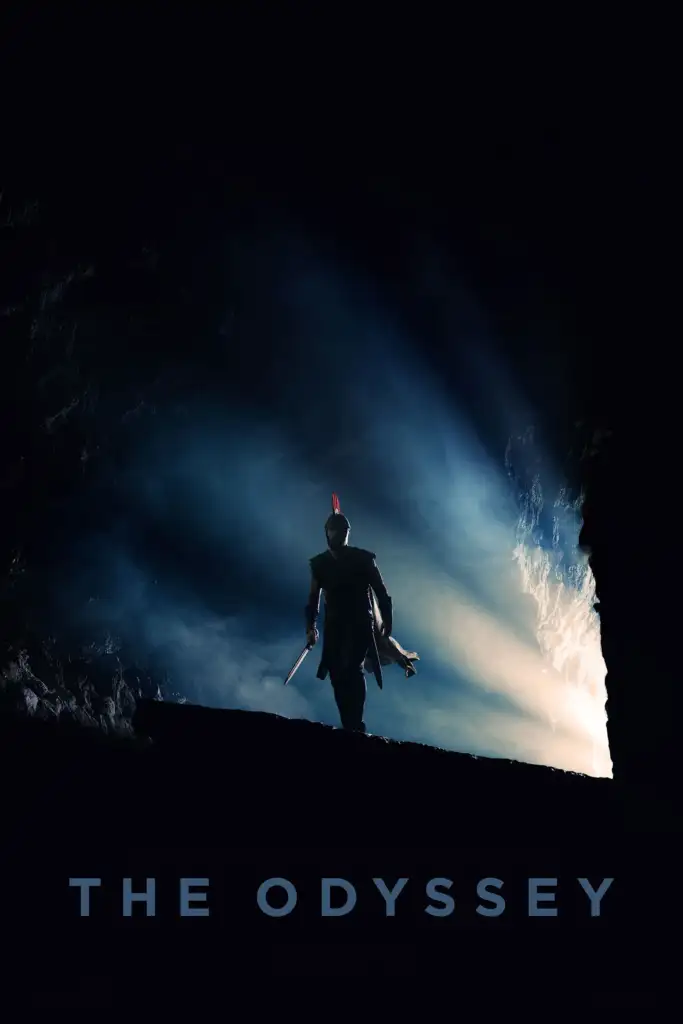
Christopher Nolan has returned Homer to the scale at which contemporary culture most readily recognises the classical: the vast screen, the technological event, the authority of a celebrated filmmaker. Yet the renewed visibility of the Odyssey also throws another, far less visible encounter with Homer into relief (Universal Pictures, *The Odyssey*).
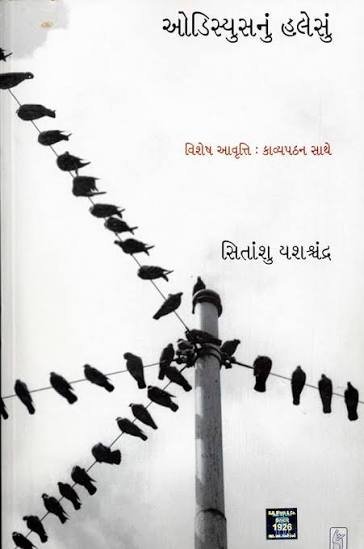
More than half a century ago, Sitanshu Yashaschandra published Odysseusnu Halesu—The Oar of Odysseus—in Gujarati. Its importance lies neither in having arrived before Nolan nor in offering a quieter literary virtue against cinematic spectacle. Its relative invisibility reveals something more consequential. Homer continues to be received as universal; a Gujarati poet’s radical transformation of Homer remains regional, even when it changes what the classical work allows us to see.
Sitanshu entered the epic through the oar Odysseus must carry beyond Ithaca, inland, until someone who has never seen the sea mistakes it for a winnowing fan. In that displaced object he found a way to ask what becomes of return when history has altered both the traveller and the world called home. The desire to return survives, but the assurance that homecoming can restore an undivided world does not.
I first knew the title before I understood the force of that question. In the old Arts Faculty building at M.S. University in Baroda, Political Science was one floor above Gujarati. I was an undergraduate in the 1980s. Sitanshu taught downstairs and later headed the department. I spent many hours with him there.
I was young and eager to absorb whatever came my way. A poem, a film, a philosophical name or an argument among writers often reached me before I had the language to place it. One could move from political theory upstairs to a dispute about modern poetry downstairs without feeling that one had crossed between disciplines. Babubhai Chavda and the film-society movement had made world cinema part of the city’s education. Raojibhai Mota moved between mathematics, philosophy and public argument. During Bhikhu Parekh’s tenure as vice-chancellor, 1981–84, the university possessed a certain confidence in its intellectual life. Salman Rushdie passed through around the years of Midnight’s Children and did not seem like an emissary from a distant literary centre so much as someone entering conversations already underway.
Baroda was fertile not because it was harmonious, but because different inheritances had come close enough to trouble one another.
After Ithaca
There is something almost humiliating in Tiresias’s instruction. Odysseus is not asked to preserve the oar as a relic. He does not hang it in his palace as proof of endurance, mastery or suffering. He must carry it away from the world in which it has meaning.
The oar keeps its shape. It still bears the pressure of hands and water, effort and repetition. Yet inland its history becomes unreadable. Those who have never seen a ship recognise the object through the material life available to them. What Odysseus knows as an instrument of navigation, they see as an implement for separating grain from chaff.
The object remains. Its world has fallen away.
The oar remembers the sea. No one around it does.
Odysseus himself comes burdened by centuries of interpretation: survivor, liar, strategist, husband, invader, wanderer, man of many turns. The oar is quieter. It has endured the journey without acquiring the authority to narrate it. It carries the voyage, but cannot compel anyone to recognise what it carries.
This is where Sitanshu’s choice begins to open. The collection’s achievement lies not merely in transplanting a Greek hero into Gujarati poetry, or in displaying the cosmopolitan range of a modern Indian poet. It makes the Odyssean structure answerable to postcolonial history, linguistic modernism and cultural estrangement. The ancient sequence of departure, wandering, recognition and restoration remains visible, but its terms have been stripped of epic certainty.
The desire for return survives. What disappears is Homer’s assurance that return can restore the world.
In the Odyssey, the journey culminates in recognition, recovered sovereignty and the reconstitution of the household. Odysseus returns to the immovable bed whose construction still holds the secret of his marriage; to a name that can be restored; to a kingdom that can again be claimed. The restoration is violent and morally troubled, but Ithaca remains capable of recognising its returning king.
In Odysseusnu Halesu, arrival carries no such assurance. Home is not an intact destination waiting patiently for the traveller. It is itself a historical and linguistic formation, altered in his absence and unavailable as undivided ground. The returning subject has changed; so has the world to which he returns. Homecoming cannot simply cancel history.
What becomes of Ithaca when inherited culture no longer offers an unbroken ground of belonging? What becomes of return when language itself has become unstable, when history has entered the consciousness of the traveller, and when the self that left can no longer coincide with the self that arrives?
Sitanshu’s Odyssean figure makes a modern impossibility legible: one may belong to a world from which one has also become irreducibly estranged. The oar acquires its force inside this broken structure of return. It is what remains when homecoming cannot absorb the history of the voyage. Odysseus must carry it beyond Ithaca because Ithaca cannot settle everything the journey has made of him.
A Literature Divided Against Itself
Odysseusnu Halesu appeared in 1974, when Gujarati literature’s argument over modernism was still alive. Abhay Sardesai, in “A Poetry of Urban Psychopathologies”, describes the literary scene of the 1960s and 1970s as a battleground between two powerful tendencies. One drew on the Gandhian, nationalist and humanist inheritance associated with Umashankar Joshi and Sundaram, and held that literature remained answerable to ethical value and collective life. The other, identified above all with Suresh Joshi, pressed for formal experiment and a more radical autonomy of language.
The division was never as simple as morality against form, or India against Europe. Suresh Joshi’s encounter with European modernism, French literature, existentialism and phenomenology occurred alongside his engagement with Sanskrit poetics and Indian literary traditions. As Shirish Panchal shows in his monograph Suresh Joshi (Sahitya Akademi, 2004), the point was not the imitation of European fashion but a transformation in what Gujarati writing could permit itself to ask. Could a poem begin without a moral conclusion already waiting for it? Could experience remain opaque? Could language resist the demand to become instruction?
Little magazines gave these questions a material life. Kshitij, Manisha, Uhapoh and Etad, followed by ventures such as Sandarbh and Yahom, allowed translations, formally disruptive poems and polemics to circulate beyond the settled permissions of the literary establishment. They did not merely reflect an avant-garde; they produced the conditions in which one could exist.
Sitanshu emerged from this ferment, but he was never merely Suresh Joshi’s successor. His poems inherited the modernist break and made it less austere, less secure in its own prestige. Myth, urban unease, dream, folk memory, colloquial Gujarati, parody and literary self-mockery entered the same unstable field. The literature of moral value could become prescriptive. So could the literature of experiment. Difficulty could harden into status; rebellion could acquire its own priesthood.
Odysseusnu Halesu belongs to the avant-garde, but refuses to become its monument.
The collection is often described through surrealism. The description is useful, though it can also become a form of containment. “Surrealism” gives the poems a recognisable European genealogy before their Gujarati language has had the chance to disturb us. Sitanshu’s images do not feel like imported procedures dutifully applied. They move as though the borders between things have become unreliable. Bodies become landscapes. Objects acquire animal lives. The city enters the mind while the mind spills into rooms and streets. Myth rubs against bureaucratic speech, gossip, jokes and literary vanity.
This is not merely poetry assembled from dreams. It is poetry written where language no longer feels entirely secure in the world it has been asked to name.
The Sea Inside the Language
In “Seahorses,” the ocean is no longer the immense theatre through which an exceptional hero moves. It enters the forms of things and loosens them:
“A flash of boats sprouts across ocean fields.
Sailors might take root.”
—Sitanshu Yashaschandra, “Seahorses,” translated from Gujarati by the poet
The image arrives lightly. Yet everything within it has shifted. The sea has become a field. Boats do not cut across water; they sprout from it. Sailors, figures of movement and exposure, threaten to become rooted.
Navigation and cultivation have been brought together without being reconciled. The sea contains a field. The boat begins to resemble a crop. The sailor hangs somewhere between arrival and burial. To take root at sea may sound like finding a home. It may also be a way of drowning.
Even the seahorse contains this instability. Language gives a marine creature the name of a land animal and leaves it without hooves. The word has already crossed incompatible habitats. It remembers another body.
There is no commanding Odysseus here, no intelligence standing above confusion and converting danger into strategy. Uncertainty has entered the poem itself. The voyage has passed from the man into the language.
To describe this merely as a Gujarati poet entering into conversation with a Western classic would leave Homer safely at the centre. Sitanshu makes that centre less secure. The epic enters Gujarati and becomes answerable to another imagination. The maritime world opens onto soil, cultivation and another kind of labour. The oar has already left the sea before Odysseus begins carrying it inland.
Gujarati is not a passive shore upon which Homer deposits an intact object. It sees the oar again.
Magan and the Authority of Literature
The estrangement of language takes a more comic and social form in “Magan’s Insolence.” The poem begins with a declaration of almost embarrassing simplicity:
“I want to live.”
—Sitanshu Yashaschandra, “Magan’s Insolence,” translated from Gujarati by the poet
The Gujarati literati answer:
“You dolt, is that ever possible?”
—Sitanshu Yashaschandra, “Magan’s Insolence,” translated from Gujarati by the poet
The joke cuts because Magan has not announced a literary movement or offered a theory of existence. He wants to live. Those professionally occupied with literature—people accustomed to speaking of desire, suffering, death and the human condition—cannot hear the demand when it arrives without metaphor or mediation. Life, appearing too plainly, becomes an offence against literature.
The literary institution must translate Magan’s wish into terms it knows how to manage: insolence, naïveté, vulgarity, sentimentality, perhaps bad taste.
The comedy leaves an injury behind. Sitanshu knows that literary culture can become a defence against the life it claims to illuminate. Language may grow more sophisticated while its capacity to hear an actual human appeal diminishes.
Nor does he exempt the avant-garde. Poets, critics, magazines and aesthetic experiment itself enter the field of ridicule. This complicates any neat account of Gujarati literature as a struggle between value-based writing and formal experiment. The older literary culture ought to recognise the value of life, yet its moral vocabulary has hardened into convention. The experimental world claims liberation from convention, but is equally disturbed when life appears without aesthetic disguise.
Magan falls between their languages.
In a later account recorded by Poetry International, Sitanshu described poetic language as running counter to the discourse of authority. He distinguished writing poetry from occupying the socially authorised identity of “the poet,” and spoke of a necessary “voluntary unbelonging.” The phrase came later, but it names something already at work in the early collection. Magan refuses the place prepared for him. He wants life before interpretation, desire before literary permission.
The oar occupies a different but related condition. It has left the sea but has not yet acquired a settled inland identity. It stands between names, deprived of the authority of its first world. Poetry begins not in the security of belonging but in the exposure of having lost the language that guaranteed one’s place.
The Unequal Life of World Literature
Nolan’s film is the occasion for returning to Sitanshu, but it cannot be the measure of him. Cinema is drawn, understandably, towards what can be made visible: ships against the horizon, storms, islands, monsters, disguises, bodies and violence. The Odyssey appears to ask for magnitude. Nolan answered with an industrial event whose technology and global circulation became part of its meaning.
There is no need to oppose spectacle to poetry, as though the visible were necessarily shallow and difficulty inherently profound. Homer’s epic has endured because it has always been performed, translated, compressed, expanded and made strange to itself.
But the scale of Nolan’s film reveals how unevenly works travel. Homer returns as a worldwide event, borne by money, technology, publicity and the authority of a celebrated filmmaker. Sitanshu’s encounter with Homer has existed for more than half a century in Gujarati. It remains central to one literary history and scarcely visible beyond it.
The issue is not that Sitanshu anticipated Nolan, nor that Gujarati poetry possesses a subtlety unavailable to cinema. Such claims would simply replace one hierarchy with another. The problem lies in the structure through which some encounters with the classical are recognised as global while others are held at the regional margin.
The category of world literature often preserves this inequality. A canonical work begins at the centre and travels outward. Other languages become sites of reception, influence or adaptation. Homer remains the source; Gujarati becomes a destination.
Odysseusnu Halesu proposes a less obedient relation.
The oar enters a world organised by other necessities. It is mistaken, though not foolishly. To those who see a winnowing fan, the stranger’s object has been brought within the knowledge of their own hands. Their mistake is also an act of interpretation.
We often imagine translation as the movement of meaning from one vessel into another. Something originates, something is carried, something arrives. Success is measured by what remains intact. But perhaps the works that matter survive because they do not arrive intact. They become vulnerable to another language and another material world. The receiving language brings its own labour, memory and sound to the encounter. It may disclose something the first world could not see.
What one world knows as an oar, another understands through winnowing. Neither name exhausts the object.
The Odyssey seems to promise that wandering ends in recognition. The scar is known. The marriage bed is remembered. The household is reclaimed. Yet Tiresias gives the epic another ending. Odysseus must leave home once more. He must carry the instrument of his voyage beyond the reach of the story that made him heroic, into a country where his name, his ordeals and the sea itself possess no authority.
The oar must become strange before it can be planted.
Sitanshu’s title draws us towards this quieter movement of the epic. His early poetry preserves the desire for return while withdrawing the assurance that return can restore an undivided world. It attends to the moment when home no longer lies intact at the end of the journey and inherited language can no longer return the traveller to himself.
Nolan returns our attention to the sea, the ship and the hero. Sitanshu asks us to follow the implement that survives them.
Odysseus walks until someone gives the object the wrong name.
Then he plants it in the earth.
Perhaps this is not a failure of recognition but its most difficult form: the moment when a work passes beyond the protection of its first meaning and must take its chances in another world.