Jason Arday and the Racial Politics of Britain Now
Professor Jason Arday’s tragic story sits where three racial logics collide: the declining solidarities of British political Blackness; the corporate and institutional representationalism that followed Black Lives Matter; and a restorationist Right that treats conspicuous Black advancement as presumptive evidence that merit has been displaced.
B
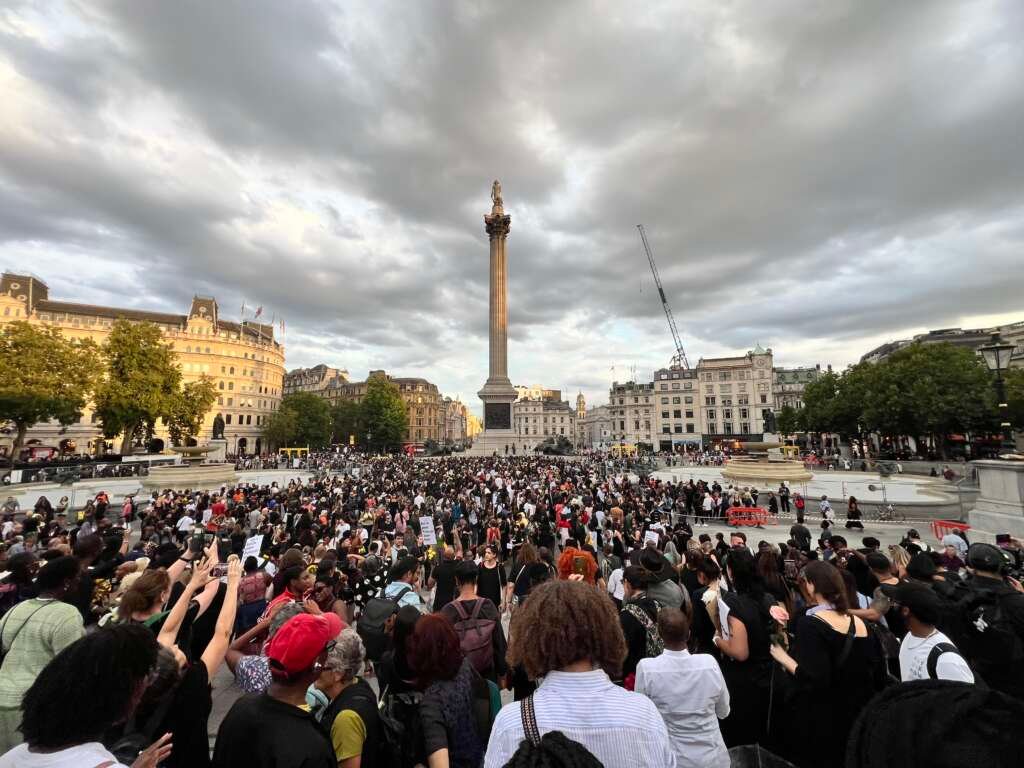
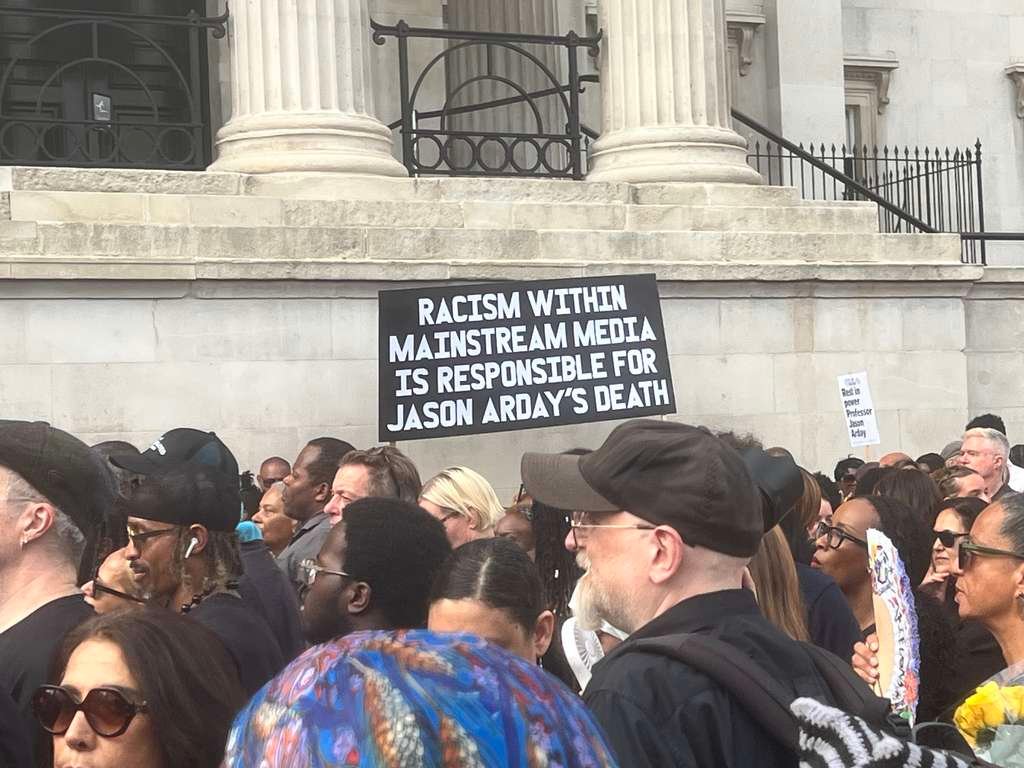
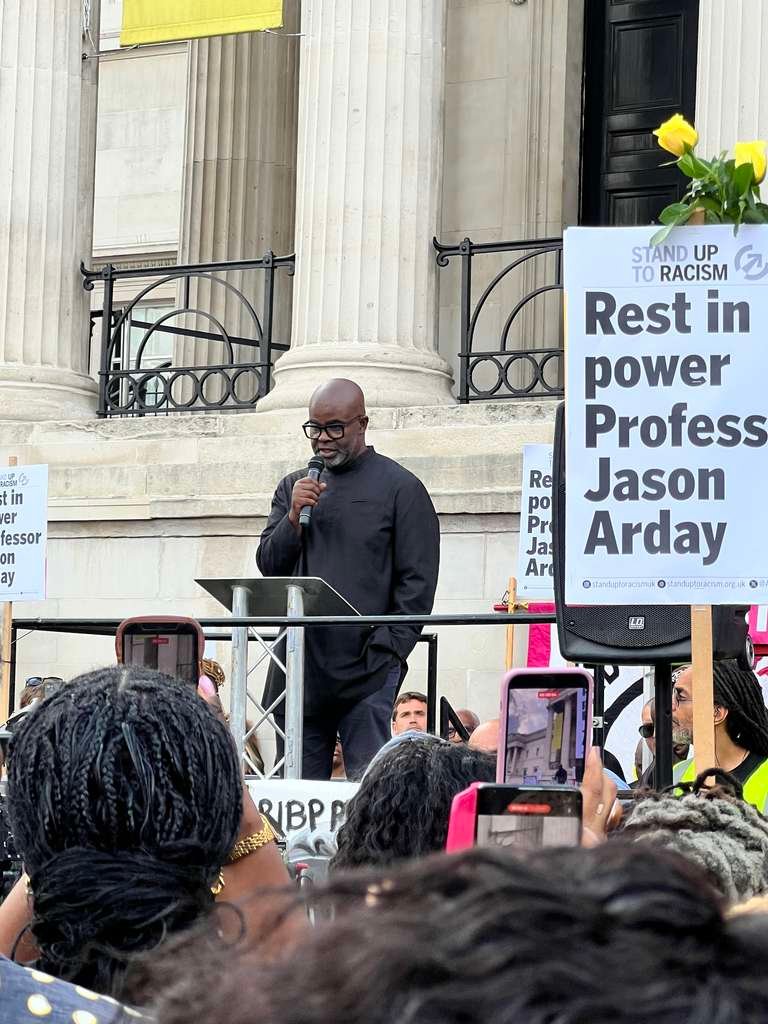
I got to Trafalgar Square early on Monday evening of August 17th. The vigil was due to begin at six on the steps of the National Gallery. Buskers were still playing, tourists were crossing the square, the stage was being prepared. People who had come for Jason Arday were beginning to recognise one another. I saw friends, exchanged a few words and stood around for a while. London was still going about its business.
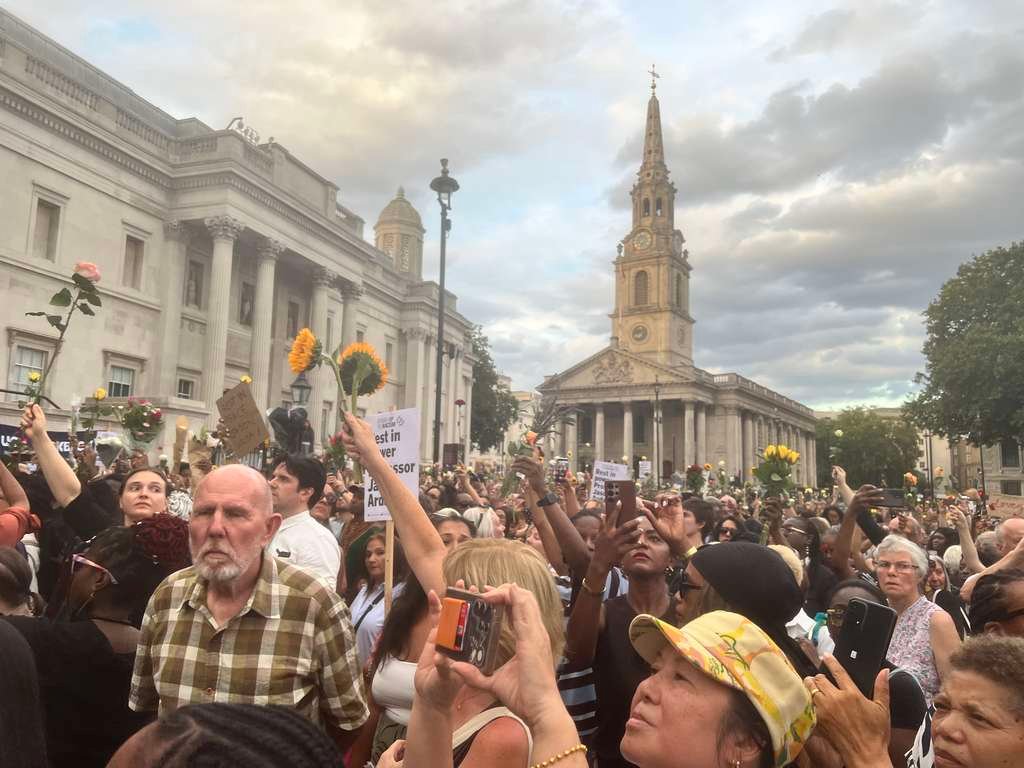
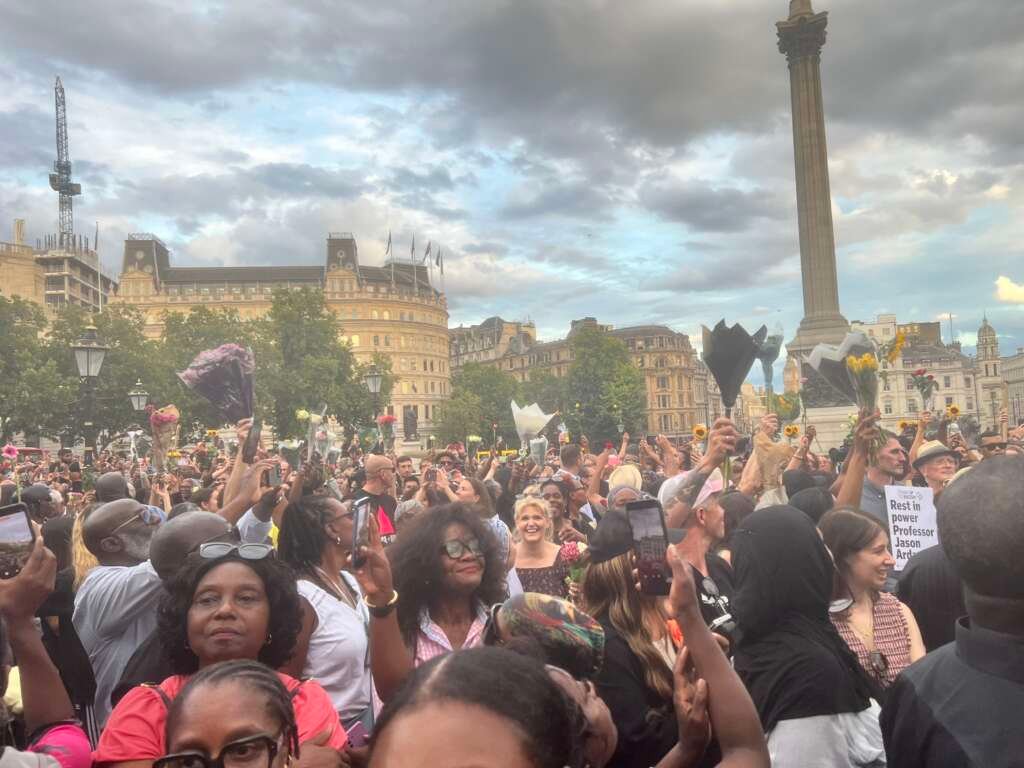
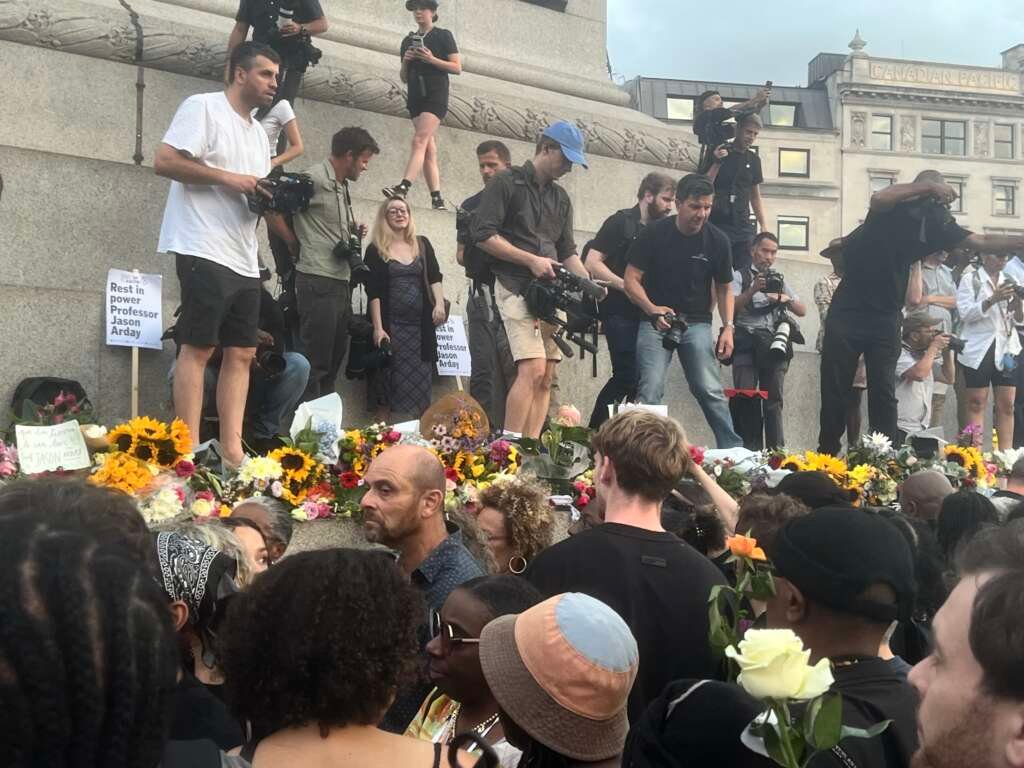
By six the square had changed. Flowers had appeared, placards were being held up and there were raised fists everywhere. I raised mine too. Stand Up to Racism, which had called the vigil, later estimated the attendance at around 30,000. I have no way of confirming that number from where I stood. I can say that the gathering was very large, and that the death of a university professor had brought thousands of people into central London on a Monday evening because something about his treatment had travelled far outside university life.
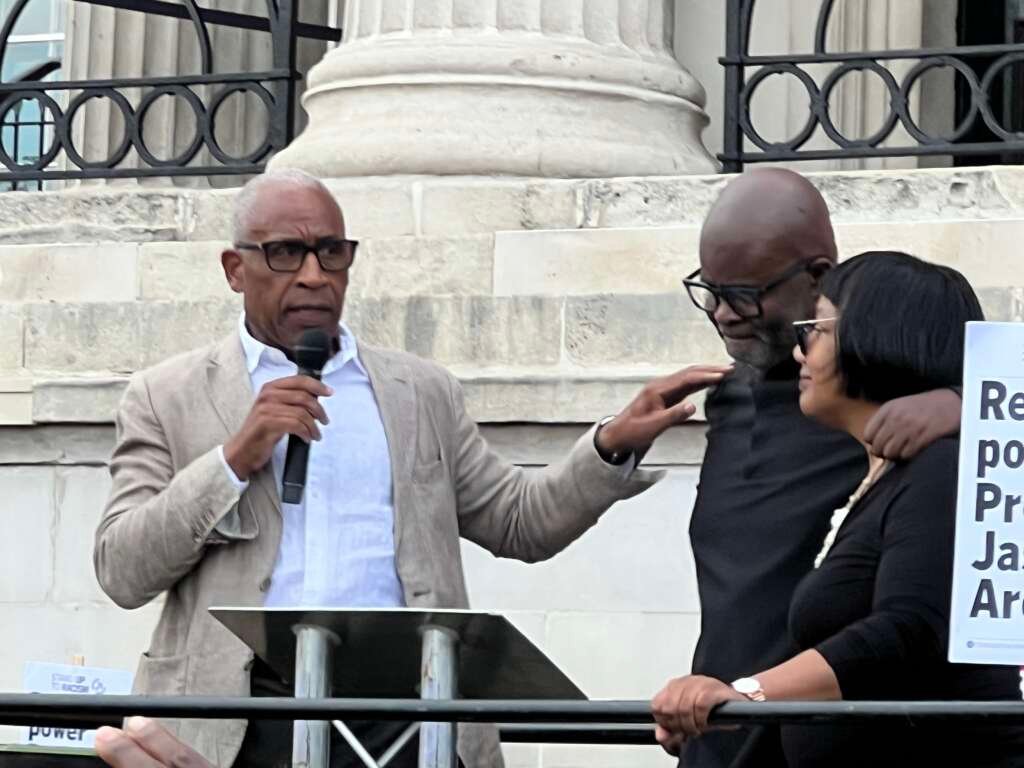
There were many tears. There was also a great deal of anger, and the two remained close throughout the evening. Bell Ribeiro-Addy, the Labour MP whose constituency includes Arday’s family home, opened by trying to return him to his family. They had lost a son and a brother, she reminded us, “not a professor, not a headline, not a symbol.” Later she read the family’s statement, ending with its appeal for kindness while people are alive.
Those words have stayed with me because Arday had spent several years being made into larger things. Cambridge’s youngest Black professor. The autistic child who had overcome extraordinary educational difficulty. The improbable academic success story. A demonstration of what inclusion could achieve. Then, with remarkable speed, came another vocabulary: alleged plagiarist, fabulist, DEI hire, proof that Cambridge had lost its judgement. After his death still more meanings gathered around him: racist persecution, press cruelty, institutional abandonment, the precariousness of Black achievement. By the time I stood in Trafalgar Square, one Black life had been made to carry an extraordinary amount of political meaning.
Diane Abbott, who in 1987 became the first Black woman elected to the British Parliament, placed the press at the centre of the evening’s reckoning. She spoke about the hundreds of stories produced about Arday within a matter of weeks and described the coverage as a vicious campaign, one that continued even after he resigned. Her presence carried a history of its own. Abbott belongs to a generation in which Black political representation in Britain remained closely tied to a wider language of anti-racist struggle and political Blackness.
Lord Simon Woolley, Arday’s friend and mentor and the founder of Operation Black Vote, spoke with far less distance. He had seen Arday shortly before he died and described the coverage as a “public execution” and a “lynching”. Sir Patrick Vernon, the Windrush campaigner, raised the question of institutional responsibility and duty of care. Misan Harriman, the photographer and activist who chairs the Southbank Centre, remembered the grace Arday continued to show others even during the hardest days of his own life. Harriman had been with him only days earlier. “The grace of this man, the kindness to give space even in the hardest time of his life, is something I will never forget,” he told the vigil. Jo Maugham KC, founder of the Good Law Project, spoke about accountability and the case for an inquiry. Beverley Knight sang Keep This Fire Burning; Jermain Jackman sang Fix You, chosen by Arday’s family. Weyman Bennett, co-convenor of Stand Up to Racism, had already described what happened to Arday as a racist witch-hunt.
Those words belong to a vigil and to people who believed that a man they knew had been subjected to something brutal. They do not settle the academic questions around him. Allegations concerning unattributed material in his doctoral thesis and other work were serious. Liverpool John Moores University had earlier considered complaints concerning his doctorate and the degree remained in place; Cambridge subsequently opened further inquiries when it said new information had been received. Arday resigned on 5 August and was found dead at his home on 14 August. The Metropolitan Police described the death as unexpected and said it was not being treated as suspicious. Cambridge itself had announced an investigation into the circumstances of his appointment two days before his death.
I want to keep some restraint around the death itself. People close to Arday have spoken about the severe distress he was experiencing, and his resignation statement described the toll taken by the allegations and public commentary. These facts tell us something about those weeks. They give me no access to his last hours, and I do not want his death turned into the final proof for one more argument made in his name.
The political argument begins before his death. I have come to think that Arday’s story sits where three ways of organising Blackness in British public life now meet. The first is the coalitional Blackness associated with British political Blackness: a language of shared struggle among people differently racialised through empire, migration and the state. The second is the representational Blackness now familiar inside universities, corporations, museums, publishers and cultural institutions, where an exceptional Black individual can become evidence of institutional progress. The third is a restorationist racial politics in which conspicuous Black advancement becomes evidence that inherited standards, authority and national possession have been displaced.
I had earlier thought of these as three racial regimes. “Logics” feels closer to what I mean. Their boundaries are untidy and they remain active together. Political Blackness survives in different forms. Institutional diversity predates Black Lives Matter. Restorationist racial politics draws upon a much older British story about race, nation and rightful inheritance. Arday became unusually exposed because all three could lay claim to the same life.
Political Blackness, Incorporation and the Exemplary Life
From the 1960s through the 1980s, “Black” could name a political position among people of African, Caribbean and South Asian descent facing the same post-imperial state: immigration controls, police harassment, workplace discrimination, racist violence, poor housing and hostile schools. The word was always disputed. Its strength came from refusing the census as political destiny. Different histories could join without being made identical. Work by Anandi Ramamurthy on Britain’s Asian Youth Movements, and more recently by Saffron East on the Black People’s Alliance, Southall Youth Movement and Southall Black Sisters, recovers this history of South Asian political Blackness: anti-racist and anti-colonial in its commitments, though never uniform across place, gender or generation.
I return to that older usage because it keeps me from treating Arday as an isolated success or failure. Political Blackness gave an individual injury a history larger than the individual. Workplace struggles, anti-deportation campaigns, tenants’ groups and student organisations could carry the meaning collectively. It also made possible something we have become less good at: solidarity around an imperfect person. Someone did not have to become exemplary, or innocent of every failing, before racism directed at him could be named. As that political language weakened, biography was increasingly asked to carry a weight that collective politics once helped to distribute.
There were good reasons for its weakening. Political Blackness could obscure anti-Blackness within minority communities and differences of class, religion, gender, sexuality and migration. African-Caribbean and South Asian people demanded names closer to their own histories. Tariq Modood’s influential 1994 critique argued that political Blackness could suppress specifically Asian experiences and confuse different forms of racial discrimination. Stuart Hall’s writing on “new ethnicities” registered another difficulty: no unified Black subject could remain untouched by questions of history, gender, sexuality and cultural difference. Gilroy, from another direction, resisted racial essence while showing how deeply race had entered British ideas of nationhood.
The state was changing its language as well. Multicultural policy, equality bureaucracies and census classifications organised communities through more discrete categories. These distinctions made some inequalities easier to identify. They also helped produce a different institutional politics of race, increasingly concerned with visibility, recognition and representation. Something was gained in specificity. Something of the older coalitional habit became harder to sustain.
That loss is critical here. Political Blackness had asked what could bring differently situated people into a common struggle. Institutional diversity increasingly asked who was present, who occupied the room and who could be announced as the first. When there are very few, every breakthrough means too much. The first Black editor, curator, chief executive, vice-chancellor or professor can become evidence of a much larger transformation. The person appointed begins carrying the institution’s story alongside his own.
Kobena Mercer saw one version of this problem in “Black Art and the Burden of Representation”, A small number of Black artists were continually required to speak for an entire racial community, so that each work and each aesthetic choice carried more meaning than it could reasonably bear. Arday’s case extends that burden in another direction. The scarce Black figure is asked not only to represent Black people. He can also be made to represent the institution’s claim that it has changed.
A decade after 9/11, Ferguson did not create a new British politics of race. By 2014, political Blackness had already been weakening for decades under the pressure of changing ethnic identifications, multicultural policy, the institutional language of diversity and the insistence of African-Caribbean and South Asian communities on histories that could not always be contained within a single political category. Britain also had its own long record of racist policing, deaths in custody, Stephen Lawrence, Mark Duggan, and the policing of Black communities. What Ferguson and the growth of Black Lives Matter did was accelerate and rename tendencies already underway, while giving them an international language capable of travelling with extraordinary speed through social media, universities, cultural institutions and corporate life.
After George Floyd’s murder in 2020, that language became much harder for British institutions to avoid. Black specificity, white privilege, allyship, trauma, lived experience and representation acquired a new public force. Some of this opened doors long kept shut and made forms of racism harder to deny. It also fitted more easily into institutional practice than the older political Blackness, with its arguments about policing, immigration, labour, housing, empire and the distribution of power. Banks, museums, universities and luxury houses could speak the language of representation much more readily than they could answer those larger questions. The shift was therefore neither simply American nor sudden. Black Lives Matter amplified a transformation in British racial politics that had already been taking place for some time.
The new language of antiracism was also unusually available to institutions. Protest could be translated into campaigns, appointments, scholarships, branding and public statements. None of these things was meaningless; some opened doors that had remained closed for a very long time. The difficulty begins when visible change becomes evidence enough of deeper change. A university could circulate the photograph of a Black appointment as proof of progress. Critics of diversity could take precisely the same photograph and give it another caption: lowered standards, capture, betrayal. In either case, the person in the photograph was being asked to signify far more than one appointment.
Cambridge had itself placed considerable public meaning around Arday’s story. His appointment carried prestige, and his biography allowed the university to speak about who could belong within an institution with its history. When serious questions later emerged around his scholarship, public claims and appointment, they therefore travelled along routes that had already been created. The dispute ceased to concern Arday alone. It became available as evidence in a much larger argument about diversity, merit and Cambridge itself.
The university became one of the places where this newer institutional language of diversity, representation, inclusion and belonging acquired particular force. Some of that change was hard won; Black academics remained markedly underrepresented at senior levels. The political response after Ferguson, Black Lives Matter and George Floyd’s murder intensified demands that universities ask who belongs inside them, who governs them and whose knowledge is valued. Sara Ahmed had already shown the strange life this language can acquire inside institutions. In On Being Included, diversity work produces policies, committees, statements and procedures which themselves become evidence of institutional virtue. The ability to describe a commitment to diversity can begin to stand in for deeper institutional change. The people expected to perform that change continue encountering structures that move much more slowly.
Priyamvada Gopal’s phrase for one version of this in the Arday tragedy is the “Oprahfication of antiracism”. Her criticism is directed at symbolic and superficial EDI and its attraction to stories of extraordinary individual overcoming. A person travels from adversity to spectacular success and the institution circulates that biography as part of its own moral story. Recruitment across levels, mentoring, intellectual development, retention, promotion and the creation of a secure field of Black scholars require much slower labour. Gopal’s point is especially sharp when she says that one highly visible appointment can come to substitute for precisely that depth.
Arday’s biography had enormous institutional appeal within this setting. Cambridge’s own 2023 announcement called his appointment the latest chapter in a “remarkable academic career”, foregrounded his autism, late speech and literacy, and announced that at 37 he would become the youngest Black person ever appointed to a Cambridge professorship. His work on race and inequality and his intention to inspire students from under-represented backgrounds were presented as part of the meaning of the appointment. That press release matters now because it shows how much biography had already been placed around the professorship before the later accusations began.
Arday therefore carried two kinds of institutional meaning. He was a scholar appointed to a chair. He was also a story through which an ancient university could speak about its openness to another Britain. Arday himself participated in telling that story and was committed to widening access; I see no reason to deprive him of agency. The difficulty lies in the amount of public meaning accumulating around one appointment.
There is a much older British history behind this capacity for incorporation. Perry Anderson’s 1964 essay “Origins of the Present Crisis” tried to explain the unusual durability of the English governing order. His subject was class and the formation of English capitalism. New social forces entered inherited structures without producing the kind of total institutional rupture associated with a classical bourgeois revolution. The governing order proved remarkably capable of adaptation, absorption and continuity.
Anderson was not offering a theory of racial incorporation. Reading him as though he had anticipated contemporary EDI would be absurd. The useful point is narrower. Institutional continuity has never required social immobility. An establishment can admit new people, develop new vocabularies and alter its public face while retaining a remarkable confidence in its own continuity.
Pratinav Anil alludes directly to this Andersonian insight in his New Statesman essay “The Fall of Jason Arday”. He questions the image of Britain’s elites as simply sealed against outsiders and points instead towards their historical capacity to absorb selected newcomers. Arday’s own rise complicates any pure exclusion story. Universities employed him, publishers wanted him, broadcasters wanted him, Cambridge appointed him and his unconventional biography became part of the attraction.
Anil’s third argument is more explicitly political. He links the weakening of organised labour and collective class politics with the growing symbolic power attached to exceptional individual advancement. I would be wary of turning this into the familiar claim that “identity politics replaced class”. British political Blackness had connected race with work, housing, policing, immigration and material inequality for decades. The more useful point in Anil is that contemporary institutions have become unusually comfortable celebrating the individual who escapes the circumstances of birth.
Put Anderson and Anil together and we get incorporation. I think Arday’s case requires another term: exemplarity. Incorporation brings an outsider inside. Representation gives his presence a meaning exceeding his individual job. Exemplarity makes that person carry proof that the institution itself has changed.
This is the second racial logic in its most dangerous form. The exemplary Black person begins to certify institutional progress. His biography carries moral weight. University publicity, publishers, journalism, invitations, public speaking and the individual’s own self-presentation can all reinforce the story. No conspiracy is needed. Once the story has become sufficiently large, failure acquires the same public reach as success.
Cofnas and the Racial Argument Inside the Academic Dispute
Nathan Cofnas is the connecting tissue between the academic dispute and the larger racial argument. The textual comparisons he produced deserve examination on their own terms. His racial politics tell us why those comparisons were immediately made to support an argument about Black presence, DEI and institutional corruption.
Cofnas came to the issue with an already developed theory of racial merit. He had argued publicly that under what he considered genuine meritocracy Black people would almost disappear from many elite positions and that the proportion of Black professors at Harvard would approach zero. His writings produced a major dispute at Cambridge; Emmanuel College ended his affiliation while the university later concluded that his published views remained protected by lawful academic freedom and free-expression rules. Gopal was right to emphasise that his intervention into Arday did not begin on politically empty ground.
The title of Cofnas’s intervention makes the move explicit: “DEI Fraud and Cover-Up at Cambridge”. A question concerning textual borrowing in one doctoral dissertation had become a proposition about diversity and institutional conduct. Cofnas presented side-by-side comparisons that required academic scrutiny and then placed them inside a wider claim: DEI had corrupted judgement and Cambridge had protected the result. The first claim can be tested against texts and procedures. The second belongs to a political argument Cofnas had already made before Arday became its example.
This distinction is central. Cofnas’s politics cannot make textual evidence vanish. Textual evidence cannot render the politics attached to it neutral. Arday entered a theory about Black presence in elite institutions that had already been formed, and his case gave that theory an unusually visible example.
By the time I was finishing this essay, Ghent University, where Cofnas held a postdoctoral position, had suspended him as a precaution while opening a preliminary disciplinary investigation. Cofnas said he expected to be fired.
Needless to say, the counter-offensive came quickly. Toby Young appeared in The Spectator under the admirably uncomplicated headline “Ghent university shouldn’t have suspended Nathan Cofnas”, portraying the decision as capitulation to a mob and warning that younger academics would learn to stay quiet when they encountered misconduct involving beneficiaries of DEI. Young also supplied a useful disclosure. The Free Speech Union, which he runs, had helped with Cofnas’s legal costs when he challenged Emmanuel College over the ending of his affiliation. The British culture war is sometimes considerate enough to supply its own footnotes.
Young’s intervention does something more revealing than defend Cofnas. Vulnerability is redistributed very quickly. In Young’s earlier Spectator piece, Arday had been a “DEI poster boy” and the subject of an extended Sacha Baron Cohen joke. Once Ghent suspended Cofnas pending investigation, the language shifted towards mobs, danger, silencing and persecution. The person receiving scrutiny changed, and the moral meaning of scrutiny changed with him.
There is a wider intellectual field around Cofnas that received far less attention during the first phase of the Arday coverage. HOPE not hate’s undercover investigation “Race Science Inc.” traced the Human Diversity Foundation and its public-facing publication Aporia to a contemporary race-science network drawing upon the institutional inheritance of the Pioneer Fund. The investigation documented HDF’s race-and-IQ research, attempts to move hereditarian arguments into more respectable venues, connections to far-right actors and explicit interest among some of its figures in white-nationalist and “remigration” politics. It also documented an effort to create a slicker public language around ideas whose historical genealogy runs through eugenics and scientific racism.
Cofnas has circulated in this milieu. Aporia has published and promoted racial-hereditarian arguments and presented opposition to them through the language of suppressed inquiry. This matters without requiring guilt by association. What matters is infrastructure: publications, donors, conferences, personal introductions, university affiliations, podcasts and political networks that help certain ideas travel from the fringe towards elite conversation.
Peter Thiel appears here, and this connection needs exact wording. HOPE not hate reported that in 2019 Thiel flew HDF founder Emil Kirkegaard out for a meeting about his work. Kirkegaard told the undercover reporter that Thiel then asked him to suggest other people, and that he named Noah Carl and Nathan Cofnas. Kirkegaard said both had received what he called the “Thiel treatment”; he also expressly said they received no money from Thiel. There is no basis in this evidence for saying that Thiel financed Cofnas’s campaign against Arday. There is solid evidence of contact, interest and access between Thiel and people moving through this race-science milieu.
A subsequent Arday-specific investigation by Nafeez Ahmed for Byline Times, “The Peter Thiel-Linked Race Science Network that Penetrated Cambridge University and Targeted Jason Arday”, draws these strands together and argues for a coordinated anti-Black campaign. Some of its claims are strongly contested, and I would keep a distinction between documented links and a claim of central coordination. The significant fact for my purposes is that Cofnas’s racial argument did not circulate in isolation. It belonged to an intellectual ecosystem where hereditarianism, anti-DEI politics, free-speech grievance and far-right racial ideas increasingly encounter wealthy and politically connected patrons.
The vocabulary within this world is usually more careful than the politics it can sustain. “Race realism”, hereditarianism, human biodiversity, meritocracy, free inquiry and opposition to DEI are different positions. Treating them as interchangeable would weaken the argument. The overlap becomes visible when historical inequality is redescribed as evidence of natural racial difference and policies intended to correct exclusion are treated as the corruption of merit.
Arday was unusually useful to this argument because Cambridge had already made him exemplary. The university and the wider publicity culture had given his biography public force. Cofnas could reverse that force. If Arday had been made evidence that inclusion worked, the allegations around him could be made evidence that inclusion was fraudulent. That is the precise point at which the academic dispute enters the third racial logic.
Restoration: Cambridge, the Kingdom and the Politics of Taking Back
I call this third logic restorationist because it is organised around a feeling of loss and a demand for recovery. Merit has been lost, borders have been lost, universities have been captured, national history has been degraded, ordinary speech has been constrained. Institutions are said to have fallen into the hands of metropolitan elites and ideological bureaucracies. Restoration promises to return them to an earlier condition of authority, truth and ownership.
I hesitate before placing Jason Arday’s name beside Tommy Robinson’s “Unite the Kingdom” rallies or Reform UK. He had no documented connection with either. His resignation and death have no established causal tie to those political formations, and his name was not central to their rhetoric. The connection I am making concerns a recurring political account of Britain in which the country has been taken from its rightful owners and must be won back.
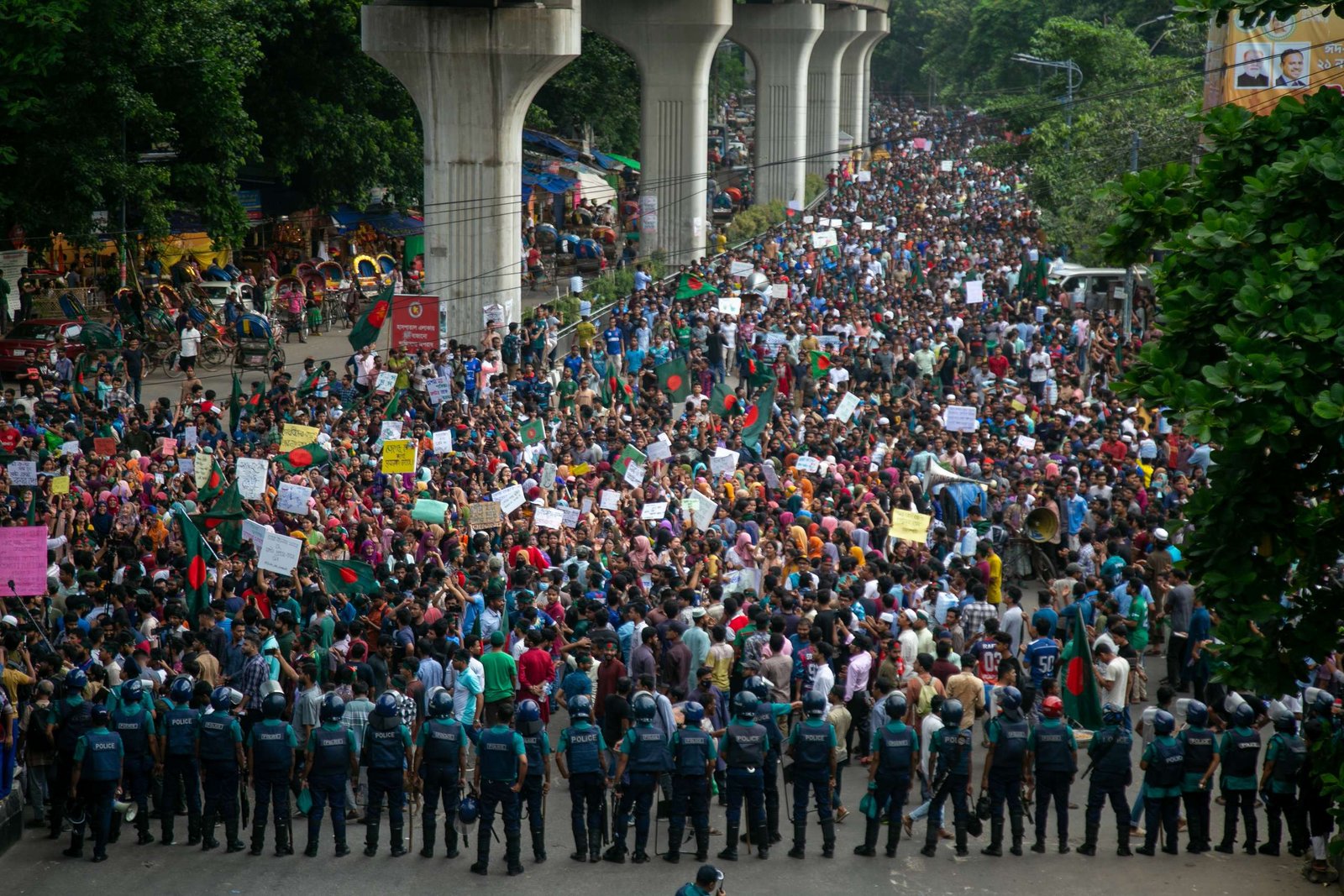
The first huge “Unite the Kingdom” march in September 2025 drew around 110,000 people according to the Metropolitan Police. Union flags and St George’s crosses filled central London; some participants wore MAGA hats and carried “send them home” placards. Elon Musk addressed the crowd by video, and Robinson called the gathering the spark of a cultural revolution. A second large London rally in May 2026 drew an estimated 60,000; Robinson invoked a coming “battle of Britain” and urged supporters towards electoral politics.
The crowd is loose and internally quarrelsome. Anti-Muslim agitation, migration, “two-tier” policing, Christianity, masculinity, national decline and free-speech grievance circulate together without producing a coherent programme. The common feeling is easier to identify: the country has been lost, official language conceals what has happened and transgression becomes evidence of courage.
The word “unite” catches me because British political Blackness also made a unity. It joined people whom the state and empire had already brought together through policing, immigration law, work and racism. Robinson’s unity is organised around threatened inheritance. It asks who properly owns the nation and which outsiders or elites have made that possession insecure.
Gilroy’s question in There Ain’t No Black in the Union Jack returns here. Who inhabits the national “we” naturally, and who is repeatedly asked to account for their presence? His later Postcolonial Melancholia described a Britain unable to work through the loss of empire, with imperial nostalgia, border anxiety and the ordinary multiculture created by imperial history sitting uneasily beside one another. “Battle of Britain” language makes that unease explicit by turning political disagreement into national emergency.
Cambridge matters unusually within such a political imagination. It is a university and also one of the institutions through which Britain narrates its own continuity, prestige and intellectual authority. A conspicuously Black professor inside Cambridge can therefore acquire a significance much larger than one faculty appointment. When questions arise about his record, a restorationist account is waiting: standards were lowered, diversity displaced judgement, officials concealed the consequences and the person willing to expose the truth was punished.
“Take back the university” sits very comfortably beside “take back the country.”
Reform UK gives some of this restorationist language an electoral home. Its current policy programme is explicit: Britain has declined because of failed leadership; the party exists to “restore Britain’s power”, defend British culture, ban DEI quotas, reject the “politics of guilt”, teach a “great and proud history” and protect a culture it says is built on Christian values. Nigel Farage has maintained organisational distance from Robinson, and the distinction should be respected. Their rhetoric meets around restoration, free speech, borders, national inheritance and hostility towards DEI.
This does not mean Cofnas is Tommy Robinson in academic dress. That would be intellectually lazy. Cofnas’s arguments require engagement on their own stated scholarly terms. What he provides is an academic dialect of the restorationist logic: under genuine merit, the racial distribution at the top would look very different; DEI obscures that truth; Arday becomes an empirical example of what happens when the institution refuses to accept it.
The three logics can now be seen together. Political Blackness says that racial injury belongs to a history and a collectivity. Institutional representation says that Black success demonstrates institutional progress. Restorationist racial politics takes an exemplary Black failure and uses it to argue that progress corrupted the institution. Arday was made to carry all three.
Hounding, Responsibility and the Right to Be Ordinary
A death cannot settle the argument about what preceded it, though it can make certain questions about scale, responsibility and restraint impossible to avoid.
The press carried the affair from an academic dispute into national public life. A distinction has to be maintained because journalists had legitimate grounds to investigate Arday’s work, his public claims and the circumstances of a senior Cambridge appointment. Hugh Muir has argued that a right-wing witch-hunt and serious journalism inhabited the same affair. I think that difficulty has to remain. Calling every investigation racist would leave us unable to speak seriously about academic integrity; pretending that the racial politics were incidental would be equally evasive. Arday’s death does not retrospectively make legitimate scrutiny illegitimate. It does, however, make the question of accumulation impossible to evade. A death cannot settle the argument about what preceded it; it can make questions of scale, responsibility and restraint much harder to avoid.
Scale creates another ethical problem. At the vigil Diane Abbott MP put numbers to the pursuit, referring to the 249 stories published in three weeks and calling it a vicious campaign that continued even after Jason had resigned. Coverage moved from academic work into charity activity, athletic feats, medical history, childhood memories, relationships and the publication of memoir. Each newsroom could defend its individual story. Arday had to live through all of them at once. Editors knew that Arday was autistic and vulnerable. They knew that he had asked for peace. They knew that he had resigned. They chose to publish 188 further pieces. An account of those choices does not need an unsupported verdict on causation.
Carole Cadwalladr called this a “digital lynching”. As it enters my argument, I remain uneasy with the phrase because lynching carries a specific racial history and should not become a loose synonym for savage publicity. Her phrase “digital lynching” draws attention to some of the same social acts: accusation treated as guilt, humiliation staged before strangers, punishment repeated for public consumption, and one Black person used to instruct others about the limits of their belonging. The analogy concerns what the public ritual is made to do. Her more useful point concerns the machinery of accumulation: attention produces traffic, traffic justifies more coverage, promotion creates more reaction, and reaction itself creates further stories. Responsibility becomes dispersed while the target experiences an environment. That is what Woolley’s phrase “public execution” made me think about at Trafalgar Square. Public punishment is exemplary because a person’s suffering is made to teach an audience something. By August, Arday was being asked to show the public what Cambridge, EDI and Black advancement had supposedly become. The story had exceeded the proper boundaries of questions about a thesis.
Cambridge cannot place itself outside this history. It has serious questions to answer about the appointment, credential checking and the handling of earlier complaints. Vice-Chancellor Deborah Prentice acknowledged that concern on 12 August and announced an investigation into the circumstances of the 2022 appointment and Arday’s subsequent time at Cambridge. The university was right to investigate. Its own 2023 publicity also demonstrates how actively it had participated in making Arday’s biography part of the public meaning of the appointment.
An institution that draws symbolic value from an exceptional life acquires responsibilities when the visibility attached to that life becomes dangerous. Cambridge has said it provided support to Arday, including mental-health and security measures in response to racist abuse. Those facts belong in any fair account. The larger question remains: why had one person been made to carry so much institutional evidence in the first place?
Scarcity is part of the answer. A university with a large and settled presence of Black professors has less need for the first, the youngest and the miraculous biography. One professor’s success carries less racial meaning. One professor’s failure carries less racial meaning too. A broad field distributes consequence.
There is, for me, a very simple measure of equality buried in this story: the right to be ordinary. A genuinely altered university would contain Black academics across the usual human range — brilliant, painstaking, awkward, generous, vain, ambitious, average, mistaken, inspired, disappointing. None would have to certify the intellectual worth of Black people. Their misconduct, when it occurred, would be investigated with the same seriousness as anybody else’s and would remain attached to the people who committed it.
That right to ordinariness is what institutional exemplarity quietly removes. The exceptional Black life has to succeed at a higher symbolic level because the institution has attached part of its own moral narrative to him. When the person fails, the failure travels along the same route. Success is made collective; failure becomes collective too.
Ribeiro-Addy’s opening words at the vigil now seem to me an attempt to interrupt this machinery. Son, brother, neither headline nor symbol. Public life had moved Arday steadily in the opposite direction. Professor, first, exemplar, alleged fraud, victim: every description made him available to another constituency and another argument.
Political Blackness, at its strongest, had room for solidarity without sainthood. It allowed people to say that racism directed at a flawed person remained racism. An individual did not have to become morally spotless before a community could object to the way power treated him. Institutional Blackness created another bargain, attaching collective hope to exemplary achievement. Restorationist politics accepted the same concentration of meaning and reversed its value.
Cofnas sits at the hinge between the latter two. He raised academic questions that deserved examination and inserted them into a racial argument he already held. The network around him shows that such arguments have an intellectual and political infrastructure. Toby Young’s intervention shows how quickly institutional consequences for Cofnas can become a free-speech drama. Robinson and Reform show the restorationist mood moving at another scale through the nation, borders, heritage and belonging.
I went to the vigil with some version of this argument already forming. Being there made it harder to keep everything neat. Woolley was struggling through grief. People around me were crying. The family wanted privacy and kindness. The easiest response would have been to produce a complete moral story in which every uncertainty disappeared.
I do not think Arday needs that from us. I can say he faced racist abuse. I can say the scrutiny became extraordinary in scale and range. I can say people close to him believed he was in severe distress. I can say serious questions existed about his scholarship and public biography. I can say Cambridge had made his race and adversity part of the significance of his appointment. I can say Cofnas placed the academic controversy inside a pre-existing argument about race, merit and DEI. None of this gives me the right to turn Arday’s death into proof of a case I want to make.
Late in the vigil, after the speeches and through the music, the square felt different. People stayed where they were and held one another. Flowers had accumulated around the steps. The anger remained, though grief had taken over the place for a while. I had gone there thinking about Britain’s racial politics and found myself thinking about the weight placed on individual Black lives when collective politics weakens and institutions become hungry for symbols.
The older coalitional Blackness tried to distribute the burden through solidarity. Institutional representation concentrated it inside exemplary lives. Restorationist politics takes the collapse of an exemplar and converts it into an argument for an older order. There is a long British history between those three positions, running through empire, class, migration, incorporation, Black politics, diversity and the present culture war. Somewhere inside those different histories lies a simpler question: whether equality can ever be real when one person is still required to stand for everybody else.
Jason Arday cannot settle those histories.
At Trafalgar Square, his family asked for something much smaller. Ribeiro-Addy had begun the evening by asking us to put down the professor, the headline and the symbol long enough to remember a son and a brother. Public life had done almost everything in the opposite direction. Arday had been made exceptional in success, exemplary in controversy and symbolic again in death.
He should never have been required to carry so much.
After everything that had been made to rest upon him, perhaps a serious racial politics begins with something much smaller: allowing him, finally, the right that had become so difficult in life — the right to be ordinary.