The American Midterms and the Politics of Economic Power
The Democrats have won Congress on promises of economic relief and political accountability. Yet many of the decisions shaping Americans’ economic insecurity remain beyond electoral control, protected by the lawful powers of ownership and investment. The election raises a question that goes deeper than the familiar contest between markets and the state: who governs capitalism, and to whom is that power answerable?
The Democrats’ victory in the American midterm elections of November 3, 2026, has brought together two questions that have rarely been adequately considered within the same political argument: the authority to conduct war and the authority to govern economic life. The eight-month war against Iran has imposed costs extending far beyond the battlefield, contributing to rising energy prices and public anger over the Trump administration’s conduct of foreign policy. It has also raised constitutional questions about executive power and Congress’s responsibility for decisions involving military force. According to an Associated Press voter survey, approximately six in ten voters considered the decision to use force against Iran wrong, although only about a third described the war as crucial to their congressional vote. The cost of living and government corruption were more widely cited. These concerns have converged in an electorate confronting the consequences of decisions made through institutions over which it exercises limited influence. The Democrats have acquired congressional power through that discontent, but the result tells us little about whether Americans have embraced a particular alternative to the economic policies of the Trump administration. What it does reveal is a growing tension between the extraordinary powers exercised by government and its apparent inability to provide lasting economic security.
The familiar argument between market freedom and government intervention offers an inadequate explanation. The American economy has never operated independently of public authority. Corporations possess rights established through law, creditors rely upon enforceable claims, financial institutions operate through publicly regulated systems, and private investment frequently depends upon infrastructure, subsidies and protections supplied by government. Yet the decisions made within these organisations can remain largely beyond the influence of the people affected by them. A corporation may close a factory, relocate production or restructure employment while remaining entirely within its legal rights. Workers and communities must then absorb the consequences, often turning to elected officials for assistance after the decision has already been made. The question is therefore how economic power has been distributed, whose interests it protects, who bears the consequences of its exercise and whether democratic government can alter those arrangements.
The war has made this problem unusually visible. The American state can mobilise extraordinary resources for military operations, impose sanctions, reorganise trade relationships and sustain public commitments with consequences extending across generations. Its capacity to act is considerable, although the division of responsibility between the presidency and Congress remains contested. Meanwhile, proposals to strengthen healthcare, protect employment or extend social provision are regularly confronted by arguments about fiscal restraint and the need to preserve conditions favourable to investment. The legal and political considerations governing these decisions are different, but the contrast requires an explanation. Government acts through priorities that determine whose claims are accommodated and whose burdens are treated as unavoidable. The extent of governmental power cannot be understood independently of the purposes for which it is used.
Hakeem Jeffries has identified affordability, accountability and constitutional government as priorities for the incoming Democratic majority. In his November 4 letter to House Democrats, he proposed reversing Medicaid cuts, restoring food assistance, extending Affordable Care Act subsidies, removing Trump’s tariffs and ending the Iran war. Senate Democratic leader Chuck Schumer has similarly emphasised affordability while warning against treating the electoral victory as an unrestricted mandate for the party’s entire programme. Senator Chris Van Hollen has argued that ending the war, confronting corruption and addressing the material difficulties of working Americans must proceed together. These priorities reflect a coalition whose members agree upon the need to challenge the administration but hold different views about how extensively American economic arrangements should be changed.
That disagreement is consequential. Abdul El-Sayed’s advocacy of Medicare for All and higher taxation of extreme wealth belongs to a different conception of economic reform from the more moderate approaches associated with other incoming Democrats. Sherrod Brown’s return to the Senate brings the experience of industrial decline and organised labour into a congressional coalition that also contains strong advocates of market competition and private investment. The Democrats will possess the power to investigate the administration, set legislative priorities and use Congress’s control over public spending. They will also face a Republican president with the power to veto legislation. Their victory therefore opens a dispute over the direction of economic policy under circumstances in which political power remains divided.
The immediate temptation will be to judge the new Congress by the amount of relief it can deliver. That is understandable when households are struggling with healthcare, housing, energy and food costs. But the legislation that provides relief also determines what businesses can be required to do, what protections citizens can claim and the conditions under which public resources support private enterprise. A subsidy can make an essential service affordable while leaving considerable control with the companies providing it. Regulation can change the responsibilities of those companies without changing their ownership. Labour protections can alter the balance of power between employers and workers even when investment remains privately controlled. The Democrats’ economic programme should be examined through these differences, because each represents a distinct answer to the question of who is entitled to make decisions affecting other people’s lives.
An Unsettled Economic Majority
The division between moderate and progressive Democrats is commonly presented as a disagreement about the size of government. Their actual programmes reveal a more complicated argument about economic organisation. In February, the New Democrat Coalition published an Affordability Agenda proposing reforms to housing, healthcare, energy, competition and family support. It called for the construction of four million homes over a decade, changes to zoning and permitting, increased housing tax credits, a higher minimum wage and stronger protections against medical debt. The Congressional Progressive Caucus’s programme, announced in April, addressed many of the same costs while placing greater emphasis upon public provision, labour rights and restrictions on corporate practices. Its proposals included measures against companies using personal information and artificial intelligence to set prices, lower prescription drug costs and expanded access to healthcare. The caucus also supports a longer-term transition towards Medicare for All. Both programmes envisage substantial government action. Their differences concern the means through which that action would occur, the discretion private organisations would retain and the rights that citizens might acquire.
Healthcare provides an immediate illustration. In its post-election analysis, KFF found that 49 per cent of voters trusted Democrats more than Republicans to handle healthcare, compared with 30 per cent who preferred Republicans. Fifty-four per cent said the administration’s policies had worsened their healthcare costs. These figures give Democrats a powerful political reason to prioritise the restoration of insurance subsidies and the reversal of Medicaid reductions. Yet the immediate objective of making treatment affordable leaves important decisions unresolved. Public subsidies can help households purchase private insurance while preserving the commercial organisation of coverage. Insurers continue to administer benefits and operate within a system whose rules determine the treatment patients can obtain and the expenses they must bear. Regulation has already limited some of that discretion through coverage requirements and consumer protections. A greater public role in financing can also weaken the dependence of healthcare upon employment, improving the circumstances under which workers change jobs or negotiate with employers. The character of reform depends upon the protections provided, the requirements placed upon insurers and the alternatives available to patients.
A more extensive public programme would reorganise financing, although it would still require decisions about hospitals, medical labour, providers and the allocation of resources. The political choice cannot be settled simply by asking whether healthcare should be public or private. The existing American system combines public expenditure, private administration, employer-based coverage and extensive regulation. The question for Congress is which decisions should remain within commercial discretion and which should become enforceable public duties. The Democrats can agree that Americans should pay less for healthcare while disagreeing over who should possess the power to determine the cost, availability and conditions of treatment. Their legislation will disclose these commitments more clearly than their shared campaign language.
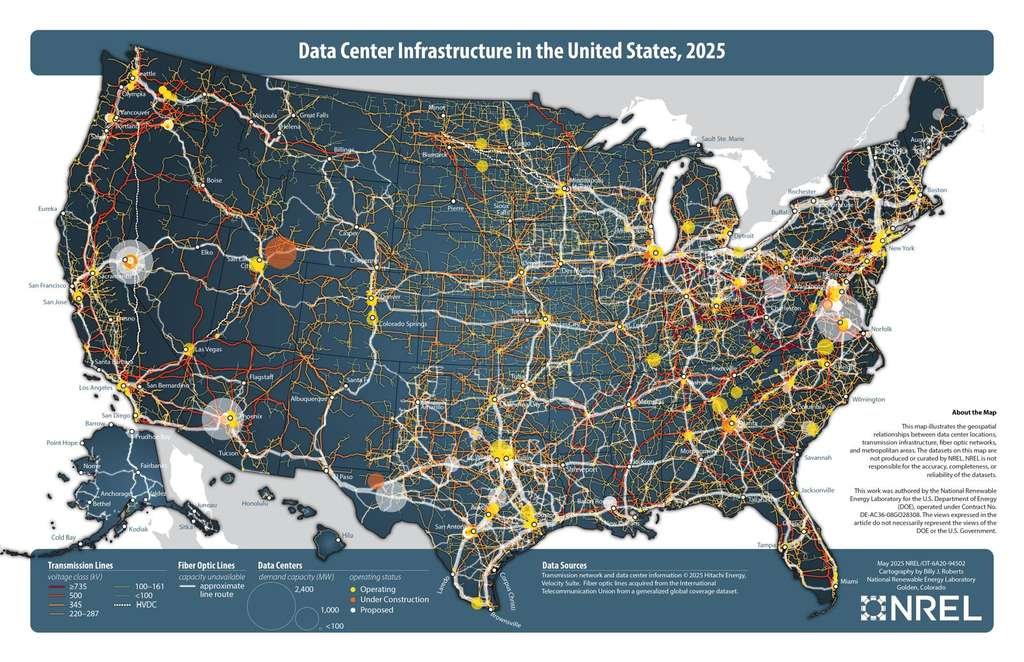
The same problem appears in the infrastructure supporting private investment. The New Democrats have proposed protecting households from increased electricity-grid costs associated with manufacturing and data-centre development. The issue may appear technical, but its consequences are substantial. A business requires electricity and transmission infrastructure to expand. Utilities and regulators must determine how much of the resulting expenditure should be recovered from the business and how much distributed across existing customers. A decision favourable to new investment may impose costs upon households that receive few direct benefits from it. Alternatively, requiring companies to bear more of those costs may influence where and how they invest. The dispute concerns the conditions under which private enterprise may draw upon collectively maintained resources. Congress and public regulators already have a role in determining those conditions. Their decisions can influence the economic advantages available to investors as well as the expenses borne by people who have little say over the investment itself.
Housing introduces another distribution of power. Restrictions on development can preserve the advantages enjoyed by existing property owners while limiting the supply available to tenants and first-time buyers. Removing some restrictions may increase construction, but the affordability of the resulting housing also depends upon land values, financing, rents and the treatment of housing as an investment asset. Public tax credits can encourage development while transferring public resources to private owners. Rental protections and publicly supported housing may strengthen the position of households otherwise exposed to market conditions they cannot influence. There are legitimate disagreements over the effectiveness and unintended consequences of these approaches. Their political significance lies in the relationships they create between property owners, tenants, developers, lenders and government.
These examples complicate the customary separation between market-oriented reform and more ambitious public provision. Greater competition can challenge established corporate privileges, particularly in industries dominated by a small number of firms. Public expenditure can expand access to essential services while preserving significant commercial power. Labour legislation may constrain managerial discretion without transferring ownership. The formal distinction between public and private activity tells us surprisingly little about how decisions are actually made. What counts is the content of the rules, the protections they establish and the ability of affected people to enforce them.
The new Congress will have to make such choices without a settled agreement about the ultimate direction of reform. Political coalitions often support the same legislation for different reasons. An insurance subsidy may be defended as a means of preserving private coverage or as an interim measure pending more extensive change. Public investment may be intended to encourage commercial activity while also providing an opportunity to impose new requirements upon participating companies. Such compromises can produce important gains. Their longer-term significance depends upon whether they alter the rights and capacities of those who would otherwise remain dependent upon private decisions.
The Authority of Ownership

To understand why these distinctions matter, it is necessary to consider how economic power acquired its present form. Property and corporate authority are commonly discussed as though they existed before government and required only protection against interference. Their history is more complicated. Property depends upon enforceable legal claims. Corporations possess forms of continuity and limited liability created through law. Creditors enjoy different priorities when businesses fail, while workers and communities may discover that the losses they experience give them comparatively weak claims upon the assets of an enterprise. In The Code of Capital, Katharina Pistor examines how assets acquire legal durability, transferability and protection against competing claims. Her work helps explain why the advantages associated with ownership cannot be reduced to the successful exchange of goods and services. The rights attached to capital have been constructed through legal and political arrangements that governments continue to administer. They determine what owners may do, which claims take precedence and how the consequences of economic decisions are distributed.
Consider a company that decides to move production. It may possess legal rights to reorganise its operations, transfer assets and negotiate new financial arrangements. Employees whose livelihoods depend upon the enterprise have a different relationship to the decision. They may have contractual protections, collective bargaining rights or access to public assistance, but they seldom possess comparable influence over where investment occurs. The community that loses employment may have even fewer claims. The economic consequences of the decision are distributed far beyond the group entitled to make it. Governments are then expected to address unemployment, declining public revenues and the deterioration of local services. The power to decide and the responsibility to manage the consequences are lodged in different places. That separation is central to the problem of accountability within contemporary capitalism.
The development of political democracy did not eliminate it. The extension of voting rights gave citizens a means of influencing government while leaving substantial economic power in the hands of property owners and employers. Ellen Meiksins Wood pursued this historical contradiction in Democracy Against Capitalism. The struggles for collective bargaining, social insurance, public provision and labour protections arose partly because political citizenship offered insufficient protection against economic dependence. The American New Deal demonstrated that government could alter these relationships through law, but it also revealed the unequal distribution of the resulting protections. Agricultural and domestic workers were excluded from major initial provisions, preserving inequalities that disproportionately affected Black Americans. As Ira Katznelson documents in When Affirmative Action Was White, Southern legislators played an important role in shaping those exclusions. The achievements of American social democracy were considerable, but they were established through political compromises that also limited who would benefit.
By the middle of the twentieth century, economists were confronting the concentration of power within large corporations. John Kenneth Galbraith argued in American Capitalism in 1952 that powerful businesses might be restrained by trade unions, organised buyers and other bodies capable of negotiating with them. He called this countervailing power. The argument emerged from an economy in which large corporations and organised labour had become dominant features of industrial life. It challenged the expectation that competition among individual market participants would necessarily prevent concentrations of power. Galbraith’s critics, particularly George Stigler, questioned whether the evidence demonstrated that such countervailing organisations emerged wherever they were needed or that they consistently benefited society. Those criticisms were important. Trade unions could secure gains for their members while leaving other workers unrepresented, and organised producers could obtain advantages at the expense of consumers. As Ibanca Anand shows in her 2026 study of the controversy, the dispute also concerned the boundaries of economic explanation during the Cold War. Whatever the limitations of Galbraith’s theory, the concentration of economic power could not be adequately explained without examining the organisations capable of challenging it.
The political significance of employment itself had been identified earlier by Michał Kalecki. Writing in 1943, he argued that employers might resist policies capable of sustaining full employment even when those policies could be compatible with profitability. His explanation concerned the discipline imposed by the possibility of unemployment. Workers who feared losing their jobs were less able to challenge management, while those confident of obtaining alternative employment possessed greater bargaining power. The argument arose under wartime conditions quite different from today’s economy, but its central insight remains relevant to public policy. Employment security affects the control employers exercise over workers. Government programmes that expand production may increase employment while leaving existing relations of workplace power largely intact. Stronger collective bargaining, portable benefits or protections against arbitrary dismissal can change those relations even where ownership remains unchanged. A policy may improve economic performance and still leave important questions about the distribution of power unresolved.
There is a more extensive difficulty for elected governments. They depend upon private decisions concerning investment and employment for economic growth, public revenue and much of their political legitimacy. In Politics and Markets, Charles E. Lindblom described this as the privileged position of business. Corporate influence extends beyond lobbying, campaign finance or direct access to politicians. Governments must anticipate the consequences of business decisions because those decisions affect the economic conditions for which elected officials are held responsible. A company may postpone investment or relocate production without organising a campaign against the government. Its actions can nevertheless affect employment, tax receipts and the prospects of entire regions. A trade union may lobby Congress for higher wages. A corporation may lobby Congress as well, but it also possesses the power to make investment decisions that can create pressures Congress is then expected to manage. The difference has profound consequences for democratic accountability. Political influence arises partly from the ordinary functions private firms perform within the economic system.
This does not make governments powerless. Their legal and fiscal decisions help establish the circumstances under which investment occurs. They can regulate corporate conduct, provide alternatives to private provision, support collective bargaining and attach conditions to public assistance. But they operate under pressures that make some forms of intervention politically costly. A government seeking to improve employment may hesitate to impose requirements that major investors oppose. A government promising affordable services may rely upon commercial providers whose pricing and administrative decisions it subsequently struggles to control. The dependence of political power upon private economic activity can limit reform even when a legislative majority has been elected to pursue it. Lindblom’s argument is therefore particularly relevant to the Democrats. Their powers in Congress will be considerable, but many of the organisations on which their economic promises depend will remain under private control.
Fiscal policy provides another way of examining this relationship. In The Capital Order, Clara E. Mattei examines austerity in Britain and Italy after the First World War, arguing that fiscal and monetary restraint helped restore established relations of ownership and employment during a period of intensified working-class demands. Contemporary American policy has different origins and circumstances. The federal government continues to run substantial deficits, and the 2025 reconciliation legislation is projected to increase borrowing overall. Yet the law also reduces projected Medicaid expenditure by approximately $1.2 trillion and food-assistance spending by $211 billion over 2026–35, according to the Congressional Budget Office. These reductions occur within a fiscal framework that sustains other commitments, including spending associated with defence and immigration enforcement. The question is not resolved by describing government as either expansive or restrained. Public responsibilities are being reorganised, with consequences for households whose security depends upon healthcare and food assistance. Decisions about what the state will finance, and what individuals must secure through wages or private resources, also influence the power employers and commercial providers possess.
The larger issue is whether democratic government should concern itself more directly with the power exercised within enterprises. Robert A. Dahl asked in A Preface to Economic Democracy why workers should remain largely excluded from decisions affecting their livelihoods when democratic participation is considered appropriate to political government. Employee ownership and democratic management offer possible ways of redistributing control over investment, employment and economic returns. Yet the experience of worker participation suggests that formal representation has limits. In a 2022 study of codetermination, Simon Jäger, Shakked Noy and Benjamin Schoefer found generally small or modest positive effects upon worker and firm outcomes and limited evidence of substantial aggregate consequences. Existing arrangements often provide consultation and representation without transferring decisive control over the direction of enterprises. The findings suggest that the presence of workers within corporate governance must be distinguished from the powers they can actually exercise.
Worker cooperatives provide a more extensive example. The Mondragon group in Spain’s Basque region demonstrates that significant businesses can operate through forms of collective ownership and worker participation. Yet these enterprises remain dependent upon credit, suppliers, customers and international competition. Not every worker employed within cooperative structures necessarily possesses equivalent membership rights. Collective ownership can change who makes decisions without freeing enterprises from the financial and competitive circumstances in which those decisions must be made. A wider system of economic democracy would consequently require attention to credit, investment, labour protections and the duties enterprises owe beyond their own membership. The democratic governance of a workplace may strengthen the position of its employees while leaving unresolved the interests of consumers, surrounding communities and those affected by its environmental consequences.
These wider claims are important. In Behind Marx’s Hidden Abode, Nancy Fraser examines capitalism’s dependence upon social care, ecological resources and political institutions whose contributions are frequently subordinated to the requirements of production. Workers may have legitimate reasons to defend employment in an industry whose activities impose costs upon surrounding communities. Patients may have interests that differ from those of the people employed to provide healthcare. Tenants, developers, construction workers and existing property owners may make competing claims upon the organisation of housing. Extending participation within enterprises cannot settle all these conflicts. Economic accountability would require arrangements through which those affected by decisions can make claims, contest their consequences and secure enforceable protections.
The historical record therefore presents a more complicated account of capitalism than either its defenders or critics sometimes allow. Economic power has been repeatedly reorganised through law, public provision, collective bargaining and political struggle. Ownership has never supplied a complete answer to the question of who should govern production, investment and the distribution of economic risks. Nor has government intervention necessarily made the resulting arrangements more democratic. Public policies can protect existing privileges or alter them. The distinction depends upon what powers they establish, whose claims they recognise and whether those making consequential decisions can be held to account.
After the Ballot
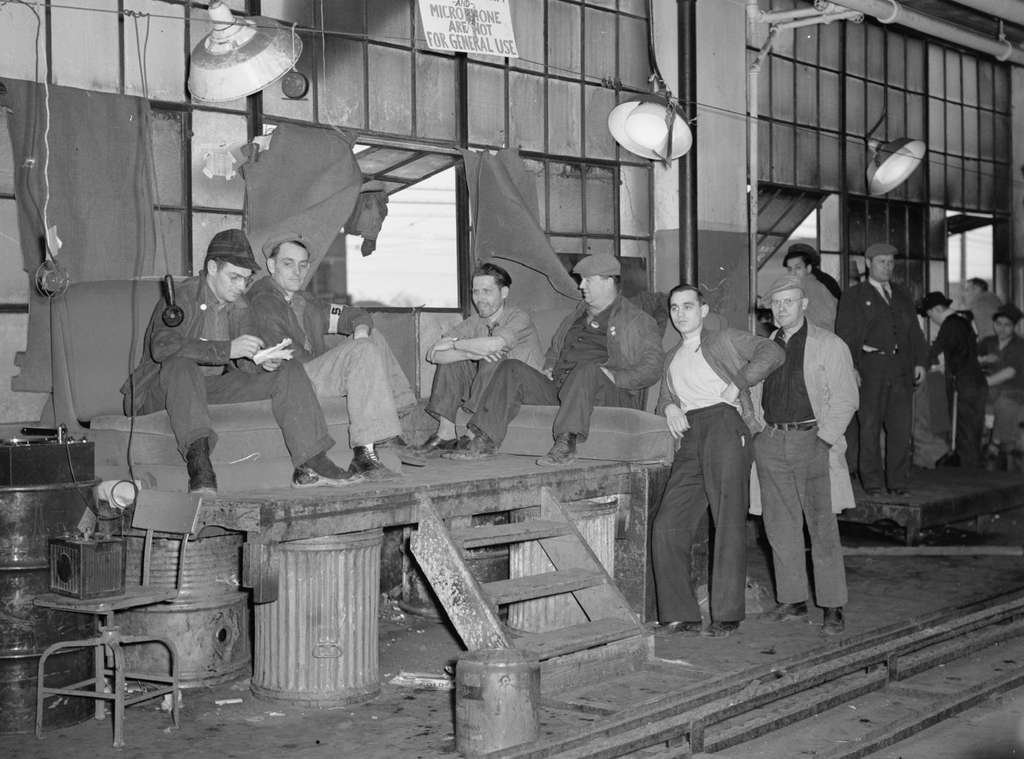
The decline of organised labour offers one measure of how much economic power has become harder for ordinary Americans to challenge. In 1983, 20.1 per cent of American wage and salary workers belonged to a trade union. By 2025, that proportion had fallen to 10.0 per cent, according to the US Bureau of Labor Statistics. The latter estimate excludes October because of the federal shutdown, making it less directly comparable with earlier annual averages, but the longer decline is unmistakable. Union membership in the private sector stood at only 5.9 per cent in 2025. The contraction reflects changes in industrial employment, employer opposition, legislation and the international organisation of production. Collective bargaining has never represented everyone, and its institutions have sometimes reproduced inequalities of their own. Nevertheless, it has given workers a means of challenging decisions that might otherwise remain entirely within managerial control. Its weakening has reduced the capacity of many Americans to exercise collective influence over the enterprises on which their livelihoods depend.
This helps explain a contradiction that the midterms have made especially visible. Voters possess the collective capacity to remove congressional majorities, but their influence over everyday economic decisions is far more limited. Zygmunt Bauman, writing in In Search of Politics, examined how individuals were increasingly expected to manage risks originating in organisations beyond their control. Employment insecurity, inadequate social protection and the withdrawal of public services could be experienced as personal difficulties even when their causes lay within wider economic arrangements. The problem concerned the means through which such experiences could become subjects of collective action. The November election demonstrates that Americans retain considerable political agency. Whether that agency can be translated into more durable influence over investment, employment and essential services remains the central difficulty.
The new congressional majority will face immediate demands for relief that cannot be postponed until the larger problems of economic democracy have been settled. Millions of households have reasons to demand affordable healthcare, secure employment and protection against rising costs. The power to investigate possible abuses of executive power is also an essential constitutional responsibility. Such purposes have value in their own right. Their longer-term political significance, however, will depend partly upon the protections and requirements established through the measures intended to achieve them. Restoring insurance subsidies can provide urgent assistance. Strengthening the rights of patients to challenge denial of coverage or restricting practices that expose them to arbitrary costs would also affect the discretion of insurers. Supporting industrial development can create employment. Making public assistance conditional upon enforceable labour standards, transparent financial requirements and protections for affected communities would influence how the resulting benefits are distributed. Housing policy can encourage construction while also determining the protections available to tenants and the responsibilities of developers receiving public support.
These examples establish a practical test of economic accountability. People affected by economic decisions must have some capacity to know how those decisions are made, challenge their consequences and enforce claims against those exercising power over them. The form of that capacity will differ across industries and relationships. Workers may require collective bargaining and protection against retaliation. Patients may need enforceable coverage rights and effective avenues of appeal. Communities affected by publicly supported investment may require transparent conditions, meaningful consultation and remedies when agreed standards are violated. Public authorities themselves must possess the ability and willingness to enforce the rules they establish. The purpose is to make decisions carrying substantial social consequences answerable through procedures capable of acting upon those consequences. Merely adding representatives to a board or asking companies to behave responsibly cannot guarantee that result.
Congress possesses important powers relevant to these arrangements, but the election has not given Democrats unrestricted control over economic policy. Congressional committees can investigate corporate practices, examine public contracts, question regulators and expose relationships between private interests and government decisions. Legislators can use appropriations and negotiations over public programmes to press for stronger conditions. More extensive changes to corporate duties, labour rights or the organisation of essential services generally require legislation and administrative enforcement. The president’s veto power and the divisions within Congress will constrain what can be enacted. These limitations make it especially important to distinguish between proposals that can be advanced immediately and reforms requiring broader political coalitions. Accountability cannot depend entirely upon the willingness of one congressional majority to act. It requires enforceable rights and protections capable of surviving changes in government.
The Iran war brings the argument back to the election and the responsibilities Congress has inherited. The conflict has raised constitutional questions about the use of military force while imposing economic costs felt through energy prices and public expenditure. The incoming Democratic majority will have to scrutinise the administration’s conduct of the war while responding to demands for relief at home. Its decisions over military funding, executive oversight and domestic spending will reveal how far it is prepared to exercise the powers voters have entrusted to it. Military expenditure and social provision involve different legal and practical considerations, but both require political decisions about the use of public resources and the burdens society is expected to bear. A Congress demanding accountability for the exercise of military power must also consider the terms on which public resources sustain private economic interests.
The history of capitalist democracy offers grounds for recognising what such political intervention can accomplish. Labour legislation restricted powers employers had previously exercised with little challenge. Social insurance changed the consequences of unemployment and old age. Public healthcare and other forms of social provision reduced the dependence of individuals and families upon private resources. These achievements were uneven, often compromised by exclusions and subsequently exposed to political reversal. Yet they altered relationships that had once appeared firmly established. The rights of ownership, the conditions of employment and the responsibilities of government have changed repeatedly through political struggle. Their present arrangement is neither inevitable nor beyond further change.
Who, then, governs capitalism in the United States? Employers, investors, creditors, insurers and corporate managers exercise extensive powers over employment, production, investment and access to essential services. Their decisions can determine the economic prospects of people who have little opportunity to influence them. Government is deeply implicated in this arrangement. It establishes and enforces property rights, protects contracts, regulates finance, supports private investment and decides which risks will be borne publicly and which will fall upon households and workers. Elected representatives are held responsible for economic conditions shaped by decisions that remain largely outside electoral control. This is the central contradiction facing the new Congress: it must respond to demands for economic security while operating within a system that grants private organisations considerable discretion over the conditions producing that insecurity.
The Democrats cannot resolve this contradiction through one election or legislative session. They can, however, challenge the terms on which economic power is exercised. Companies receiving public support can be required to meet enforceable standards concerning employment, investment and the use of public resources. Workers can be given stronger bargaining rights, patients better means of contesting insurers’ decisions, and communities greater protection against the consequences of corporate restructuring. Congressional investigations can expose abuses, while legislation and public spending can establish more durable safeguards. These possibilities face substantial constraints: a Republican president with veto power, competing priorities within the Democratic majority and the continuing dependence of government upon private investment. Yet none of these removes Congress’s responsibility to examine the privileges it helps sustain and the public protections that should accompany them.
The Democrats’ victory has returned Congress to the centre of political contestation without fundamentally altering the distribution of economic power. Their immediate responsibility is to provide relief to Americans struggling with healthcare, housing and the cost of living. That relief is necessary, but its longer-term significance will depend upon whether it also changes the relationships that repeatedly leave households exposed to economic insecurity. Subsidies can ease hardship while preserving the discretion of those who control essential services. Public investment can create employment while leaving workers with little influence over decisions affecting their livelihoods. Legislation can also restrict those powers, establish enforceable rights and give affected people greater capacity to contest decisions made over their lives. The differences will reveal what the Democrats understand by economic accountability, and how far they are prepared to pursue it. The state already governs capitalism through the laws, protections and public resources that sustain private economic power. The test of the Democrats’ victory is whether Congress can begin to make that power answerable to the people who live with its consequences.
Narendra Pachkhédé is a critic, essayist and writer who splits his time between Toronto, London and Geneva, and is the author of Form as History: When History No Longer Requires Us. His latest book, The Cinema of Unfinished Witnessing, is published by Daraja Press.