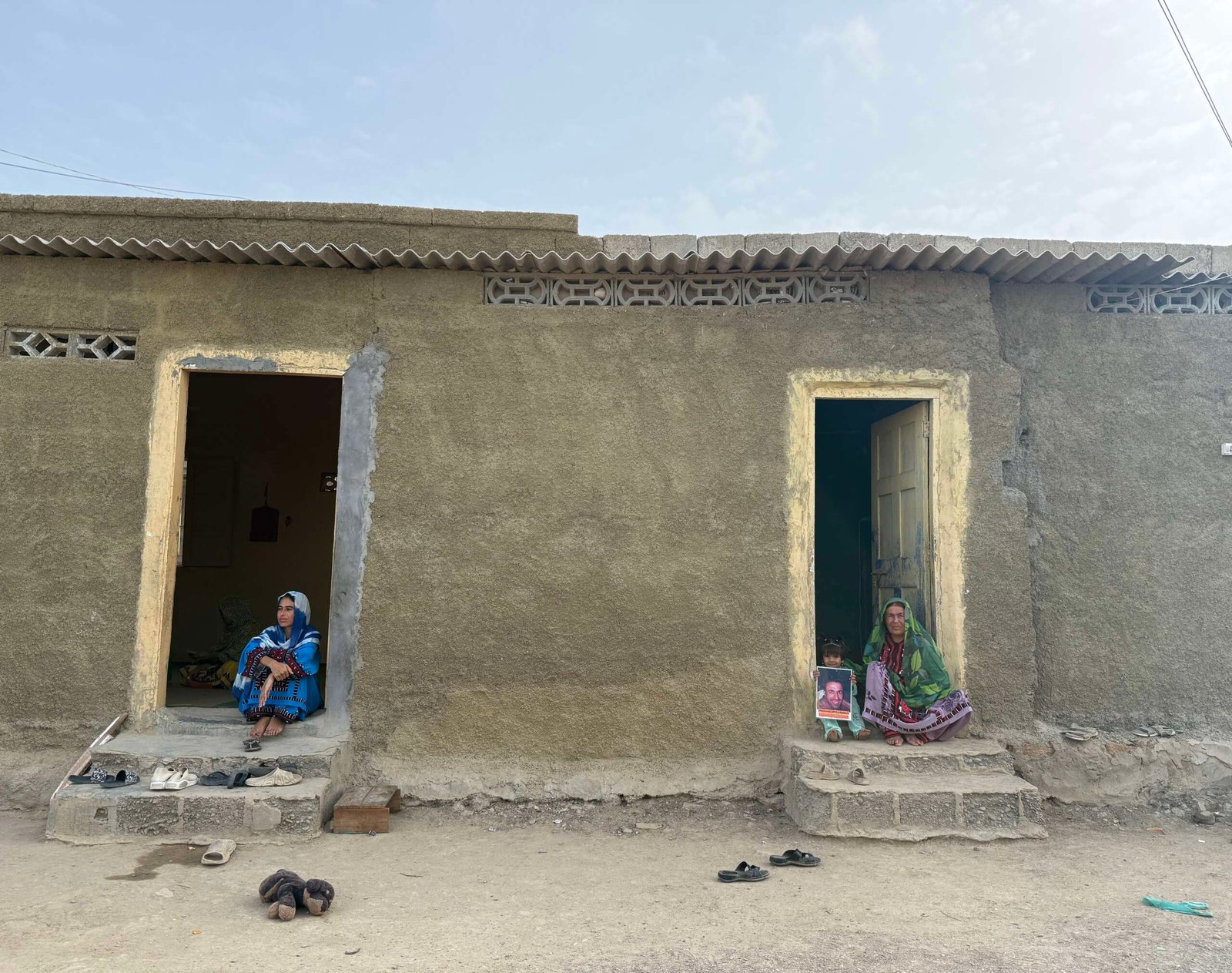
At around 6:30 p.m. on April 21, 26-year-old Fozia was startled by a sudden commotion inside her family’s home in Abdul Rehman Goth, a predominantly Baloch neighbourhood in Hawke’s Bay, Karachi. Armed men stormed the house, she recalled, their voices cutting through the panic, ordering everyone to remain where they were.Fozia said the men were dressed in civilian clothes and alleged that they belonged to the Counter-Terrorism Department and other security agencies. According to her, they took away her brother, Dad Shah, subjecting him to enforced disappearance for the second time.
Dad Shah, a Balochi writer, was previously enforcedly disappeared on August 11, 2023. He returned home 27 days later.
Fozia’s sister-in-law Humaira recalled that as soon as the children saw the armed men they began calling out Fozia’s name. Fearing that this might alert the men to her presence, she quickly told them to stop, hoping they would assume Fozia was not at home.
According to her, everyone in the family believed the raid was intended to arrest Fozia. Not for a moment did they imagine that the forces had come for Dad Shah.
Fozia is a human rights defender and a member of the Baloch Yakjehti Committee. Her activism has repeatedly placed her under pressure—she has received threats and has been arrested several times while participating in protests.
At the time Dad Shah was taken, his mother, Mahal, was at a nearby zigrana—a place where members of the Zikri community gather for prayer and remembrance. She recalled seeing several vehicles speed past her.
“I never imagined that my Dad Shah was being taken away in one of them,” she said. “They came like hunters. They struck and vanished.”
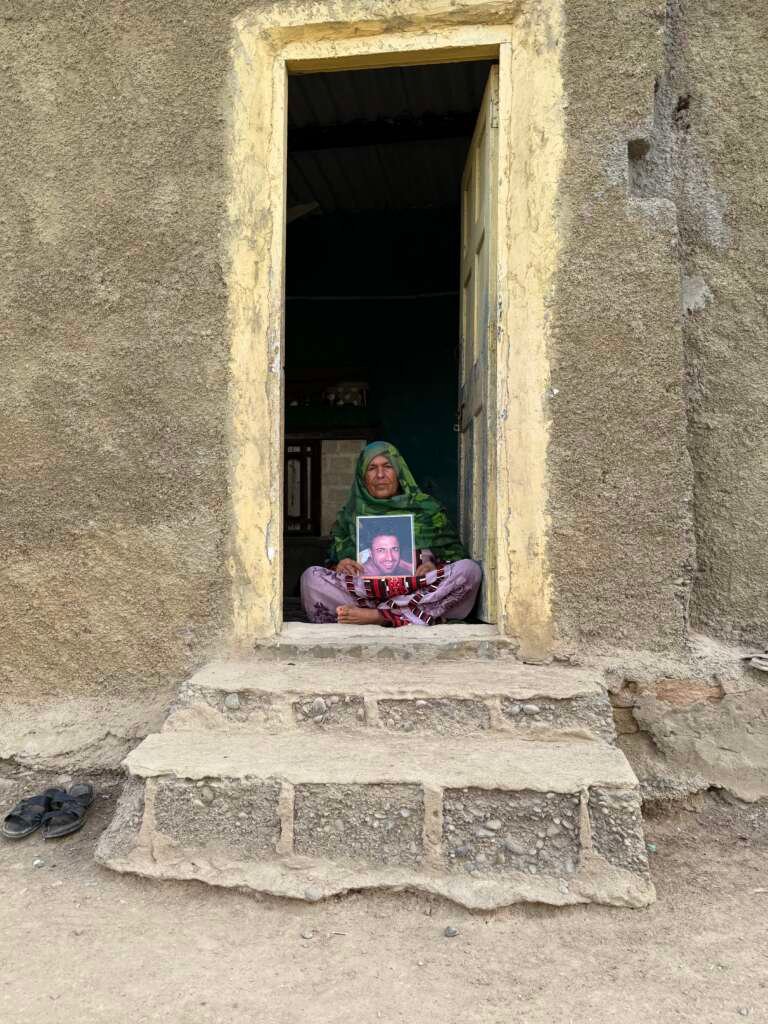
Because Dad Shah had already been forcibly disappeared once, Mahal believed he would be spared from enduring the same ordeal again. In recent months, she said, she had been more concerned for the safety of her daughter, Fozia, whose activism had repeatedly brought her under pressure than for her son.
—
Fozia said that when the forces took her brother away, she ran after them barefoot demanding to see an arrest warrant or a copy of the first information report. They gave her no explanation telling her only to go to the police station. Her elder brother attempted to film the raid, but his phone was confiscated.
During Dad Shah’s first disappearance, Fozia had not been at home. She often imagined that, had she been there, she might have confronted the men, demanded answers, recorded what was happening, and somehow prevented them from taking him.
This time, she was present, yet the experience left her with an even deeper sense of powerlessness.
“What could be more painful than watching someone you love being taken away in front of you and being unable to do anything?” she said. “No one should ever be made to feel so helpless.”
Fozia and her elder brother immediately rushed to the nearest police station. There, she said, the station house officer told them that a first information report could only be registered against “unknown persons.”
Fozia objected. She had witnessed the incident herself, she said, and had seen two police vehicles accompanying the forces who took Dad Shah. She insisted that, even if the suspects were recorded as unidentified, the presence of the police vans should be mentioned in the report.
According to Fozia, a police officer responded: “Police vehicles are also used by your BLA people.”
She interpreted the remark as an attempt to intimidate the family and discourage them from pursuing the case. The police did not register the FIR.
–
On April 25, Fozia booked a press conference at the Karachi Press Club. Her family urged her not to go, fearing that she might be arrested. But after the police refused to register the FIR, she felt she had little choice but to speak publicly.
The family also tried to persuade her elderly mother, Mahal, to remain at home. Mahal suffers from high blood pressure and they assured her that Fozia would be accompanied by other family members.
“But my heart would not allow me to let Fozia go alone,” Mahal said. “I wanted to stand beside her and protect her.”
Her blood pressure had already been troubling her that day, she remembered, leaving her anxious and restless. When she arrived at the press club, Fozia handed her a photograph of Dad Shah.
“I do not even remember whether I had sat down with the photograph in my hands,” Mahal said. “Everything happened so quickly. The next thing I saw was the police grabbing Fozia.”
Fozia said that when they arrived at the Karachi Press Club for the conference, one of the police officers told her that personnel had been deployed there for the previous three days. According to her, the officer said they had been instructed to wait because the authorities expected that she would eventually appear either to hold a press conference or stage a protest.
Mahal said that when she saw the police detaining Fozia, she felt as though another catastrophe had descended upon the family.
“They had already taken my son, and now they were taking my daughter,” she said. “For me, it felt like a moment of qayamat, as though the world were coming to an end.”
She clung to Fozia all while pleading with the police officers not to drag her so violently towards the police van. Moments later, Mahal said, the officers seized her and other family members as well and dragged them into the vehicle.
–
At the women’s police station, Mahal said, officers searched her and asked what she was hiding in her pindol [pocket]. Before she could respond, they reached into the pocket and pulled out her tasbeeh—the prayer beads she had been carrying while praying for Dad Shah’s safe return.
She pleaded with them to give the beads back.
“I was being locked away, but I did not want my prayers to stop,” she said.
Mahal, Fozia and other relatives were then confined in a small, dark lockup with three other women detained in unrelated cases. There was no light or fan and a persistent stench filled the cramped room. The smell made Mahal vomit repeatedly. She asked the officers to open the door so that she could breathe, but her request was refused.
Mahal said she could not comprehend how she endured the night. Her thoughts kept returning to Dad Shah. Was the room where he was being held even darker? Was he also choking in the same suffocating air?
“At least we had been detained publicly, and our family knew where we were,” she said. “But Dad Shah had been disappeared. We did not know where he was, in what condition he was being held, or what was happening to him.”
She was also consumed by fear for Fozia. Would the authorities keep her daughter in custody for longer? What might they do to her? As Mahal’s condition deteriorated and she continued to vomit, Fozia repeatedly called out to the officers, asking them to leave the door slightly open or allow her mother to step outside briefly for fresh air. According to the women, their pleas were ignored.
They remained in the lockup until they were released the following day. Denied the opportunity to speak at the Karachi Press Club, Fozia held the press conference from her family’s home and uploaded the recorded video herself.
Mahal said the family had originally moved from Gresha, Balochistan to Karachi in the hope of building a safer life. She had never imagined that the same kind of tragedy would follow them there.
An only child, whose parents both died, Mahal said she has no siblings or extended family to lean on.
“My children are my only support,” she said. “How am I supposed to survive when they themselves are in such danger?”
–
More than three months have passed since Dad Shah was taken, yet his whereabouts remain unknown. Fozia said that, in the early hours of the morning, she often finds her mother placing small cakes outside for the crows—an act of charity through which Mahal hopes her prayers will reach God and her son will return safely.
At night, Mahal repeatedly wakes at the slightest sound near the door, convinced that Dad Shah may have come home. Each time, Fozia gently tells her that no one is there.
Fozia tries to remind her mother that she is not alone in her grief. Across Balochistan, she tells her, many mothers are enduring the same uncertainty, waiting for sons who have disappeared.
“She tells me, ‘Look, Dr Mahrang is also imprisoned,’” Mahal said. “I tell her that I know. I keep a poster of Mahrang in my room.”
Mahal understands that her suffering is shared by many other families, but that knowledge offers little comfort.
“My pain may not be different from theirs,” she said, “but I still cannot bring my heart to rest.”
This Eid, Mahal returned to her hometown of Gresha to visit a sacred zigrana situated at the top of mountain Saheh. Among members of the Zikri community, she said, there is a belief that if a person reaches the shrine, offers prayers, and leaves behind a chadar, a detained or disappeared loved one may return.
Families of missing persons often travel there to pray, Mahal spoke. The climb is steep and difficult and she needed the support of one of her sons, who held her as she made her way to the top.
“We cannot protest now,” Mahal said. “Prayer is the only option left to us. Whatever form of prayer people tell us may help, we try it.”
The last time Dad Shah disappeared, he returned within a month. During those 27 days, the family protested almost every other day, demanding his release. This time, Mahal said, they have been left with little more than prayer and an overwhelming sense of helplessness.
Fozia said that her elder brother, Gul Khan, had repeatedly been told by local authorities’ personnel that she should remain silent, withdraw from activism, and stop protesting or speaking publicly. Dad Shah could be released if she complied.
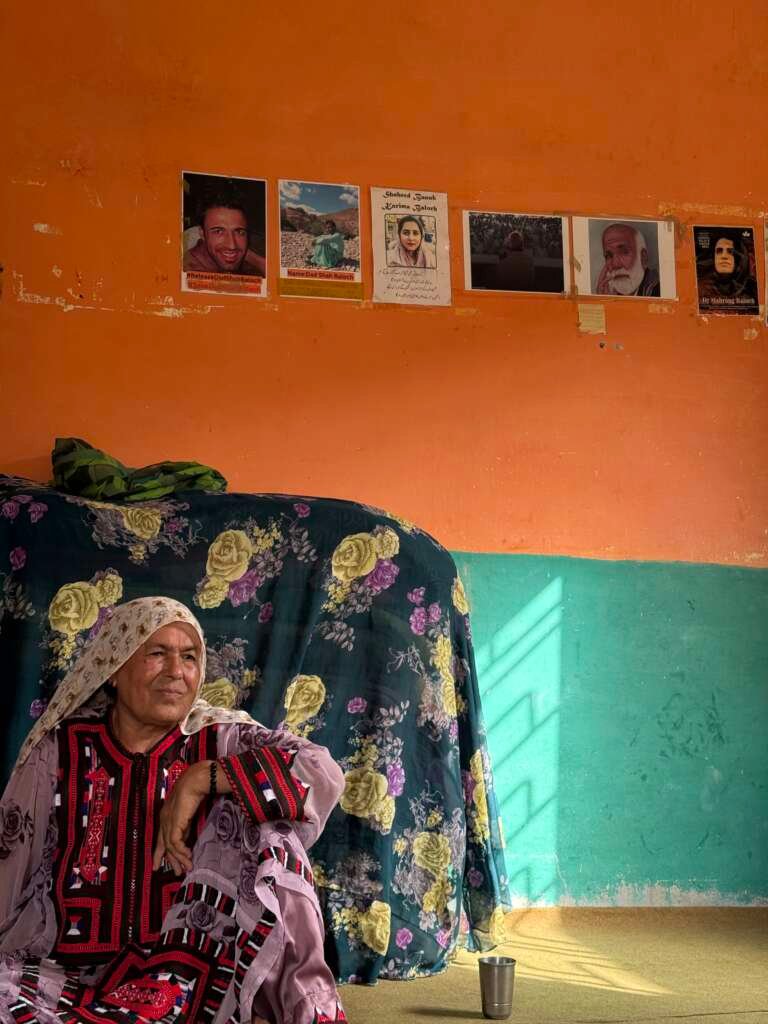
Within the family, Dad Shah had long been one of Fozia’s strongest sources of support. Whenever she faced FIRs, arrest or threats because of her activism, she said, he stood by her.
Fozia believes her brother’s disappearance is intended to pressure her into abandoning her peaceful campaign against alleged human-rights violations affecting her community.
“They want me to remain silent,” Fozia said. “By taking away the person who supported me most, they are trying to weaken my struggle. But I have witnessed the pain that has consumed families across Balochistan. I cannot turn away from it. I want enforced disappearances to end. If they end, there will no longer be a need for this struggle.”