Pakistan’s YouTube philosophy boom marks the rise of a vernacular counter-university: born of educational failure, religious anxiety, youth precarity, creator culture, and algorithmic theatre. Its promise is access. Its danger is the glamour of certainty before the discipline of thought.
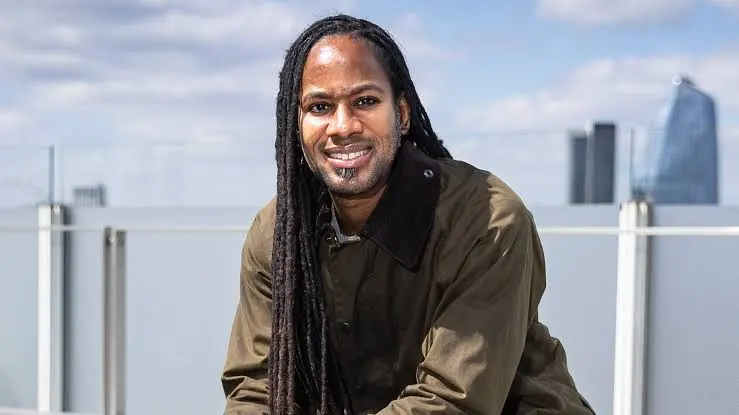
A recent graduation speech by Dr Nauman Naqvi at Habib University gives us a precise entry into Pakistan’s philosophy boom. Speaking to the Class of 2026, Naqvi paused over a word rarely granted to the young: seriousness. He recalled that when he described the graduating cohort as “serious,” a Habib alumna told him this was the first time she had heard someone use that word for her generation.
The remark cuts through the usual complaint about youth: distracted, cynical, performative, screen-damaged, incapable of depth. What if the turn toward falsafa now visible across Pakistani platform culture is not a craze for ideas, but a crisis of attention seeking sanjeedgi?
Naqvi is not speaking as a motivational academic elder. His work in Comparative Humanities places him at the crossing of anthropology, philosophy, Urdu literary-critical culture, and postcolonial pedagogy. He speaks from the classroom, from Karachi, and from the fragmentary postcolonial university, where forming students means giving thought a home institutions rarely provide.
Sanjeedgi gathers this burden. Naqvi does not confuse seriousness with solemnity. Sanjeedgi carries dignity, measure, self-command, a capacity to bear weight without turning bitter. It has its counterfeit too: the wish to appear profound, to gather the signs of importance, to mistake depth for display. That counterfeit finds fertile ground on digital platforms, where meaning is often staged, thought slips into performance, and the teacher risks becoming an influencer.
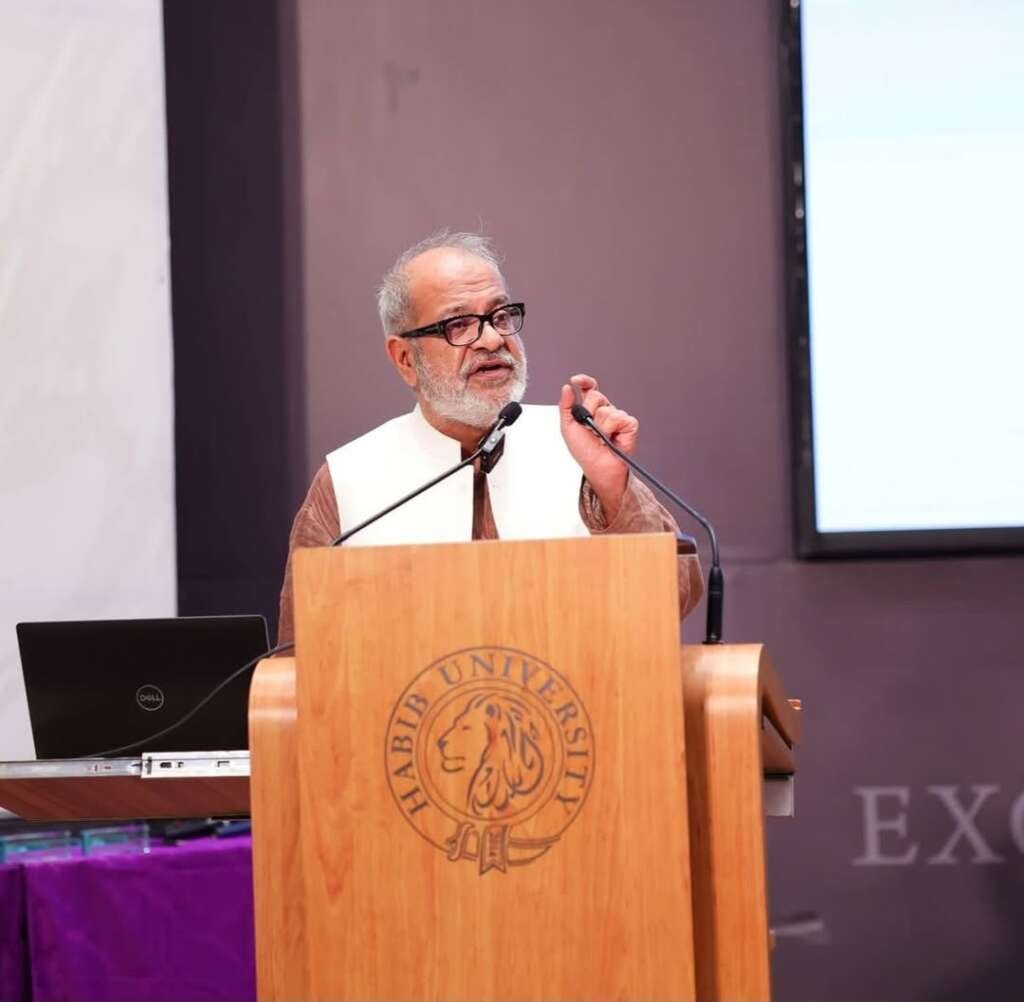
Yet the search itself should not be mocked. The turn toward philosophy, religion, ethics, atheism, Iqbal, Nietzsche, Ghazali, science, masculinity, and modernity speaks to a generation trying to give shape to its bewilderment. It is looking for words after public language has frayed. Naqvi’s lesson is exact: attention begins the labour of seeing things as they are. The Pakistani philosophy boom, at its best, stages that struggle: attention against distraction, sanjeedgi against spectacle, judgment against the speed of content.
Philosophy as Mass Culture
Before falsafa went viral in Pakistan, philosophy had already begun to lose its old address. It no longer belonged securely to the department, the seminar room, the inherited canon. It surfaced elsewhere: on television, online, in public lectures, in languages and locations that had long sat outside philosophy’s official self-image.
Michael Sandel’s Justice was one early sign. In 2009, a Harvard course escaped the university and became a public event. In Japan, NHK turned moral philosophy into civic theatre. The University of Tokyo’s record of “Harvard Hakunetsu Kyōshitsu in Japan” notes that Sandel’s 2010 lecture, co-hosted with NHK, asked whether Ichiro’s salary, four hundred times that of a Japanese teacher, was morally justified, and whether President Obama should apologize for Hiroshima and Nagasaki. Merit, pay, war memory, responsibility, apology: abstract ethics entered public life because it gave unease a form.
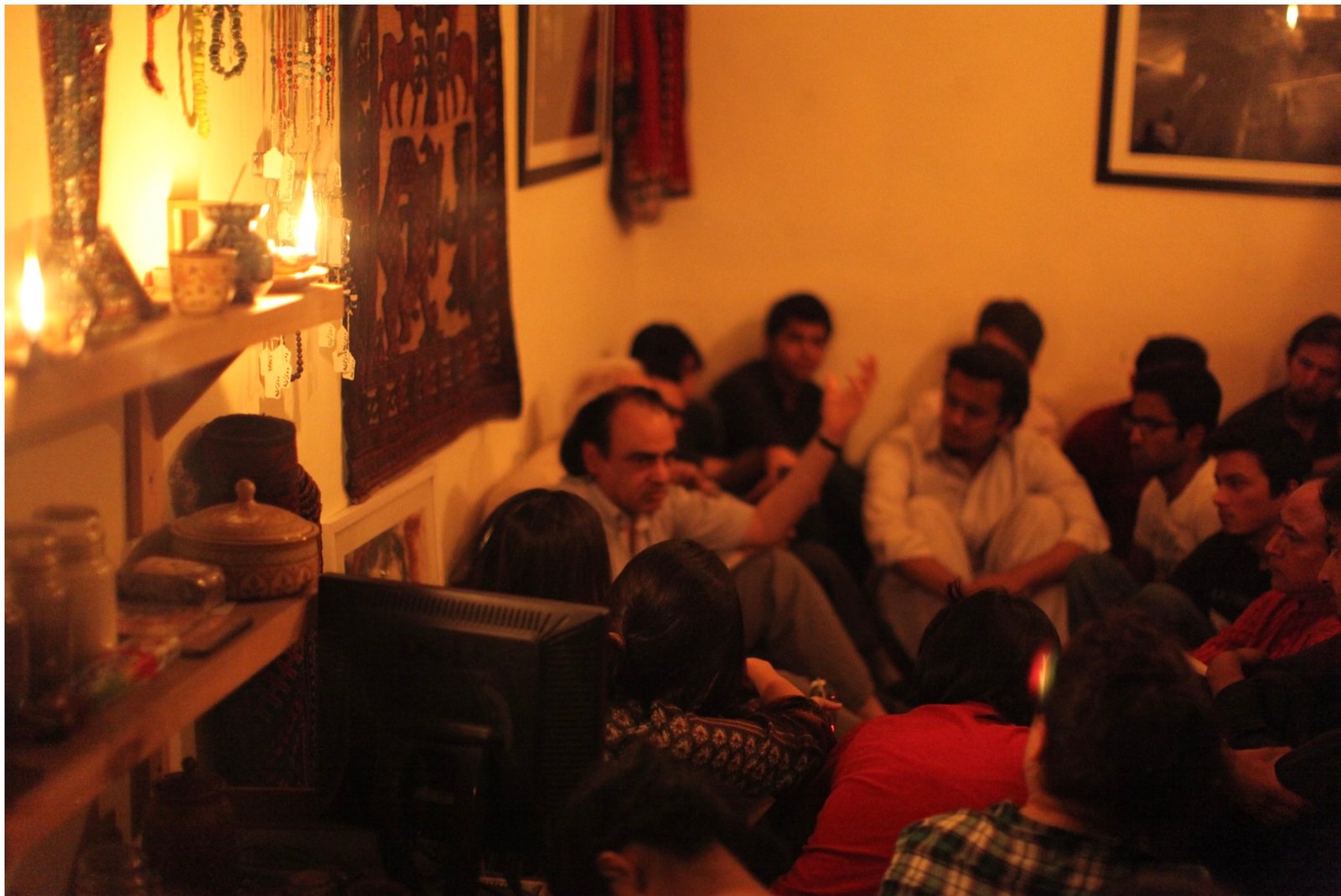
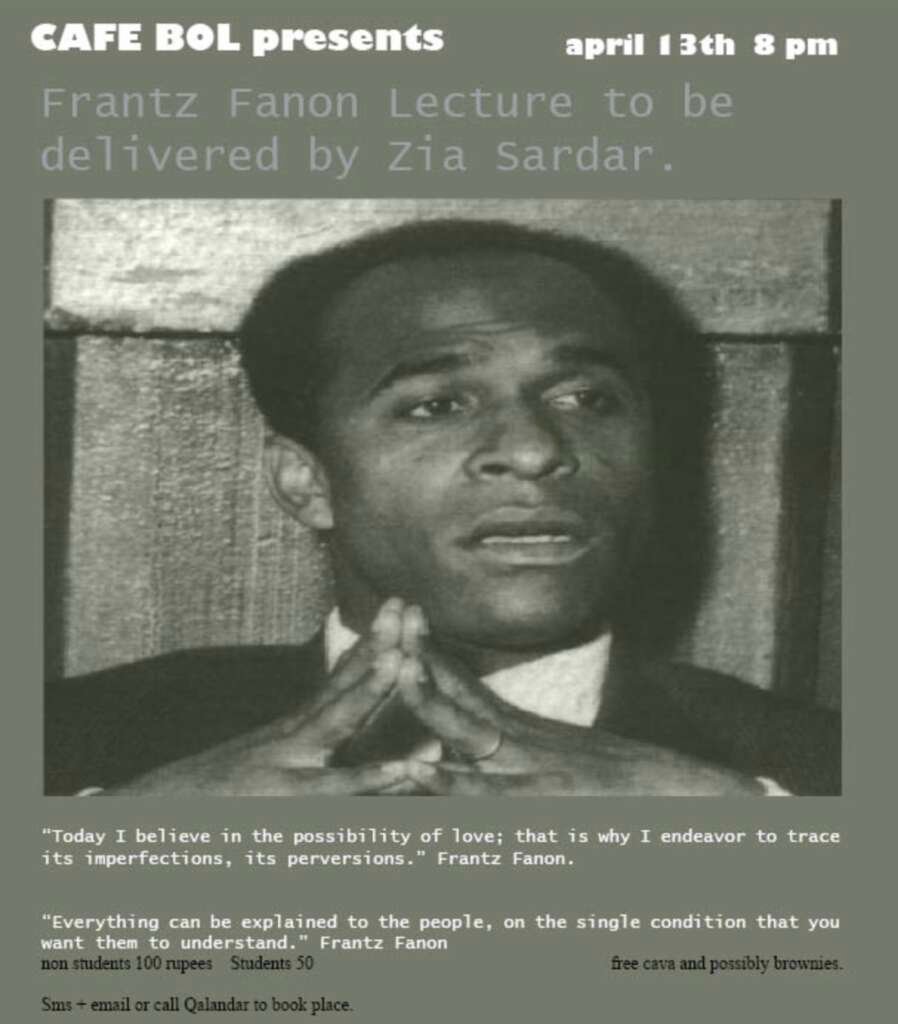
Pakistan, too, had its analogue prehistories of public thought. Before the feed became a classroom, there were smaller rooms: cafés, study circles, lecture halls, art schools, activist gatherings, and improvised publics where politics, literature, religion, and philosophy could still be argued in person. Café Bol in Lahore was one such experiment. In a modest Habermasian sense, it occupied public space as a counter-public: tea, lecture, dissent, poetry, anti-imperialism, urban struggle, and philosophical argument sharing the same room. Whether it was the “Struggle Series” on katchi abadis, or the inaugural Frantz Fanon Lecture delivered by Ziauddin Sardar on “Islam, Modernity, Post-Modernity and Trans-Modernity,” these were not mass platforms rather fragile civic interiors, sustained by bodies in a room and by the old discipline of listening.
The YouTube moment inherits that desire for public thought, but changes its scale, speed, and danger. In Japan, television staged deliberation. In Lahore’s analogue spaces, argument required presence. In Pakistan’s current platform culture, YouTube receives disorientation and distributes it at scale. The medium is cheaper, quicker, harsher. The audience is younger. The institutions are weaker. The demand arrives less as civic ritual than intellectual emergency.
Jonardon Ganeri’s 2016 manifesto, “Why Philosophy Must Go Global”, opened the deeper question: why should philosophy have to travel from the West at all? Europe had mistaken one historical province of thought for thought itself. Indian, Islamic, African, Chinese, and other traditions were not waiting outside the gate as culture, wisdom, spirituality, or heritage. They were philosophy. They had always been philosophy.
Akeel Bilgrami sharpens this bridge between philosophy and lived crisis. His work on secularism, identity, enchantment, and moral psychology asks why modern political vocabularies so often fail to satisfy the deeper need for meaning, community, and ethical orientation. For Pakistan, this question is not abstract.
It has to pass through Urdu, Persianate inheritance, Islamic philosophy, adab, the madrasa, the colonial university, the English-medium school, the television sermon, the coaching centre, and the exhausted home where political despair and religious anxiety meet. It has to ask why Iqbal is everywhere and so rarely read as a philosopher; why Ghazali appears more often as authority than as argument; why Ibn Sina, Shah Waliullah, Fazlur Rahman, and Eqbal Ahmad remain scattered across mutually suspicious worlds of study.
Pakistan has no shortage of intellectual inheritances. It lacks durable spaces where those inheritances can argue with one another without panic.
The Pakistani Paradox
In the West, the liberal arts are being cut from within institutions that once claimed them as inheritance. Philosophy, literature, history, classics, languages, and the humanities must now justify themselves before the market. The old question of formation has been replaced by the narrower question of certification: what kind of worker can the university produce? The humanities survive as prestige, branding, nostalgia, or moral ornament attached to employability.
Pakistan’s deprivation has another history. The humanities are not being dismantled after centuries of institutional strength and public confidence. They were never widely housed with such confidence. Philosophy did not fall from the centre of public education. It was barely allowed near the centre. The older public sphere weakened before it could become democratic. The university became vocationally anxious. The school became exam-driven. Television became spectacle and religion became refuge and authority, while the state monopolised history and the market colonised aspiration.
Pakistan Studies rarely taught history as argument over evidence, memory, violence, power, and consequence. Too often it taught citizenship as obedience to a script. Zia-era Islamisation narrowed public speech by rearranging the grammar of the state, the school, the censor, and the family. Suspicion of philosophy came from several quarters. The religious establishment distrusted it as doubt. The technocrat dismissed it as useless. The nationalist feared it as disloyalty. The market ignored it unless it could be sold as confidence.
Mohammed Hanif’s Rebel English Academy, which I reviewed, catches this hierarchy with satire’s cold eye. The English academy is both farce and indictment. English promises uplift, respectability, employment, escape. It also sorts bodies, trains posture, manufactures mimicry, and teaches people how to enter a room already designed to humiliate them. In Hanif’s world, language is never a neutral medium. It is a distribution system for permission.
The raid on Hanif’s Urdu publisher supplied the state’s accidental epigraph: what English contains, Urdu makes public. English can quarantine satire inside the class that can afford it. Urdu changes the rate of contagion. It moves the joke out of the gated enclave and into common speech. In Pakistan, permission travels through class, accent, institution, and circulation. A raid on a translation is also a judgment on reach.
That is why the English hierarchy belongs inside any serious account of the philosophy boom. The demand for falsafa on YouTube is partly a demand for access without humiliation. Urdu and Hindi lectures on Plato, Marx, Nietzsche, Ghazali, Hegel, Iqbal, Foucault, or Heidegger do more than translate content. They disturb the old arrangement in which seriousness had to arrive in English, through elite institutions, sanctioned accents, and imported syllabi. They say: difficult thought belongs here too.
Language access alone does not produce judgment. A translated slogan remains a slogan. A concept stripped of difficulty becomes content. A canon moved into Urdu can still become a hierarchy of names. The real question is what translation permits: imitation, resentment, discipline, emancipation, or a new vernacular authority with its own habits of command.
UNDP Pakistan has described the education system as marked by rote learning and tutorially instilled conformity, producing black-and-white thinking rather than critical reflection. Syed Nomanul Haq’s essay “Narratives and Legacy: The Humanities Crisis in Pakistan” makes the deeper charge: higher education policy has treated knowledge as vocational training, discouraged the humanities, weakened access to languages and primary sources, and diminished the capacity for analytical and creative thought.
Pakistan is young in the most literal sense. DataReportal’s Digital 2026 Pakistan report estimates Pakistan’s median age at 20.6 at the end of 2025, with 117 million internet users and YouTube ad reach of 54.3 million users in late 2025. This is not a market segment. It is an enormous restless audience, half-educated by formal institutions and over-educated by crisis.
The older public sphere has weakened. The university is often rigid, exam-driven, anxious before the job market. The school rewards conformity before doubt. Serious reading remains fenced by price, language, confidence, and class. The madrasa and university often inhabit separate epistemic planets. The coaching centre trains the body to sit tests. The screen trains the mind to seek verdicts.
The Feed as Classroom
When school withholds philosophy, television forfeits trust, books remain guarded by class, and home forbids the dangerous question, the young go where permission is weakest: the feed. There, falsafa becomes refuge, rebellion, theatre, and trap.
A new Pakistani vernacular intellectual public has formed: uneven, restless, sometimes brave, sometimes fraudulent. Dr Taimur Rahman’s Urdu lectures on the history of philosophy belong to the more pedagogical end of this world. Plato, Aristotle, Marx, Hegel, liberalism, socialism, class, political economy: the canon is brought into Urdu, linked to society and history rather than left as elite decoration. This is philosophy as public education and its wager is simple: people deserve access to difficult thought in a language they can inhabit.
Ali Hassan, through 3rd POV, works in another register: videos such as his Urdu-Hindi lecture on Schopenhauer as “the darkest philosopher in history” turn the Western canon into existential drama, where suffering, will, pessimism, and the crisis of meaning become audible to a Pakistani public outside the university.
Then there is Sahil Adeem, visible in clips such as his discussion of Nietzsche’s Übermensch and Iqbal’s Khudi. Here philosophy appears as diagnosis, charisma, cure, and alarm. Its attraction tells us that many viewers are searching less for arguments than for someone to name why the world feels false. It would be unfair to dismiss the audience as simply misguided. At the same time, it is worth distinguishing between philosophical inquiry and the persuasive power of performance. A more helpful question is what gaps in education, dignity, religious literacy, political trust, and masculine formation help explain this demand.
History channels such as Faisal Warraich’s Dekho Suno Jano answer another need: accounts of the past that do not sound like Pakistan Studies. Feminist and cultural voices such as Sabahat Zakariya shift the centre of the argument toward gender, media, class, respectability, and everyday life. Around them sit atheist and ex-Muslim channels, religious-intellectual platforms, literary podcasts, and self-help metaphysics, each trying to claim some part of the confusion. All of this cannot be called philosophy in the disciplinary sense. But it explains why philosophy has become the word under which so many questions gather: religion and doubt, masculinity and failure, politics and selfhood, science and revelation, civilisational anxiety and anti-Western critique. The boom feels chaotic because several restless publics are colliding.

A society deprived of serious public thinking has discovered a classroom in the feed. The room is noisy. The teachers are uneven. The curriculum shifts mid-lesson. The algorithm keeps entering without knocking. Still, the need is real. Philosophy has become the name Pakistanis give to a more basic desire: to understand why the world they inherited feels intellectually false, politically broken, and morally insufficient.
The Algorithm as Ustad
YouTube does not simply carry thought but changes its shape. While NHK staged Sandel as civic pedagogy, YouTube rewards charisma, compression, conflict, and certainty. The slow movement of thought must compete with the thumbnail, the provocation, the clipped exchange, the promise of total explanation. The algorithm favours confidence before judgment. It rewards the sentence that sounds final. It pushes the teacher toward the preacher, the critic toward the debater, the philosopher toward the performer of depth.
Here Naqvi’s warning about seriousness returns with force: Sanjeedgi is not a mood. It is a discipline of attention. It asks for patience, proportion, and inward steadiness. Platforms train opposite habits. They teach the eye to skim, the ear to crave decisive tone, the mind to mistake speed for clarity. A lecture becomes a clip and a clip becomes an identity badge while a name becomes a tribe and a question becomes content.
The danger is not that philosophy has become popular. The danger is that popularity may teach people to admire certainty before they have learned how to think.
In Pakistan this danger sharpens because philosophy often arrives mixed with damaged authority. For many young men marked by class injury, unemployment, English-language exclusion, and political helplessness, “philosophy” can begin to sound like rank. Names become weapons. Nietzsche becomes mood. Ghazali becomes authority. Democracy, feminism, secularism, and doubt are dismissed before they are understood. The platform gives the viewer the theatre of command without the discipline of study.
The same platform can open real doors. It can let a student in Sahiwal hear Marx in Urdu. It can let a young woman in Karachi encounter feminist argument outside the suffocation of family respectability. It can let an engineering student in Peshawar discover that doubt has a history. It can let a religious viewer see that faith has intellectual traditions deeper than slogan and scolding. It can let history escape the dull violence of state textbooks.
The same feed contains education and fraud. That is the condition of the moment.
Why Ethics Returns
The new politics requires ethics because politics without ethics has become management, propaganda, or identity war. Pakistan knows this too well. Its public life is full of administrative language, religious accusation, national security speech, class contempt, dynastic performance, and masculine grievance. Almost every major question is displaced before it can become moral: poverty becomes discipline, censorship becomes stability, patriarchy becomes culture, violence becomes necessity, corruption becomes realism, despair becomes personal failure.
Philosophy returns because people sense that official languages do not tell the truth. They want another grammar. They want to ask what justice means when the law is weak; what freedom means when speech is dangerous; what faith means when religion polices thought; what masculinity means when men feel powerful in speech and powerless in life; what education means when it produces credentials without formation; what Pakistan means when history is taught as obedience.
Many online philosophy channels deepen confusion. Some launder reactionary politics through intellectual vocabulary. Some make thought more authoritarian by dressing certainty in the language of depth. But the appetite indicts the institutions that failed them. People do not search so desperately for words of judgment when school, university, media, mosque, family, and state have done their work.
The old elite answer to this search is contempt. It mocks the YouTube listener, the Urdu autodidact, the overexcited young man with Nietzsche on his screen, the girl watching feminist commentary in secret, the religious student trying to reconcile physics and revelation, the ex-Muslim testing forbidden thoughts through anonymous channels. This contempt misses the point. The boom does not prove that Pakistan has suddenly become philosophical. It proves that philosophy was withheld too long, then returned through a medium built for attention capture. The task now is to distinguish inquiry from performance, judgment from appetite, and vernacular access from new forms of authority.
Naqvi’s word lets us name the central stake. Sanjeedgi is not intensity. Pakistan has enough intensity: passionate speech, injured pride, denunciation, prophecy, grievance, moral heat. Sanjeedgi asks for something rarer: the capacity to remain with a difficult question without turning it too quickly into identity, insult, certainty, or performance.
That is why his graduation speech exceeds the occasion. It offers vocabulary for a generational search. The young are not simply asking for more content. They are asking for form. They want a way to order disillusionment without surrendering to cynicism.
Falsafa has gone viral because thought was evicted from the institutions meant to house it. In its place we now have a vernacular counter-university: alive, uneven, vain, serious, fraudulent, necessary. Pakistan is not witnessing philosophy as fashion. It is witnessing the return of seriousness through an unserious medium. That should unsettle universities, clerics, liberals, leftists, and English-speaking elites alike. A generation went looking for thought where it could find it. The question now is whether that search can become judgment, or whether the platform will teach it to love the sound of certainty more than the labour of thought.