In this paper I will try to answer very important questions related to the Baloch struggle and the toll it has taken on lives and the importance those lives have gained for they sacrificed not for personal benefits but for the Baloch nation. Questions were proposed and posed by Saeeda Mengal w/o Shaheed Faisal Mengal.
How do graveyards, the missing, the tortured, the assassinated and funerals affect and become an over-riding factor for the people?
How do grief and resulting emotions become motivating factors for mass mobilization in Balochistan?
How the death squads, the missing and the mass-graves impact the discourse on politics in Balochistan?
How the graveyard of New Kahan, the graveyards of the unknown become political spaces and symbols of resistance legacy?
Why is the state fearful of the dead, their funerals and graveyards?
What reactions come from the mothers and relatives and how important these are for the resistance?
How the gender norms saw a change due to the state repression and killing sprees?
How the necropolitics steels the psyche of the people instead of weakening it?
In short, how important is Necropolitics in the context of Balochistan?
Before I begin to answer these very important questions, I consider it necessary to repeat a quote from an old piece which may help understand the answers better. I had then said:
“The Baloch history of resisting aggressors form the crux of its culture, and they are brought up in an ethos that equates Freedom with Dignity”.
It is an established fact that when a colonized and oppressed Nation starts to resist, oppression, exploitation and repression in short colonization and all attempts at their erasure by the colonizer, for it is only through erasure that the colonizer can feel safe in occupying and exploiting the land and resources of the colonized. The colonizer adopts brazenly brutal policy decimation and erasure because it is fearful that its privileges and loot will end unless they initiate a brutal policy of repression to deter opposition to its aim and make things easy for itself.
This is the policy that the colonizer will adopt and pursue when they understand that the colonized will not give up on their rights, resources and land. This has to lead to a conflict between two unequal forces, as the colonizer has resources and partners, who also eye the resources, to help and subsist it while the colonized is weak as they are deprived of even the normal facilities of development by the colonizer. They are disenfranchised, disempowered, deprived of opportunities to gain strength for any strength the colonized secure; it endangers the colonizer’s rule. This strength can be educational, social, political or economic and all these are considered as a serious threat by the colonizer.
The colonizer starts with the belief that what they seek to capture and exploit is ‘terra nullis’ for the people there, their lives, culture, history and everything else associated with their lives is meaningless and a hinderance to the objectives of the colonizer. How the colonized respond to the repression, loot of resources and land and the gradual march towards erasure like the western powers practiced in Americas, Australia and wherever they thought they would benefit and Israel does today and is doing since 1948 in Palestine depends on the history, culture and consciousness of the colonized. History and culture give the consciousness to resist when there is an element of love of land and a sense of pride in history and culture of resistance to the aggressor.
Anyone who covets something that belongs to others, be they individuals, groups, nations or countries, the predominant element at work is avarice and greed and this is reinforced by racism and arrogance of power. Those who resist are guided by love of the motherland, a sense of self-respect and dignity and plus pride in ones’ history and culture. As can be seen two diametrically opposing sentiments and interests are at work in this equation. One is bent upon subjugating and looting while the other on resisting and defending their interests. The clash of interests and objectives leads to brutal conflict.
There always arises the question as to who initiated the violence and there is the tendency of the mainstream to blame the colonized and this is so because the interests of the media and the colonizers are the same and they support each other to the hilt. Although the colonized never initiate the violence but even if for argument’s sake we were to concede that; don’t you think that exploiting someone else’s resources and trying to control lives of the colonized is by itself the most vicious form of violence against a people?
That ‘violence begets violence’ is axiomatic and so very well established a fact that only the very biased could miss or disregards its importance or the consequences that stem from ignoring it. I say this to understand and explain as to why the States disregard it and perpetrate violence against the colonized people or even the subjects. As I have said above, repression and economic and resource exploitation too are a form of violence which people who have the care and consciousness of their rights oppose.
The States initiate violence on those who seek to defend their rights and resources in the hope that the colonized and the oppressed will fear the violence unleashed on them and submit and there will be an end to the resistance. This is the prime folly for a people with the history and legacy of resistance to injustices and exploitation do not submit but respond with defensive violence and the States not learning from the initial folly persist with this folly and the initial violence transforms to a perpetual cycle of violence. A huge price in terms of death and destruction is exacted from the colonized but they continue to resist for they understand submitting would not only mean a life of deprivation and indignity, it would end up in their total erasure.
Why don’t the States understand? They do not understand because they believe that they have enough military power and support of those politicians and groups who benefit from the endowments of the state. These benefits are never permanent and the states keep changing their favourites and even at times punishing them as has been often seen. They think by killing, disappearing and jailing people they will be able to subdue but it doesn’t work out that way because the people keep resisting the state and its beneficiaries.
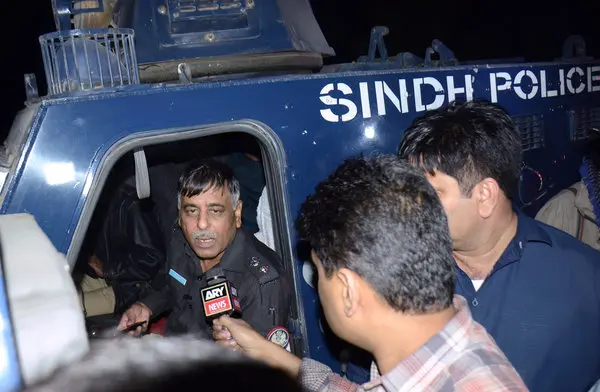
The attitude of the state here is that of their minion Rao Anwar, the Crime Control Department (CCD) of Punjab established in February 2025 and the Sindh police who think by killing innocent people and petty criminals in fake extra-judicial killings they will rid the place of crimes. However, the resistance of the people for their rights is a different cup of tea. This resistance is not for petty gains like those of petty criminals but for higher goals that are of historical importance to them and their land so they continue to resist. Let it be said that despite the spate of extra-judicial killings by the above mentioned they are nowhere near controlling crime in the cities.
The mainstream tends to blame the colonized and the oppressed for the violence and they advise and pander the State logic that this violence would end if the colonized stopped resisting. They give an example of some major incident of violence by the colonized and oppressed as being the reason for the increased and sustained violence by the state.
I will elaborate on this with the example of Gaza and the 7th October 2023 incident when Hamas attacked inside Israel. This incident has been the justification of destruction of Gaza and genocide of the Palestinians. The world, with a few exceptions, has been complicit in this genocide and shamelessly so. However, though there was no aggression from the Palestinians in the West Bank, Israel has been killing people there, demolishing homes, destroying olive gardens, making new settlements and all those who justify destruction of Gaza and the genocide there seem blind to the West Bank happening. States eyeing land and resources don’t really need justification for perpetrating violence against the people but somehow that violence is condoned wholeheartedly while the violence in response to the state violence is condemned.
Although it is the State that is responsible for this perpetual cycle of violence against the people, it is the people opposing that violence who get to be blamed and held responsible. Unless the mainstream doesn’t understand this basic reality, states will have the impunity to perpetuate senseless violence against the people. Being neutral isn’t a moral position, it is a complicity of the first order. Sadly, we live in an era where live- streamed genocide doesn’t get condemned the way a moral world would condemn and put a stop to. And in the times when there is brutal repression in Balochistan and now even women are being disappeared and not many voices speak up against the travesty of justice being committed there. It becomes all the more necessary and imperative to speak up forcefully against the injustices and exploitation because oppressors cannot be allowed to ride roughshod over people. The culture of impunity has to be challenged and done away with and that is the responsibility not of the victims of violence but of the civil society in particular and the society at large in general.
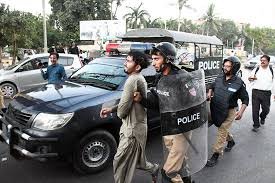
This violence of the colonizer can be only answered by the violence of the colonized who consider it as their duty to defend their resources and their land from being taken over by the colonizer. This resistance to exploitation and land grabbing is answered with brutal force for the colonizer wants to enrich and empower itself at the cost of the colonized. This is how violence begets violence and the perpetual cycle of violence persists.
Conflicts mean death and destruction for the colonized because the colonizer’s greed and racism is insatiable and knows no limit or boundaries. Moreover, in their arrogance they believe that with force they will be able to put an end to the peoples’ resistance to their loot. They think that there is a limit to the price that people will be ready to pay for defending their Motherland and their rights. This is where they make their fatal mistake by underestimating the will and determination of the people who pride themselves as the protectors of their Motherland and their rights. The Baloch have resisted for the past 78 years despite paying a terrible price in terms of life and of the related consequences of lost opportunities and lost generations and the accompanying traumas and tragedies that deaths and destruction of lives that conflicts bring in their wake.
Death is the consequence of conflicts and it is viewed with a different perspective by the opposing sides. The colonizer thinks that a troublemaker is eliminated while the colonized knows it is the price they have to pay for a life of freedom and dignity. Death for the colonized assumes a sacred dignified place because they know that the path they tread for the defense of their sacred land is this price that will be exacted from them if they desire for dignified life and a mastery of the resources.
The Baloch people have resisted all sorts of depredations, physical, cultural, social, political, economic, by Pakistan since 27th March 1948 when Khan of Kalat Mir Ahmad Yar khan was forced to sign the Instrument of Accession. From that time onward the Baloch have relentlessly struggled for regaining not only their usurped freedom but also have tried to stop the theft of their resources, coasts, sea and land. This has come at a cost which has kept on mounting increasingly with increased greed and covetousness of the Pakistani state and its attempts to sustain itself by pawning off the Baloch resources.
There have been numerous insurgencies to thwart the loot and designs aimed at erasure of Baloch by demographic changes, giving a free hand to religious outfits to instill religious fundamentalism for only the Pakistan Studies teaching in schools and colleges is not diverting the Baloch minds towards the interpretation of nation being based on religion and accepting Pakistani version of nationalism and nationalistic feelings and is not being successful in erasing the millennials old culture and history that the Baloch are proud of having. Insurgencies are conflicts and conflicts mean loss of life.
Because these losses of lives have been for the noble goals these have come to symbolize defiance and dedication to the motherland. These deaths have garnered an aura which transcends sorrow or anguish and is accorded the respect it deserves as it is not thought to have been in vain but for a noble purpose. Death among the colonized epitomizes something very different from that of the colonizers, although they label their dead as martyrs and the colonized as ‘terrorists’ and other derogatory terms. The colonized see their dead as saviour and redeemer who deserves not only praise with words but deeds which would show respect more eloquently. These deaths as I have said above are no ordinary deaths; these deaths illuminate the paths of freedom and resistance.
There is a sad aspect which does need urgent attention. There is no consolidated and authentic record of all those who have lost their lives in the 78 years of resistance. Someone should take the responsibility and start this work; it is certainly not a single person’s task or capability to do this because Balochistan is vast and the period of resistance very long. A team of dedicated persons from different areas of Balochistan could do it.
There is a very recent, important and significant example of how important Necropolitics is in the context of Baloch Resistance to the oppression and the struggle for decolonization.
In March this year i.e. 2025 that Mahrang and others were protesting the burials of unidentified persons and extra-judicial killings of those who may have been in State custody before that the brutal, sustained and severe crackdown was unleashed on Baloch in Balochistan and elsewhere.
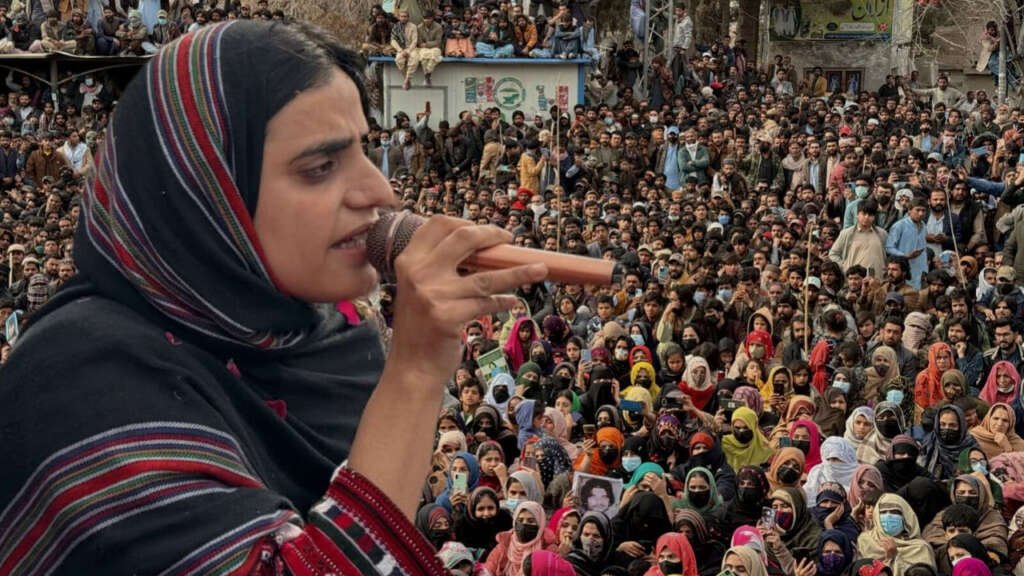
Some unidentified bodies were brought to the morgue of Civil Hospital in Quetta on the 19th of March 2025 and the relatives of missing persons suspected their loved ones might be among them. So, Saeeda Mengal, wife of Shaheed Faisal Mengal and her sister, their cousin and nephew are missing, went there and demanded to see the bodies but were denied access. They went there the second day too but were not only refused; all present there were then baton charged and Saeeda and her sister were injured and arrested. This brutality on relatives of the missing resulted in deep resentment among the people.
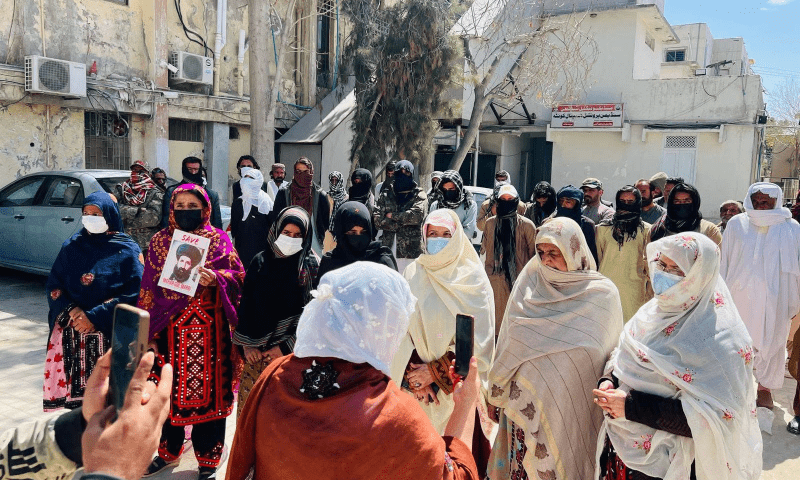
In the evening of the 21st some activists went and took away a few bodies and started a sit-in which was also attended by Mahrang. Before that during the day the police had fired on a rally and some were injured and one boy had been killed. His body was also there among others at the sit-in.
However, before dawn there was a brutal assault on the sit-in and Mahrang Baloch, her youngest sister and many others were abducted forcibly and taken away to unknown place and it was only after passage of 24 hours that Mahrang’s sister was released as she was a minor. The bodies too had been taken away. It was later in the day that the whereabouts of Mahrang being in jail were known. The reign of terror has been unleashed on Baloch since then, not that they were being molly coddled before.
Even the right to know the identity of the killed persons prompts the State to use excessive force for there is a lot that it wants to sweep under the carpet by not allowing the relatives the right to know if among those killed a relative’s body might be there. This continued denial plus the brute use of force doesn’t deter the people from their quest to know about their loved ones and these compounded injustices create even more resentment. Frustrated with the absence of the legal and normal means of justice many young men and now increasingly women too resort to desperate measures. It is the State that is to be blamed for this resulting peoples’ violence.
The State response to the atrocities and injustices it commits is not aimed at providing justice because it results in more and more blatant brutality and flagrant injustices. The State kills without remorse and when people demand answers they are targeted with brutal assaults and incarcerations. Mahrang Baboch, Beebow Baloch, Gulzadi Baloch, Bebarg Baloch and Sibghatullah Shahjee have been kept in jail since March under one draconian law or the other. They think keeping people in jail would break their spirit or dishearten the Baloch Nation they are mistaken for the Baloch have seen a lot of their dear killed and maimed and have also suffered injustices across the physical, political, economic and social spectrum for the last 78 years. However, they have continued to resist despite the losses suffered.
As the sacrifices of the past are of importance not only for today but for the coming times as well so when those who have sacrificed their lives and are laid to rest; the place i.e. the graveyards, become equally important a symbol and conveyors of a message of defiance associated with the love for the land and the people. We can take as an example ‘Chashma Qabaristan’ in Kalat at a distance of about 2 KM from the Kalat Bazar where Babu Nauroz Khan Zarakzai and the seven Martyrs of 15th July 1960 who were hanged in Hyderabad and Sukkur Jails are buried. This is a place for homage for many Baloch and their sympathizers who hold this place in deepest esteem and honour those buried there. Graveyards too become symbols of defiance and enter into the glorious annals of history of resistance.
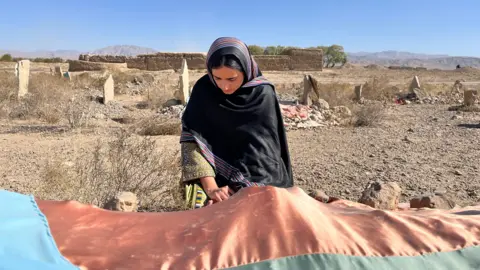
It should be mentioned that the four Shaheeds martyred at Hyderabad Jail, namely, Shaheed Wali Mohammad Zarakzai, Shaheed Bhawal Khan Musiyani, Shaheed Masti Khan Musiyani and Shaheed Jam Jamal Khan Zehri their bodies were transported to Balochistan under arrangement made by my paternal uncle Mir Rasool Bakhsh Talpur. Moreover, Nawab Nauroz Khan died on 25th December 1965 in Civil Hospital Hyderabad and his body was received by Mir Rafiquie Ahmed Talpur s/o Mir Rasool Bakhsh Talpur and transported under instructions of Mir Rasool Bakhsh Talpur to Kalat.
The graveyard of Shaheeds and the grave of Nawab Khair Bakhsh Khan Marri at New Kahan on the outskirts of Quetta is very significant and has a very important place in the Baloch resistance history for many important reasons which show the attitude of the Baloch people to their leaders and martyrs and the fear that the dead create and instill in the minds and hearts of the State.
When the Baloch mostly from Marri tribe who were living in exile in Afghanistan since 1975 due to the 1973-1977 insurgency returned after the takeover of Kabul by the Mujahedeen in 1992, they made their homes on outskirts of Quetta and this place came to called “New Kahan” after the “Kahan’ town in Marri area which was the traditional place of the Marri Sardars.
The confrontation between Baloch and the State was for some time dormant but not dead. The State continued provocative actions with the arrest of Nawab Khair Bakhsh on false charges of killing Balochistan High Court’s Justice Mohammad Nawaz Marri in the year 2000. Under Musharraf military rule the dormant confrontation became active again and slowly the repression unleashed against the Baloch prompted resistance and in the resulting conflict there were casualties on the Baloch side as well and the martyrs were buried there near New Kahan.
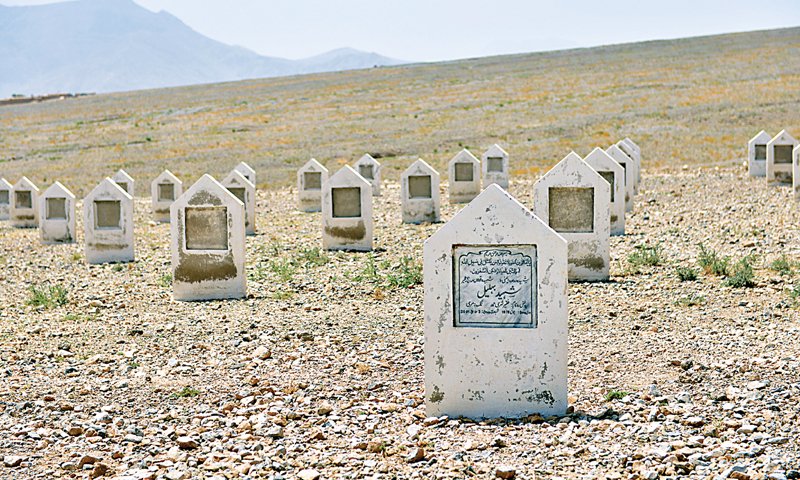
As deaths mounted the place came to be named as the “Shuhada Qabaristan” (graveyard of Martyrs). This prompted the State to try and deter people and they once desecrated the graves by upturning the tombstones but the people continued to bring their Shaheeds there. It had become a symbol of defiance and paradoxically these deaths instead of demoralizing people inspired hope and the graveyard became a place worthy of their respect.
When Nawab Sahib died on 10th June, 2014 in Karachi and his body was brought to Quetta, the government had plans to bury him in Kahan in the Marri area because it would be inaccessible to a vast majority of people who respected him and his ideology of defiance and his dream of an independent Balochistan.
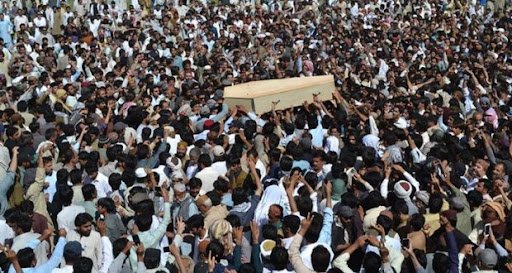
The people wanted him to be buried in the “Shuhada Qabaristan” and it was the Baloch women present there that day who took the initiative and picked up his coffin and marched for New Kahan. The authorities knew if they tried to stop the Baloch women who were now joined by multitudes of people, they would have to face a lot of trouble for at that time violence against women had not become official policy as it is today.
The Baloch women defied the son of Nawab Sahib and the authorities who were bent upon having Nawab Sahib buried in ancestral Kahan to keep him away from public reach and public eye. The Baloch gathered there that day fully understood the importance of the graves and the significance that the graveyards hold in history and legacy of resistance.
Such graveyards give dignity and respect to the dead and become the symbols of defiance and resistance to the people who though their loved ones are not buried there but feel spiritually and historically associated with these because these graveyards in their silence narrate the glorious history of resistance and defiance which words sometimes fail to express.
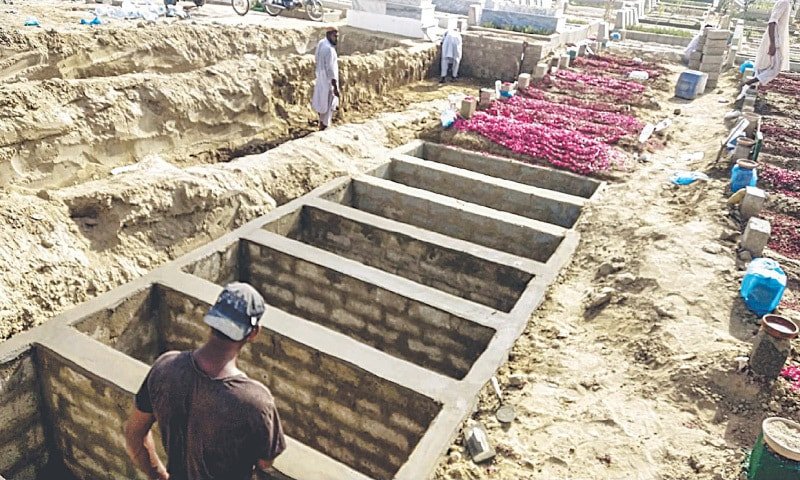
The dead, the graves and the graveyards have an aura, character and mystique which have a profound influence on the lives, characters and actions of the surviving. These become beacons that illuminate the paths of resistance but that does not in any way mean that there is worship of the dead; it is just respect that they deserve and which is accorded.
Then there are mass-graves like in Tutak and the graveyards of the anonymous in Dasht which Mahrang Baloch visited at the start of the year 2025 and happen to be found in Balochistan and are a consequence of the state and its proxies’ brutality and the peoples’ will and determination to defend their rights and land. The State doesn’t allow forensic examination to determine who these bodies belong to for they want to cover up their crimes they committed or commissioned. A day will come when the dead will tell who they are and what they suffered at the hands of their tormentors.
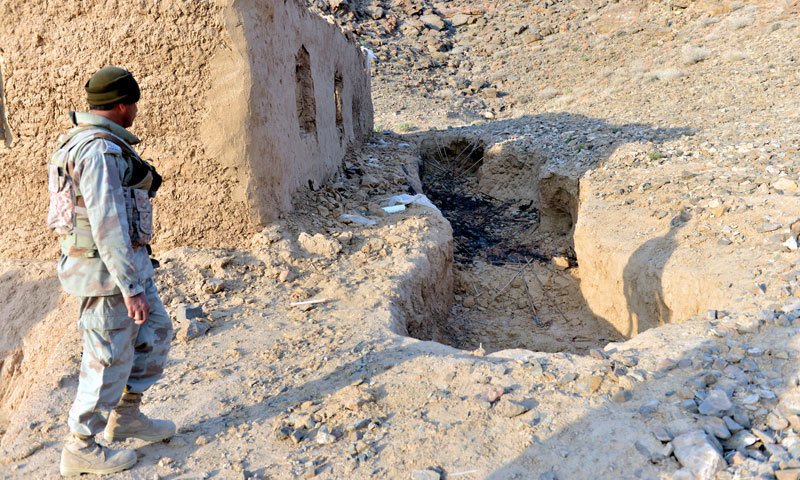
The Tutak mass grave deserves to be dealt with in some detail. It was discovered by a shepherd on the 17th of January 2014. Officially only 13 bodies were reported but people say there were many and only two were identified because there were chits on them with their names. It should be mentioned that the judicial inquiry blamed Shafique Mengal for it and it was well known that he ran a death squad outfit with the support of the government.
More importantly 30 members of Qalandrani tribe including three sons of its leader Sardar Ali Muhammad were kidnapped on February 18th 2011. Their bodies or their whereabouts are to date unknown and the family blames Shafique Mengal for he is related to that tribe via his mother. The Qalandrani family was opposed to Shafique Mengal’s activities. People of that area say that there are more mass graves but no one is allowed to search for these and uncover them.
The complicity between the death squads and the State becomes apparent from the fact that in July 2011 the Commander of the Army’s Southern Command, Lt-Gen Javed Zia talking to newsmen said, that ‘some Baloch youths had burnt the national flag just for the sake of money or carried out subversive activities. As a result, they were hit by patriotic elements. Terming the death squad which does the dirty work of killing those that they think are anti-state as ‘patriotic elements’ doesn’t leave an iota of doubt about the state being complicit.
The State brutality and the consequent mass-graves and graveyards of the unknown are aimed as a deterrence to the resistance of people by sowing terror and fear in the people but paradoxically the effect is the opposite for these engender anger, resentment and defiance. The people understand the consequences before they embark on the road of resistance and the state brutality invariably fails to deter people from their chosen course.
The graves of the unknown are not only in Balochistan as probably the biggest such graveyard is in Karachi’s Edhi Foundation’s Mowachh Goth graveyard where more than 250,000 unknown bodies are buried. How many were victims of State brutality which includes the police as well is hard to determine for in this 30-acre large graveyard there has never has been an attempt to forensically determine the identification of the dead.
In 2015 a program was launched for identifying the new bodies and was successful to some extent but the past ones remain unknown and unheard. Such graveyards are a disgrace for humanity for these help cover up the crimes that are committed and these crimes are buried forever. Getting a decent burial cannot be the end-result of a life for if it is a crime that has led to that death; that crime needs to be exposed and the culprits punished.
There is also the question of what importance can an individual’s body and funeral hold for the people and the fear and the insecurity it creates for the State and its rulers. We talked about Nawab Khair Bakhsh Marri and his funeral, however, there is another important example and that is of Banuk Karima Baloch who had been killed in Canada on 20th December 2020, which was termed as suicide, and her body was brought to Karachi on the 24th January 2021 for burial in Tump her ancestral place.
I was at the airport that day along with Dr. Mahrang Baloch, Dr. Sabiha Baloch, Shakeela Naveed with her children, then an MPA of Balochistan Assembly, Yousaf Mastikhan, Zohra Jehangir w/o Raza Jehangir Shaheed, Dur Bibi. Dr. Sabiha and myself entered the airport with Shakeela Naveed as she was a member of the Balochistan Assembly while Mahrang and others entered on their own. Outside too there were many people including Mama Qadeer and others but entry was being restricted because Banuk Karima was one of the most important personages of the Baloch resistance and the struggle for Baloch rights and they wanted to keep people away.
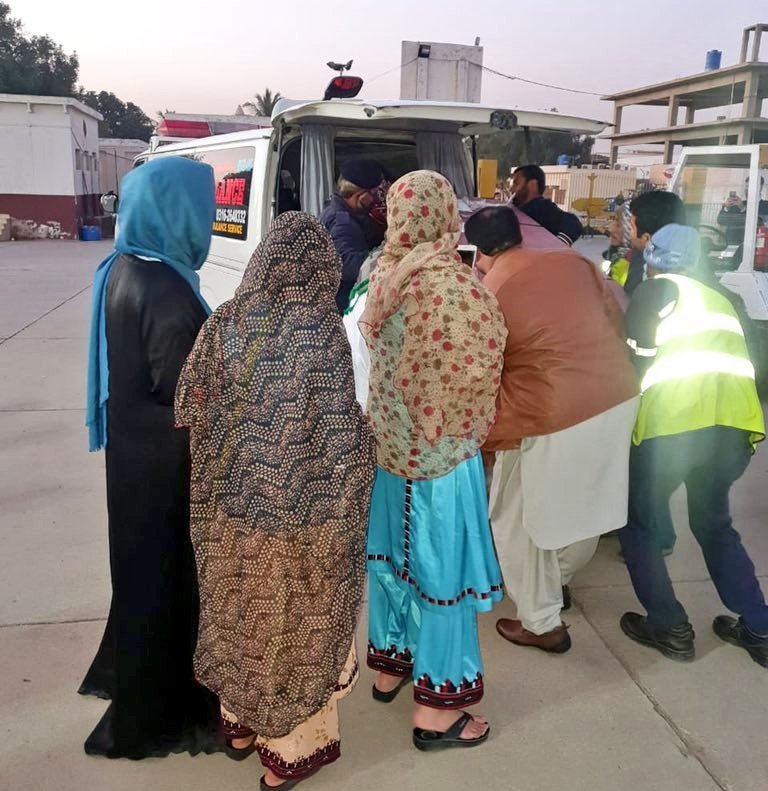
When the body did arrive Karima’s sister and other relatives who had come to receive her body were told that the body would be sent to Turbat by airplane but the family refused for they knew that multitudes were waiting for her on the roads and a funeral prayer had been arranged in Lyari for her. The State knew that Karima was a symbol that inspired defiance of State and love of Motherland and they had to stop people from even seeing the dead body of their beloved Banuk Karima.
They kept stalling and on the quiet they blocked different roads outside the airport and then put her body and the relatives in an ambulance and gave it an escort of many vehicles of Rangers and set it off for Tump. I was in touch with her sister Mahganj but could not do anything for they ensured that roads leaving the airport remained blocked so that no one could follow the ambulance.
Left with no option we proceeded to Lyari where a funeral prayer was to be held at a stadium but the gates of the stadium were locked and police posted to stop people. People went ahead with funeral prayer in absentia on the street and after speeches people dispersed. However, Mahrang Baloch, Sabiha Baloch and others proceeded towards Tump.
There were restrictions on the road to Tump and people were not being allowed to travel. Tump itself was under curfew virtually and only relatives of Banuk were allowed to attend the burial. The fear of Karima who was no longer alive even surpassed the fear the State felt when she was alive. How a person no longer alive becomes a threat to those who hounded her when she was alive just shows that some deaths have the potential of galvanizing people to a cause and prompting them to more sacrifices. Karima’s death was such a death. She is loved and revered by all who knew her and even by those who never had a chance to meet her but were inspired by what she stood for and what as Baloch woman she represented for all the Baloch women who had and have love for their people and their motherland.
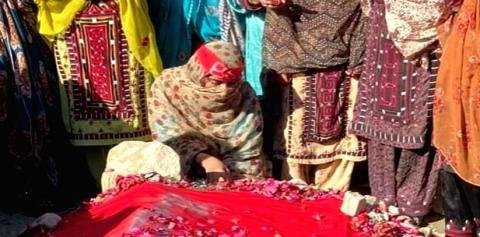
I will share what her friend Respected Nausheen Qambrani had to say for her as an elegy and what she represented as a Baloch woman for the Baloch Nation. I cry every time I read it for Karima was very dear to me and it was her hand that I kissed first to show my respect for my daughters. We became much the poorer in losing her so early but were fortunate to get Dr. Mahrang Baloch as an inspiration and the leader.
الوداع
ہست کےدائروں میں نہ شائد ملیں
وائے دل, وائے جاں اشکبار الوداع
روشنی, رنگ, برکھا, تمہارا نصیب
خاک کے ہوگئے خاکسار الوداع
تیرے قدموں تلے آسمانِ وفا
عاشقِ گل زمین, جانثار الوداع
نوشین قمبرانی
I should also mention Raza Jehangir who was with Banuk Karima when they visited me at my ancestral home in Hyderabad, Sindh in February 2013. Raza was the Secretary general of the BSO-Azad then. On March 15th 2013 BSO-Azad was banned, forcing its members to go underground. Raza was a dedicated activist and he continued to work for his organization. On 14th August 2013 he was killed along with Imdad Bojair.
His funeral was led by his Brave Mother and leading the people she sang a lullaby for her martyred son.
It goes thus:
Raza Jan is little (child) and he is naive, joyfully asleep, in his decorated cradle. Calm and fast asleep in his decorated cradle,
Sapient (learned men) are his forefathers.
This is how Baloch mothers look at the sacrifices of their sons who die for Balochistan.
The words below are an expression of a Baloch girl who feels and understands the pain that mothers undergo and what a Zahīrok (Lullaby for Elegy) denotes and stands for. The words are not only profound in meaning but also convey the determination to never give up even after the greatest loss we may suffer when we seek a life of freedom and dignity.
She wrote:
“My immediate feeling I wrote down after watching that video:
In a grainy video, I watch Raza Jehangir’s mother, as she leads her
son’s funeral procession. Her voice cracks and trembles, surrounded by other women echoing her grief. Elderly and leaning on a stick, she walks with deliberate steps, each movement a testimony of defiance. At its core, the zahīrok is more than discursive (Badal khan 2023,2003); it enacts grief in a shared register, drawing private pain into the space of the political. As she beats her chest softly, her personal mourning transforms into an affective and collective act of
resistance. In this gesture, grief becomes defiance. It is not simply
an expression of loss, but an affective, embodied mode of dissent
against the state’s violence”.
These words not only describe the scene but portray how Baloch mothers deal with their losses and it is not only true for sons alone but extends even to all male relations be it father, brother, uncle, cousin and even a family friend.
The politics of killing and death have not been limited to disappearances or extra-judicial killings alone for there have been premeditated assassinations as well aimed at eliminating personages with large circles of influence and were considered to be detrimental to state policy of erasure and loot.
These assassinations do not seem to be random. There have been many but I will mention just two. One that of Professor Saba Dashtyari and Nawab Akbar Khan Bugti.
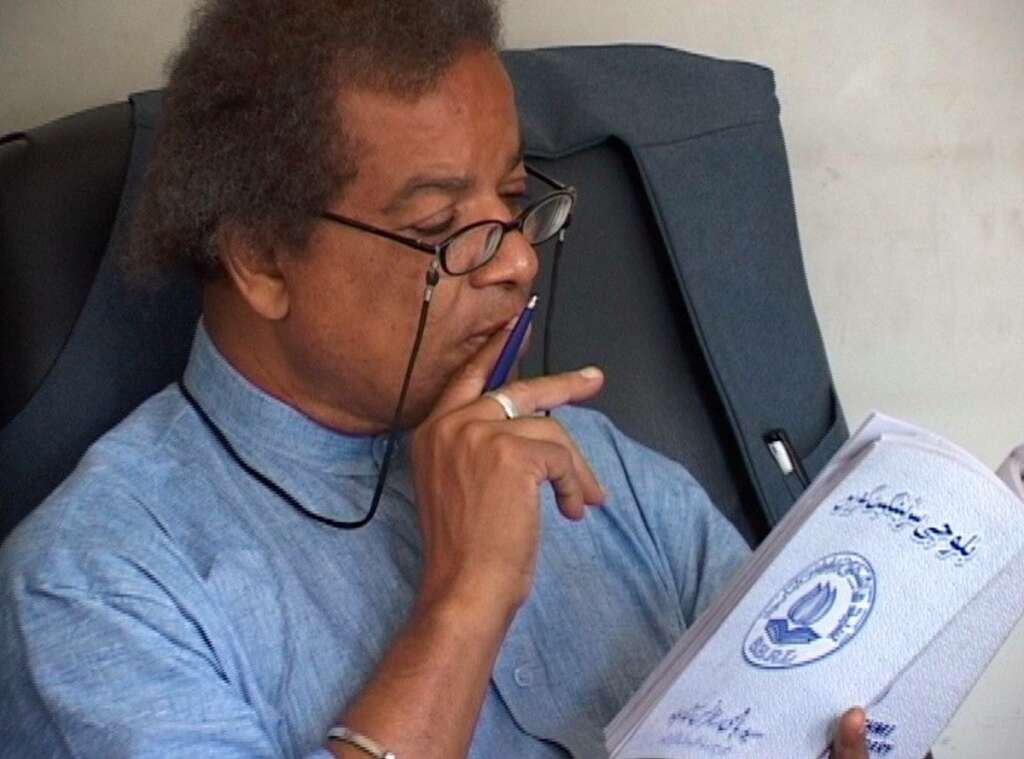
Professor Saba Dashtyari was a literary person who not only cared for Baloch literature and its history as he had set up the Zahoor Shah Hashmi Library in Malir, Karachi and which is now under threat of demolition because of an expressway, meant to benefit elite housing societies, which is also destroying the Malir River and Malir’s environment. He also advocated the right of self-determination for Baloch and Balochistan.
Both his literary endeavors and the radical political stand were irksome for the state as these both stood in the way of cultural, economic and political erasure policy that was being practiced since March 27th 1948. Professor Saba wielded a lot of influence among the Baloch youth and the state understood that the continued political and cultural radicalization of the Baloch youth would prove detrimental to its aims and policies in force. So, on June 1st 2011 when he was on a walk in Quetta he was targeted by a gunman and assassinated.
Professor Saba’s cultural, political and social activism was considered a threat and though he did not carry a gun he was considered as dangerous and even more so than those fighting with arms. He was instilling self-respect, consciousness of rights and the spirit to uphold ones’ rights and that made him a target of those who fear these things in a people they want to be docile and pliable so that their machinations of erasing indigenous culture, disempowering, disenfranchising them and of looting resources are not challenged. All educated Baloch are viewed with suspicion and there has been an increasing trend of disappearing students, teachers, publishers, poets and writers. This is culturicide and scholasticide aimed at erasing a nation. The killing of Professor Saba was a part of this institutionalized policy of erasure of Baloch.
Nawab Akbar Shahbaz Khan Bugti was the Tumandar of the Bugti tribe which along with the Marri tribe are the biggest in Balochistan. His nationalistic leaning and espousing of Baloch causes were always a reason for friction between him and the Pakistani state. Except for a brief interlude of a nine-month association with Zulfiqar Ali Bhutto at the start of 1973-1977 insurgency he always stood with the Baloch cause.
At the start of the year 2005 Dr. Shazia Khalid who was posted in Sui was raped by an army officer named Hammad but Musharraf then the President absolved him of the crime and the people outraged at the rape attacked a few installations in Sui. There were clashes between the tribesmen and those guarding the installation. This disrupted the supply of gas and there was more use of force to stop the disturbances. Troops were sent to Sui to protect installations as there had been firing on the installation and gas supply had been suspended.
The then interior minister Aftab Sherpao talking to newsmen on 12th January 2005 said the Bugtis are firing from the house next to Nawab Sahib’s residence. He also said that attacks had started from Jan 7 and continued till Jan 11 in which three personnel of the Defence Security Guards, two guards of the Frontier Corps and four civilians died. He said about 14,000 rounds of small arms, 436 mortar fires and 60 rockets were used by miscreants during the attack There was outrage in Sindh too as Dr. Shazia Khalid was from Sindh and this outrage angered the people. The confrontations continued and the temperatures kept on increasing.
Moreover, in 2005 Nawab Akbar Bugti had presented demands and had also demanded a moratorium on cantonments in Balochistan. This irked the Musharraf government and they started putting pressure on Nawab by increasing their forces in the area and confronting people unnecessarily. Nawab Akbar Khan and his tribe were not cowed by the confrontations and hostility which was systematic and had ulterior aims.
On March 17th 2005 the army shelled Nawab Akbar Bugti’s residence indiscriminately. People in the residence were injured but fortunately Nawab Sahib remained unhurt. According to Nawab Sahib himself, several hundred rockets, mortar shells and missiles were fired on Dera Bugti, killing innocent Hindus, including women and children, and Bugtis. “My residence was the main target during the operation and around 100 shells and rockets landed and exploded at different places in my house.”
However, the worst hit in the incident was the Hindu Mohallah where 32 people were killed and 16 were wounded. This Mohallah is located within the fort of Bugti. A local trader, Sarvand Jumar, said that 11 members of a family died in the FC attack. This attack ensured that the point of no return had been reached.
Though human rights activists and politicians came to try for mending and defusing the situation but the distrust of Pakistani intentions by Nawab Sahib due to continued provocations and an infamous past of betrayal after promises by Pakistan were the main obstacles. Moreover, Nawab sahib had decided to not let himself fall into the hands of the authorities whatever the consequences be.
Nawab Sahib then keeping the Baloch tradition of resistance took to the mountains though at his age and health it was torturous and difficult but his unflagging spirit kept him going. Though he was hounded and provoked he refused to give up and as the Bugti and Marri area are adjoining he crossed over to the Marri area where Mir Balach Marri s/o Nawab Khair Bakhsh Marri was already resisting the State.
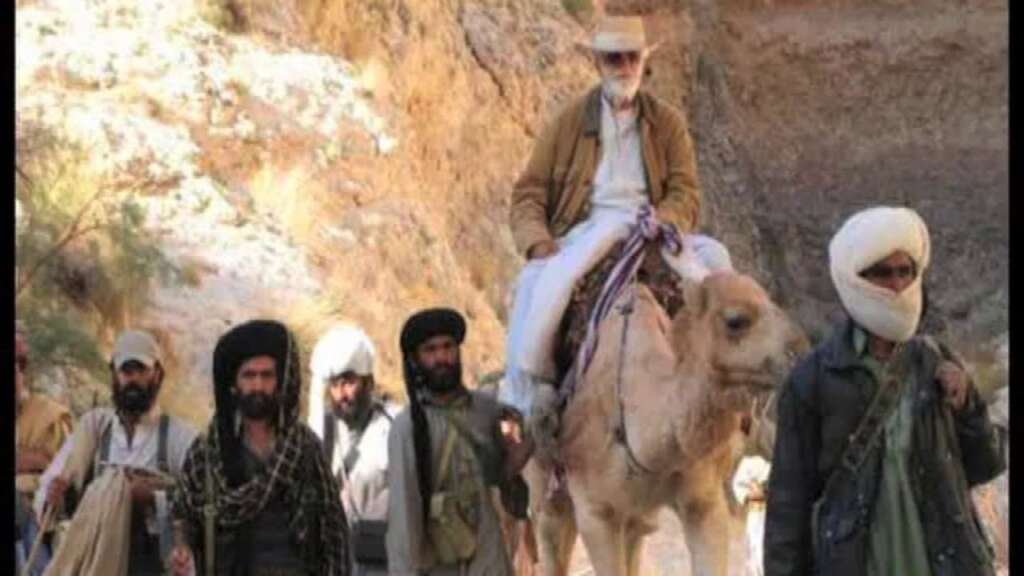
It was on the 26th of August 2006 that Pakistan decided to end the life of Nawab sahib in the hope that by eliminating this powerful symbol of resistance they could bring the people under their everlasting control. It was a step that backfired gravely and that fighting that was already going on spread like wildfire.
According to the news reports Nawab Akbar Khan Bugti was killed, along with 37 armed tribals, in a military operation in Kalgari area of Bhamboor hills of Marri area. Also, according to reports around 21 security personnel, including some officers, were also killed in fierce clashes. Over two dozen tribesmen were injured in the area and taken into custody. Mystery surrounds this event for Nawab Sahib’s body was never shown and it was secretly buried in Dera Bugti and the place remains off-limit even to his surviving son Jamil Akbar Bugti who even questions the presence of his father’s body there.
A conflagration resulted from the martyrdom of Nawab Akbar Bugti and there were protests and disturbance in not only Balochistan but in Sindh as well. People resented the tyranny that was rife in Balochistan. Pakistan thought that it would douse the fire of resistance by martyring Nawab Sahib but instead lit a fire which will eventually consume it.
That the necropolitics and death as an institutionalized policy doesn’t stop at the Baloch body and blood alone. It is used to intimidate, deter and stop people from voicing support for Baloch and it isn’t limited to verbal threats alone but extends to physical elimination for it is understood by those who want to suppress the Baloch rights and take their resources that if the Baloch find support outside the Baloch circle there would be a surge in public opinion against the injustices unleashed on Baloch.
In April 2015 Anne Hubbard a Professor of Department of Humanities and Social Sciences of Lahore University of Management Sciences (LUMS) arranged a program titled “Unsilencing Balochistan” and in it, late Mama Qadeer, Farzana Majeed, I.A. Rehman Sahib, Aasim Sajjad, Sajjad Changezi and myself were to speak and was to be moderated by Rashed Rahman on 9th April.
I need to mention that Mama Qadeer the Vice-Chairman and the founder of Voice of Baloch Missing Persons (VBMP) in 2009 and the person who led and completed the 2500 km Long March from Quetta to Karachi and then from Karachi to Islamabad in 106 days and sat outside press clubs for nearly 6000 left us on the 20th of December 2025. It is the same day that Banuk Karima was killed in 2020. Mama Qadeer’s persistence and commitment to the cause of recovery of missing persons and justice for those killed, his son Jalil Reki was killed in 2011, is unparalleled. His absence will long be felt.
As I was preparing to leave for Lahore on the 8th, I received a call from Anne Hubbard that the program had been cancelled as some members from the Inter-Services Intelligence (ISI) had visited the department and said that this program could not go ahead and should be cancelled. I informed Mama and Farzana about it and it was very disappointing surrender by the LUMS administration.
It is something else that I was invited by some brave students and faculty members on the quiet to come and hold a session on my own at LUMS. I did go and a session was held which was attended by many students and teachers who patiently heard me and did appreciate what was told about the Balochistan situation.
All people know that Sabeen Mahmud who managed the T2F always stood up for the marginalized, the unheard and the voiceless. Her T2F was a safe haven for all who were otherwise ignored. Not many people know that she was the first non-Baloch to hold a session on Balochistan titled “Compelling Conversations” on 18th May 2012 in which she had invited B. M. Kutty and myself and moderated by Nazish Brohi, that session was well attended and appreciated and its video can be found on the web.
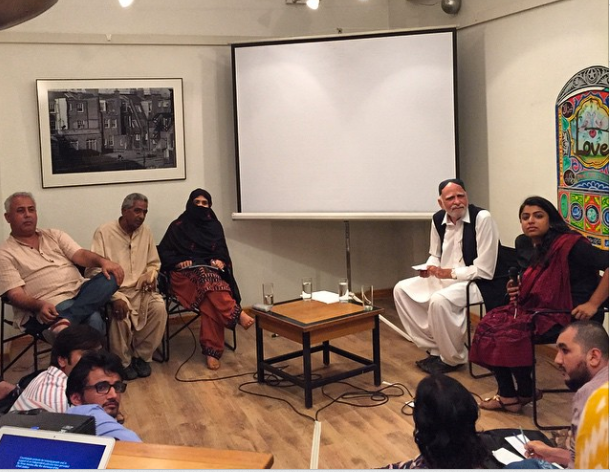
The news of cancellation of the “Unsilencing Balochistan” went viral and was condemned by many. However, Sabeen was different as she did not limit herself to verbal support only. She herself arranged another “Unsilencing Balochistan” program at the T2F for April 24th 2015. In this program Mama Qadeer Baloch, Farzana Majeed, Wusatullah Khan and myself were the panel members and Moneeza Ahmed the moderator.
The T2F that day was so full that there was hardly any standing space left. The discussion was heard very attentively. The session was being filmed by Haya Iqbal Fatima and it was one of the best sessions ever held at the T2F and Sabeen had looked so happy.
When the session ended and she was about to leave with her mother, I went up to them and thanked Sabeen. Her mother said that someone has to speak up and Sabeen does. I went back to Mama and Farzana who were there and we were discussing how to transport them to Lyari as we had a few cars. Not even 5 minutes had elapsed since Sabeen left, Moneeza who was still there came up to me and said, “Sabeen has been shot”, and walked away. It was so unbelievable that it didn’t register with me. I called her back and asked her again as to what she had said, she repeated her words. I told Mama, Farzana and others there was utter disbelief that such a thing could happen. We went and dropped Mama and Farzana in Lyari. There was gloom all around our souls.
The next day her funeral was held and Sabeen left the T2F for the last time. Thousands of people had come and those we knew we condoled each other and consoled each other. The 24th of April 2015 was a tragic day indeed and the 25th an extremely sad day.
Sabeen Mahmud was a compassionate, kind caring person who wanted to help out all those who were sidelined and neglected by the mainstream. The T2F was a social space where ideas were exchanged and plights were highlighted.
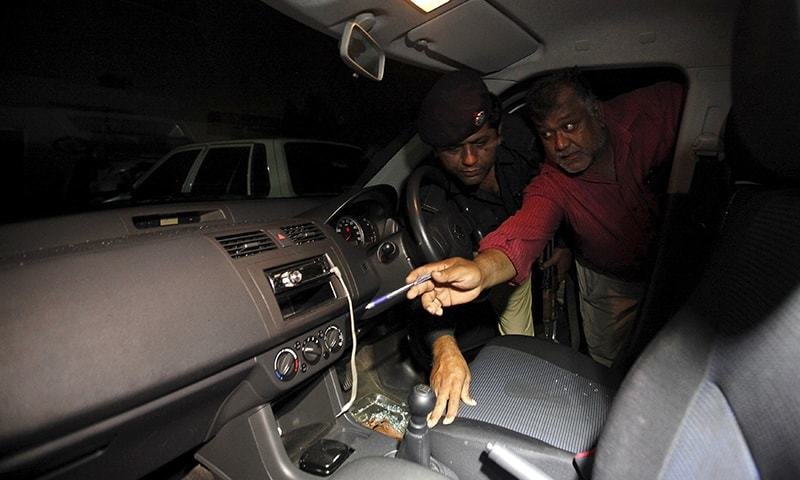
Why did Sabeen become a victim of the systematic policy of deterring people through death and threats of death? She was killed to deter the civil society from furthering causes which would challenge the State policies of repression and exploitation. After Sabeen’s killing people began to think twice before espousing a cause and specially the Baloch one. Though they came up with a killer’s confession and the rationale he gave for his action but it was blatantly obvious as to why the day she had arranged the session on “Unsilencing Balochistan” was chosen to commit the evil crime of assassinating a person as wonderful and useful as Sabeen Mahmud. The Baloch issues remain generally off limit from the mainstream and only some brave people do still risk themselves to speak and talk about Baloch.
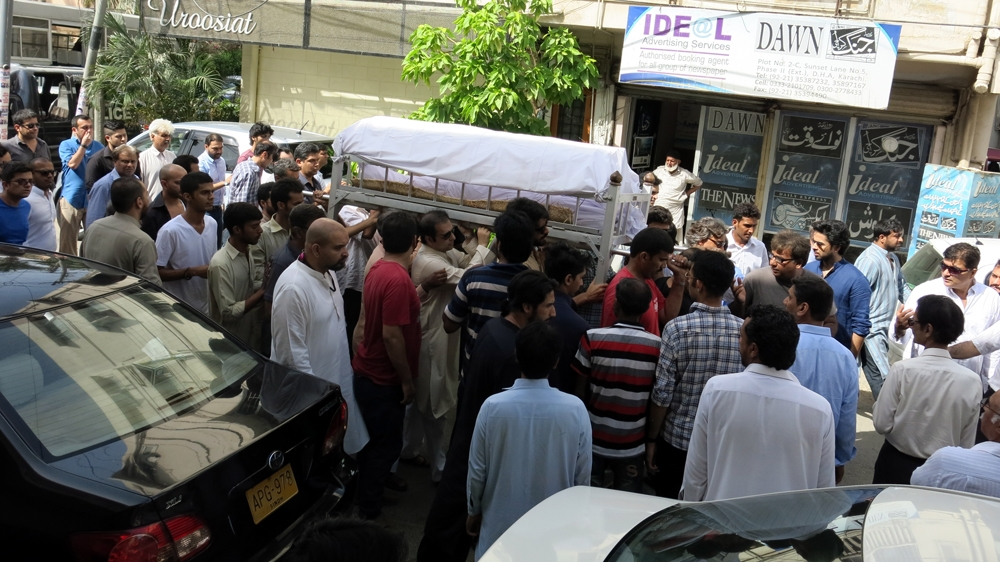
It should be understood that we understand that desire for a life of freedom and dignity will exact a price and demand sacrifices which also mean death and the equally disturbing and traumatizing disappearances of the loved ones which have the additional agonizing and distressing aspect of having no closure. The dead you see and the pain you feel is never final but still has a finality while for the missing you torment yourself about what sufferings and what torments your loved ones must be facing. It is an unending ordeal which has no end and no closure and is the worst form of torture for those who wait for their loved ones.
I will give an example which will perhaps help us understand the agonizing pain and the ordeals that the relatives undergo daily. Our friend and comrade Duleep Dass aka Dali s/o Air Commodore Balwant Dass Ret and Mavis Dass who joined the group in December 1971 and was active in educating people in the Marri area where we were. When the 1973-1977 insurgency started on the 18th of May 1973, he was a helping hand in every way. I had imparted to him basic medical knowledge and treatment methods which he responsibly dealt with.
He was coming to Sindh, if I remember correctly, it was mid 1975 for discussions as the rest of the group was in Sindh at that time but he was picked up at Belpat by the army along with Sher Ali Ramkani Marri as they were betrayed by the person transporting them. Both were never heard of again.
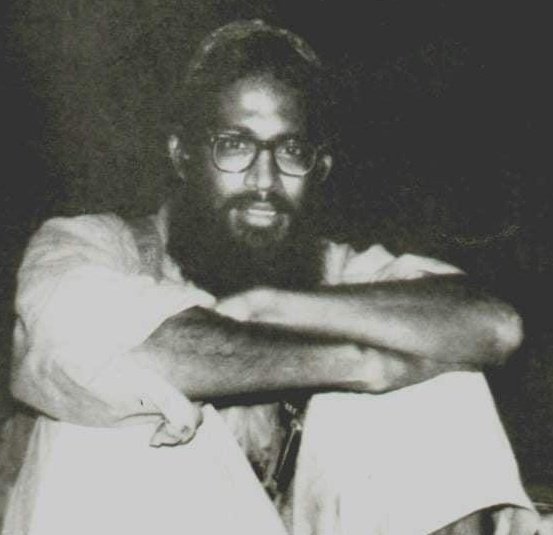
I returned from Afghanistan in April 1991 and some years later Dali’s parents got in touch with me via Sherbaz Mazari Sahib to ask about Dali. They wanted to know if by any chance he was alive or there had been any new about him from any source since his disappearance. There hadn’t been and I could not give them false hopes. However, his mother who then suffered a stroke a couple of times but retained clarity of mind by recognizing people and keeping abreast of whatever situation was in the world. However, whenever I went to visit her at their home in Karachi the first question she would ask of me was, “How is my Johnny” Johnny was Dali’s nick name. Even in her subconscious the thought that her son is alive persisted. She till the very end of her life believed her son was alive.
Repression and exploitation prompted resistance from the Baloch people. Resistance prompted brutality and brutality resulted in conflict. Conflict resulted in deaths and over and above that the State started picking up young men even at a presumption of having sympathy for the resistance. Not only did the State do this on its own but it outsourced this work to paid mercenary Baloch who sold their souls and conscience for a pittance. These death squads were funded and protected by the army and state it was a complementary existence for them each supporting and doing the same task. The death squads had and still have immunity. The cost of deaths and disappearances took a heavy toll and this could not be left unchallenged.
To counter the disappearances the women relatives came to the forefront and the organization of the Voice of Baloch Missing Persons was formed in September 2009 by late Abdul Qadeer Reki (Mama Qadeer) whose son Jalil Reki was killed by State after abduction and by Nasrullah Baloch whose uncle Ali Asghar was missing since year 2000. Also associated was Sammi Deen whose father Dr. Deen Mohammad was disappeared in June 2009. The female relatives of the disappeared began to agitate for the recovery of their loved ones like Argentinian mothers for their disappeared sons.
In October 2013 VBMP under Mama Qadeer organized a Long March whose participants were mostly female relatives of the disappeared. Farzana Majeed the sister of disappeared BSO leader Zakir Majeed was in the forefront as was Sammi Deen. They marched from Quetta to Karachi in the first stage and then from December 13th 2013 they started the March from Karachi to Islamabad. I marched with them for 26 days in different stages. It was the most powerful political action and statement regarding the condemnation of the State’s policy of disappearing people and its ‘abduct, kill and dump policy’. The State however chose to ignore it.
The complexion of the struggle changed gender-wise as men were all under threat of being disappeared so the women took up the mantle of opposing the State brutality peacefully with protests and although initially their involvement was limited to the human rights aspect but because the human right violations by the State were prompted by the political demands of self-determination and right over resources the women and their demands could not remain isolated from the political demands and political actions.
When the Chairman of the BSO-Azad Zahid Baloch and its member Asad Baloch were picked up in Quetta on the 18th of March 2014 in front of Banuk Karima Baloch the change crystalized as Banuk Karima by dint of her wisdom, courage and ability to organize was chosen as the Chairman of the BSO-Azad which had been declared a proscribed organization the first step of the qualitative change of leadership passing over to Baloch women was taken.
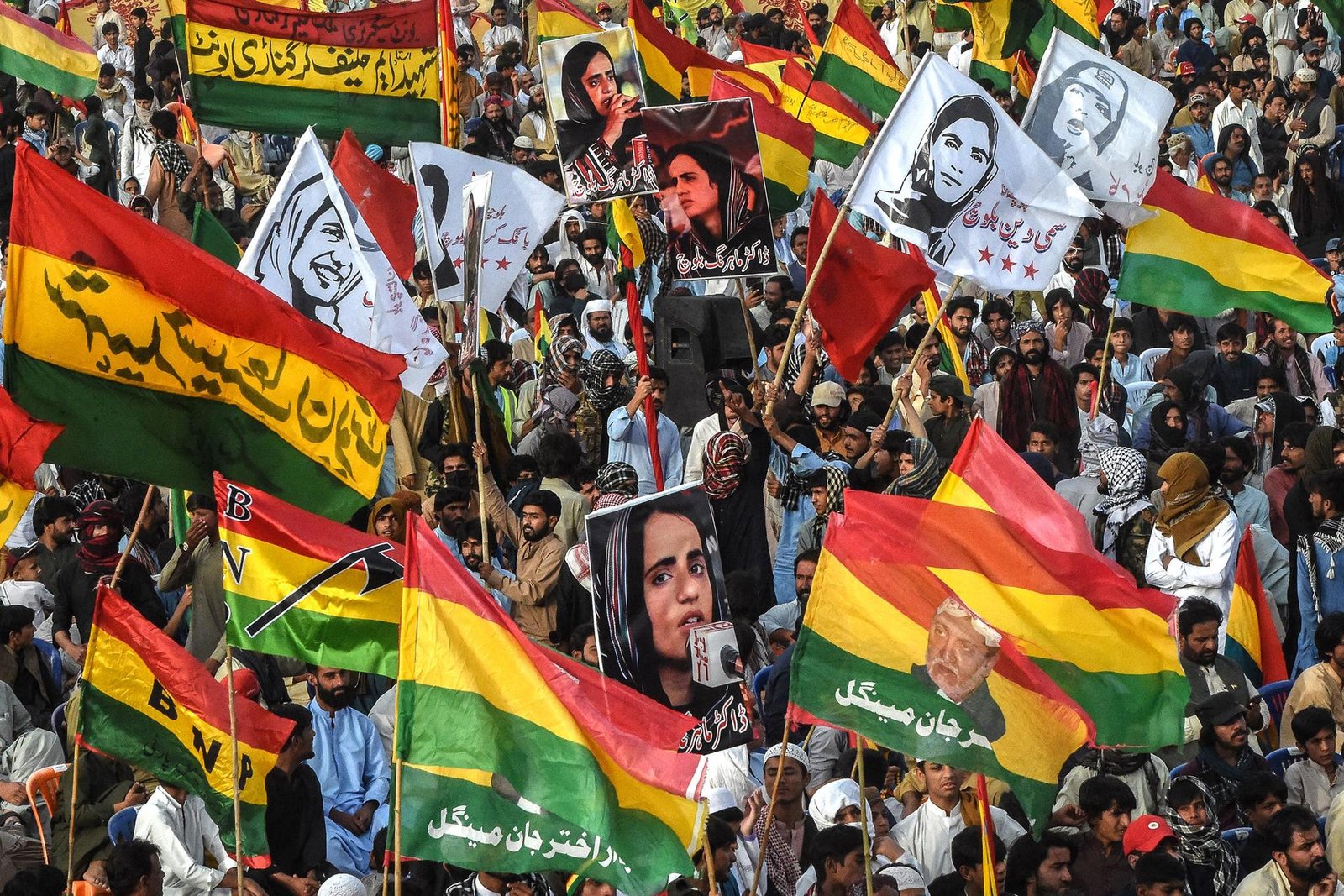
This was a landmark event in the history of the Baloch resistance struggle. With this the Baloch women gradually took over the role of leadership of the struggle. It was a cataclysmic change but it wasn’t an abrupt cataclysmic change but it slowly and subtly became a reality and today we see Mahrang, Sammi, Sabiha, Beebow, Gulzadi, Shalee, Nadia, Fozia, Seema, Mahzeb, Sadia, Saira, Mahan and others are accepted as leaders not as a favour to them but that they have earned it through sacrifices and hard work and they have followed the glorious examples of Nawab Khair Bakhsh Khan and others who persisted in their love and service of Balochistan and its people by resisting and opposing the repression and exploitation unequivocally and not letting any lapse tar their integrity or reputation as far as the love of land and liberty mattered. These women have suffered personal losses in their family as members of their family became victims. Women are now being disappeared with impunity by the authorities on false and fabricated charges and confessions of being recruited as ‘suicide bombers’.
An apparent fact that all have seen and noticed is that with the passing of the leadership to the new generation specially women the old political parties have lost whatever credibility, if they had any, in the eyes of the people. Their habitual attitude of “Running with the hare and hunting with the hound” benefits them materially but soon they stand exposed. This is what has happened and is one of the most positive developments in the political scenario of Balochistan. People no longer see the political parties as being their representative.
How does one sum up such an important piece which is so very detailed too. Due to its importance so many aspects had to be dealt with there is still space for filling up details which the Baloch may know but for a layman parts would be all Greek as she/he may not be able to relate to some events, concepts or even sentiments. Conflict which has been imposed upon Baloch has not been of their choosing their rights and sovereignty were ridden upon roughshod and they had no option except to defend the best they could.
The defense in turn brought more retribution for the oppressors thought that the Baloch would give up after a certain stage of suffering but their grasp of history and understanding of Baloch was flawed and Baloch have continued to resist with more fervor and vehemence rather than giving up in face of brutality and carnages. The State is so desperate at the increasing burgeoning resistance that it has kept Mahrang and others in jail on fabricated charges and fails to understand that by keeping them incarcerated they are pouring oil on fire of resistance. However, their release will not in any way ease the situation for the state. They fail to understand that antagonisms now have reached a point of no return.
Conflict, as I have stated often above, brings death and misery and there have been deaths in thousands and disappearances and the presumed dead also numbering in thousands. The Baloch families have protested in a dignified manner worthy of respect of their loved ones. The Baloch have not sold their grief not have they tried to materially benefit from the tragedy that has been inflicted upon them. They continue to resist with valour and intrepidity; they also mourn for the dead and missing with dignity and poise. Their morale and spirit remain unshaken and undefeated. They earnestly believe in their eventual victory and that is the reason for them to continue on this difficult and deadly path.
Pakistan is following the deadly policy of brutal force against even legitimate demands and peaceful dissent. It considers itself as the arbiter who decides who and what lives for it thinks deaths will deter people and force them into unwilling submission so that its writ and fiat become supreme and it may do whatsoever it wants to do with resources and laws and not be answerable to anyone. If deadly force were to be able to achieve this objective the tyrants of the yore and present times would still be ruling the world but they and their power were reduced to dust and ashes by the people who continued to resist and fight despite the losses they had to suffer to do away with the tyrants. Those before it failed, history says it will fail. Necropolitics is a doomed ploy and policy and has failed everywhere from Vietnam to South Africa and recently in Gaza where it has failed from 1948 to present day.
It is not that States practice necropolitics alone, for concomitantly they employ dehumanization as well. They depend on this combination because a people deprived of dignity and self-respect becomes ashamed of its existence and forgets that resistance is the cure for the problems they face. Dehumanization is done by making the identity of those people a derogatory one like them being ‘Fitna’; stigmatizing them as terrorists, mercenaries, agents and uncivilized. They even penalize people who attend funerals of those killed by the State. This is what is being done here to Baloch and to those who support the Pashtun Tahafuz Movement. This they reinforce by humiliating people at the army and Frontier Corps (FC) check posts to make them feel strangers and belittled in their own land. This dehumanization has an opposite effect: people’s resentment and anger deepen and intensifies.
Apart from this the bodies of those killed are mutilated beyond recognition sometimes. Razak Baloch’s body was recognized by his birth mark. Sangat Sana’s torso had 27 bullet wounds. At times ‘Pakistan Zindabad’ has been cut on to their bodies. Those they cannot subdue receive this treatment while persons like Gulzar Imam who sell their souls and conscience live under protection of the army because they cannot have a normal and safe life after the betrayal.
The scale at which Pakistan practices necropolitics in Balochistan will become apparent by what is stated below. Although Pakistan has always said that only a handful of misled people are involved in resisting its policies and actions in Balochistan. This apart from the often-announced mass surrenders which are state-managed.
Whether this claim holds water or not will become apparent by the statement that Additional Chief Secretary Muhammad Hamza Shafqaat and Balochistan Counter-Terrorism Department (CTD) chief Aitzaz Ahmed Goraya gave on the 14th of December 2025. They said the security forces had conducted 78,000 intelligence-based operations (IBOs) in the province this year, killing over 700 militants. Additionally in various operations and attacks, 202 security personnel and 280 civilians were killed in Balochistan this year.
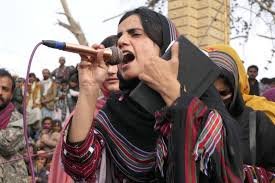
Where 78, 000 operations take place in a year the scale at which the policies are being resisted becomes very clear and of the 700 killed no one know how many of those were from those forcibly disappeared for it is common practice of the State here to bury them without identifying them. The state not only fears the living it fears the dead too and therefore buries them in unmarked and unidentified graves. They know these dead and their graves will haunt them. The path that the State has chosen is self-defeating because if the scale of killing that has been going has not been able to break the Baloch determination and spirit it never will. History progresses by its own laws; it is not dependent on the amendments and laws that the State enacts to fortify itself. All these laws and ploys come to nought eventually in face of peoples’ determination, resistance and power.