Nearly four years after Salman was forcibly disappeared on his way to Quetta, by counterterrorism officers, his family is still searching for the most basic answer: whether he is alive. Their search has taken them from the silence of their home to police stations, government commissions and protest camps, but no closer to finding him.
B
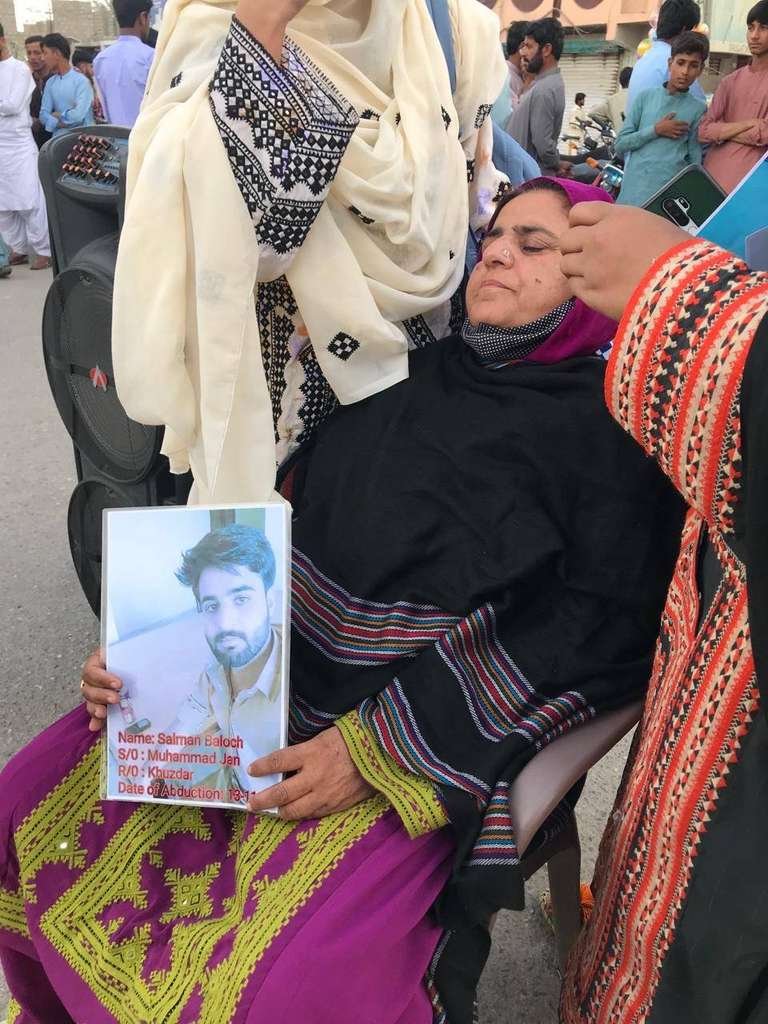
“There was a time when I wanted to live. Now, I live only to wait for death,” says Robeena. “How can a mother wish to live when a son as handsome as mine is forcibly disappeared?”
Almost four years have passed since her son, Salman was forcibly disappeared, and Robeena still looks at his photograph and asks herself the same question: how could they have lost him?
“When I hold his poster, I break completely,” she says. “How did my beloved son slip from our hands? How could we let him disappear?”
Salman was 23 when, according to his family, personnel of the Counter Terrorism Department (CTD) forcibly disappeared him in the Hazar Ganji area, on the outskirts of the provincial capital, on November 13, 2022. He was travelling from his hometown, Khuzdar, in Balochistan, to Quetta.”
The last thing his sister, Sadia, heard from him was that he had reached Hazar Ganji. Then his phone went off. She has spent the years since trying to discover what happened after that final call.
In the beginning, the family believed silence might bring him home. They were afraid that approaching the police, filing a case or publicly accusing those they believed had taken him would put Salman in greater danger. Perhaps, they thought, if they remained quiet, those holding him would show mercy and release him.
So they waited. Days became months, and months became a year. Salman did not return.
For Robeena, time has become difficult to measure by anything other than his absence. She says she has relied on sleeping medication since 2023. Even the ordinary act of going to bed has become an encounter with a question she cannot process at all.
Is her son still alive? If he is, where is he being held? Is he being fed? Has he survived whatever may have happened to him?
“The thought kills me,” she says, “when I imagine that Salman may still be alive in some dark dungeon, suffering. And then I think, what if he could not survive it?”
She cannot confirm either possibility. It is the uncertainty that refuses to leave her.
— — —
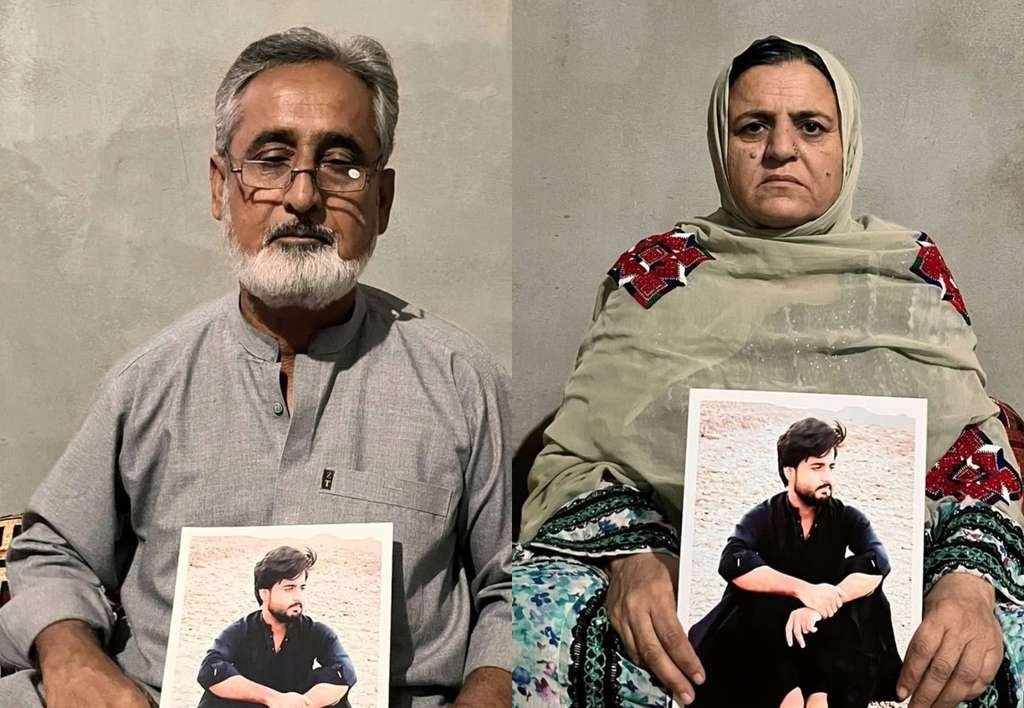
Before his disappearance, Salman had begun to build an ordinary life.
His father, Mohammad Jan, had worked as a gatekeeper at the Balochistan University of Engineering and Technology in Khuzdar before retiring. After completing his intermediate education, Salman took up similar work at the university on a contractual basis.
He was not enrolled in a degree programme, but he wanted to learn. In the mornings, he attended a computer course; by the afternoon, he reported for duty as a gatekeeper. For 15 months, he followed this routine. It was a modest beginning, but it was his own: he was earning a living and acquiring skills, moving towards a different future.
He was also engaged to a relative whom he had chosen to marry. His fiancée is still waiting.
“We have no answers for her, and she has no questions for us,” Sadia says.
The words speak to a peculiar helplessness that has settled over the family. There is no death to mourn, no confirmed detention to challenge, no date on which they can expect his return. Even the language ordinarily available to families in grief seems inadequate. They cannot say he is dead. They cannot say he is safe. They cannot say when they will see him again.
At the family home in Khuzdar, Salman’s absence has left his aging parents and Sadia struggling to preserve what remains of their former lives. Two other daughters are married.
Mohammad Jan, now retired and living with a heart condition, rarely speaks about his son. Sadia says he often falls silent when Salman’s name is mentioned. His eyes fill with tears, but the words do not come.
“I cannot explain this,” he says, pausing as he struggles to describe what the disappearance has done to him. “This pain cannot be explained. There should have been another language for it, and I still don’t know that language.”
His silence is different from Robeena’s anguish, but no less revealing. She returns to her son’s photograph; he struggles to say his name without crying. Both remain suspended between the possibility of his return and the dread that he may never come home.
— — —
The family’s fear of speaking out did not begin with Salman.
According to Sadia, relatives had previously been forcibly disappeared and later released. She alleges that the CTD compelled her uncle and cousin to hold a press conference after their release, during which Salman’s name was also mentioned. About a week later, she says, Salman was forcibly disappeared by CTD.
Sadia was in Quetta at the time, attending a course in family planning. Salman’s last communication with her came during that journey from Khuzdar. After his phone went silent, her own plans began to unravel. She never completed the course.
For more than a year, she and her parents hoped that avoiding public confrontation would protect him. But the silence they had chosen out of fear brought no news of his whereabouts.
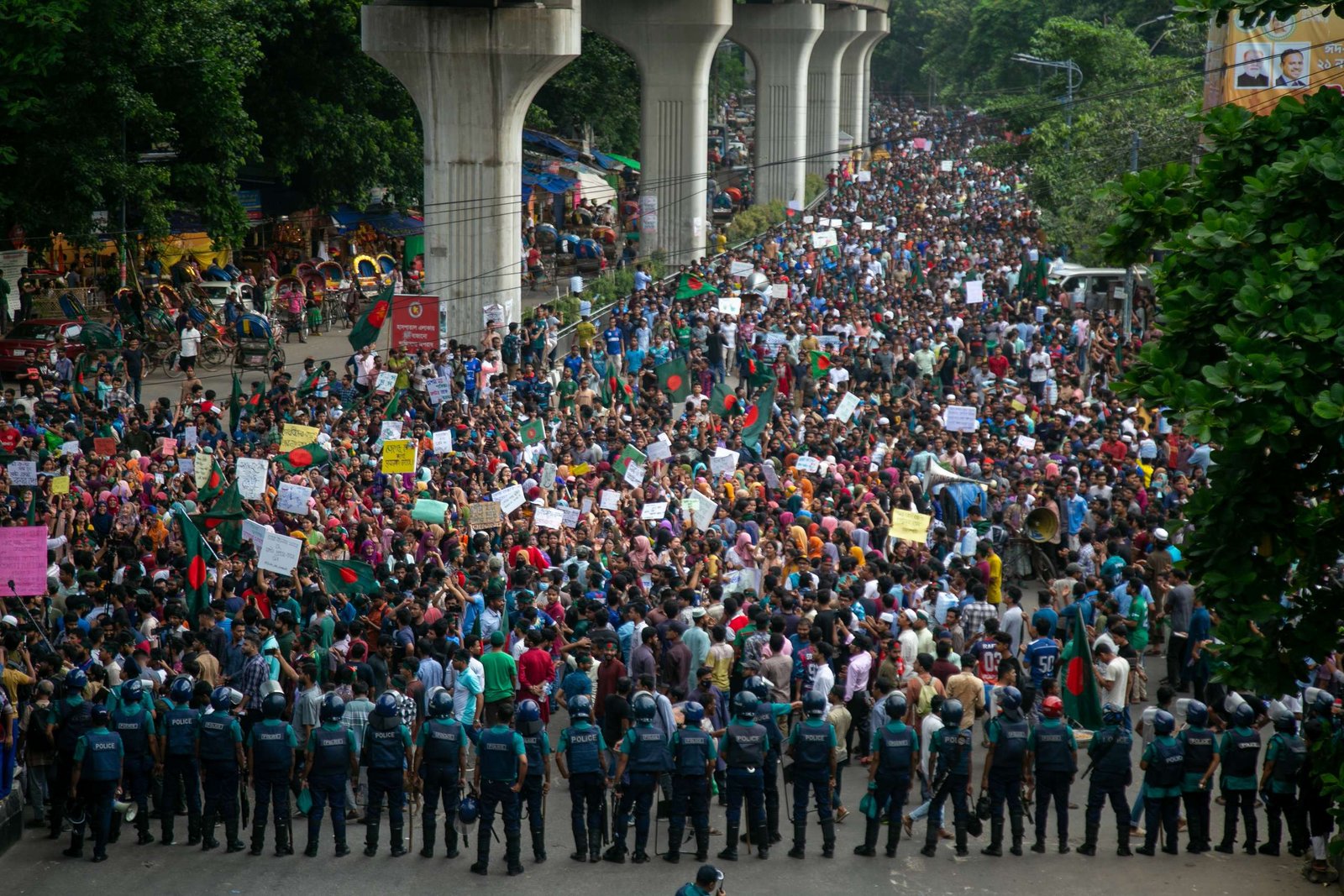
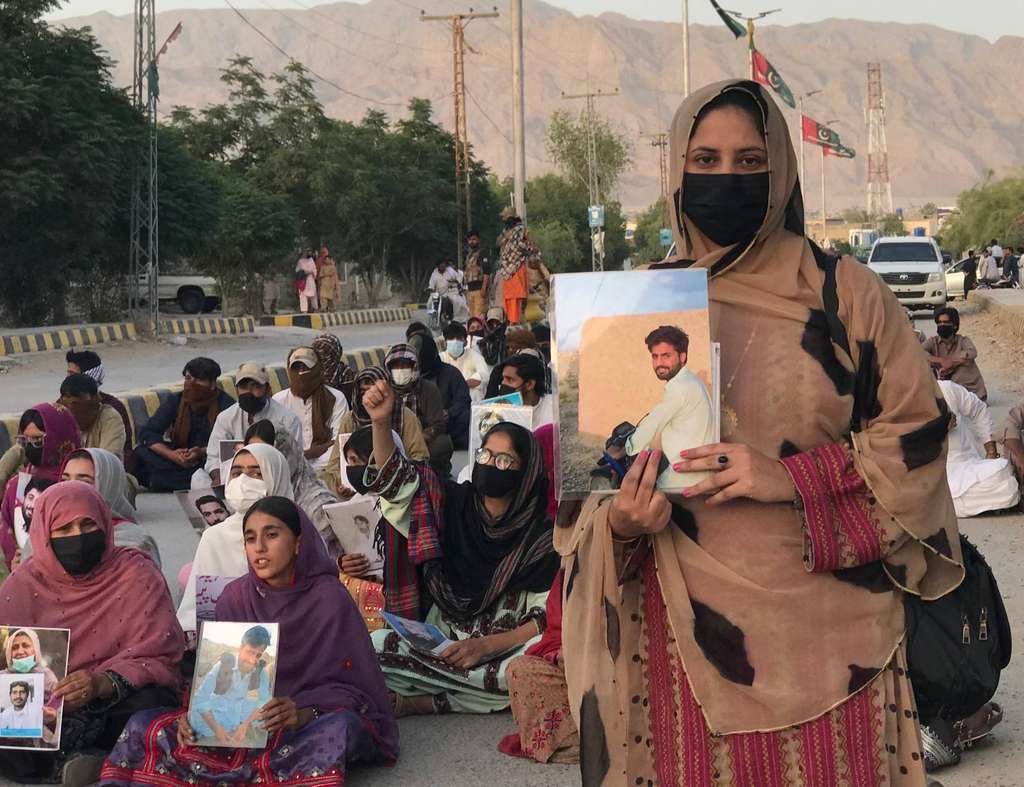
In December 2023, the family joined protests for the first time, taking part in a long march organised by the Baloch Yakjehti Committee (BYC), a predominantly women-led Baloch rights movement campaigning against enforced disappearances, extrajudicial killings and other human rights violations.
The march from Turbat to Islamabad brought together families who had long been searching separately for missing relatives. For Sadia and her family, it marked a departure from their earlier belief that remaining silent offered Salman the best chance of release.
They were no longer waiting only at home.
Sadia says she spent 73 days at the Islamabad sit-in, appealing to the government and its institutions to help recover her brother.
“I sat in protest in Islamabad for 73 days,” she recalls. “I made every possible appeal to the government and its institutions to recover my brother. But after those 73 days, I returned to Balochistan crying, disappointed and without him.”
“Who are we supposed to ask for justice?” she says.
— — —
On February 17, 2024, Sadia went to Shalkot Police Station in Quetta to register a First Information Report (FIR) concerning Salman’s disappearance.
She says she wanted to name the CTD, the agency she believes took him. At the station, she says, she was assured that the complaint had been registered against the department. Only later, through her lawyer, did she learn that the FIR named unidentified persons instead.
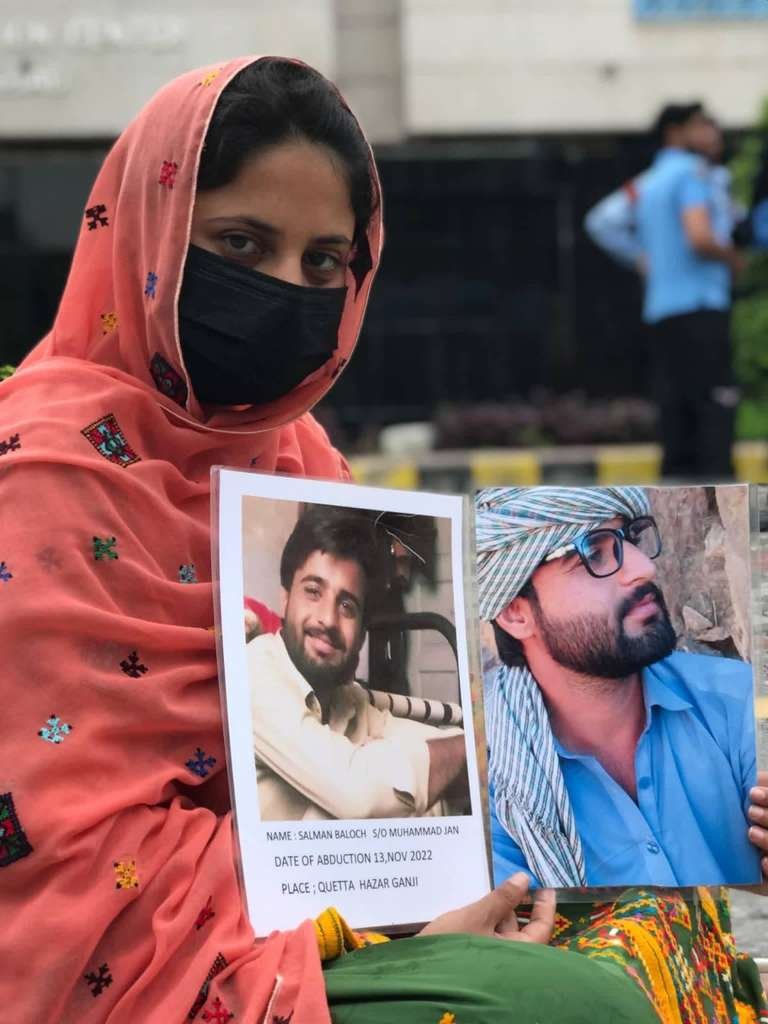
That same day, she visited the protest camp of Voice for Baloch Missing Persons (VBMP), a rights organisation that has spent years demanding the recovery of disappeared people and accountability for their cases. Its longstanding camp outside the Quetta Press Club has become a gathering place for relatives carrying photographs and appeals for information. There, Sadia recorded a video calling for Salman’s return.
Her search also brought her before a Joint Investigation Team (JIT), where she says she appeared repeatedly over the following year. Each hearing seemed to begin with the same questions: Who was Salman? Where had he been travelling? When was he taken? How did the family know he had disappeared?
She answered them again and again.
“The questions would exhaust me,” she says. “But I had to go. I had to go for Salman.”
At the end of the proceedings, she says, officials repeatedly asked her to produce an eyewitness to the disappearance.
“Where could I bring an eyewitness from?” she asks.
According to Sadia, officials told her that investigators had visited the area where Salman was taken, but people there said they had not witnessed such an incident. She was then asked to bring forward the person who had informed her of the disappearance.
“All our pain is just a joke to them,” she says.
The demands grew harder when officials asked her to bring her father. Mohammad Jan, she says, could neither travel easily nor endure what she described as the harshness of the questioning.
“Even if I were not a heart patient, even if I could endure their questions, the same questions repeated over and over, the questions that make a mockery of our pain, I would still refuse to go,” says Mohammad Jan.
“How can you seek justice from the very system you believe has wronged you? A grown son is taken away as though he were a piece of paper carried off by the wind. And then, as if taking him were not enough, they deny you even the right to know whether he is alive.”
He pauses. Tears gather in his eyes.
“The least we can ask for is the right to know whether he is alive or dead.”
His voice falters. Then he repeats, “Just the right to know. Whether he is alive or dead.”
Sadia continued appearing without him.
On February 27, 2025, according to her account, the case was closed for lack of an eyewitness. She did not stop. Through a lawyer, the family again approached the court, and a judge subsequently directed that the matter be reconsidered.
On August 20, 2026, Sadia says, the case was reopened, only to be closed again the same day, once more because no eyewitness had been produced.
Years after Salman’s disappearance, she was still being asked to provide evidence of an event she had not witnessed. The very reason she was seeking an investigation was that she did not know what had happened to him. Yet in her account of the proceedings, that lack of knowledge had become an obstacle to obtaining answers.
— — —
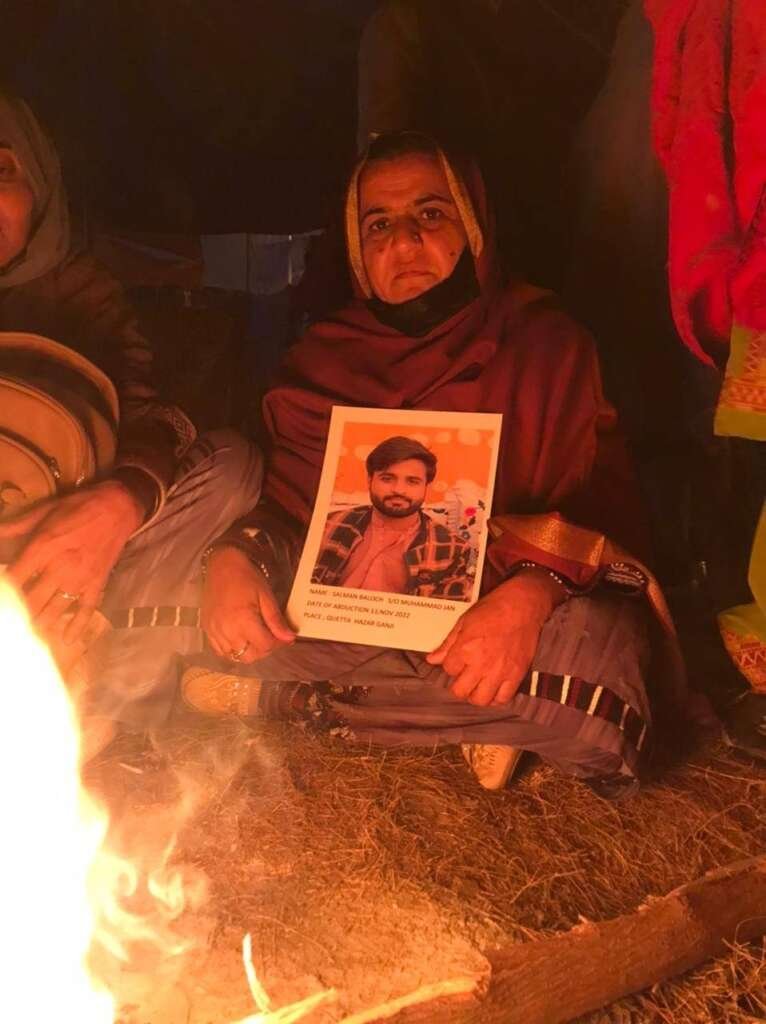
Across Balochistan, families of the disappeared have described similar journeys through police stations, courts and investigative bodies, often without learning the fate of their relatives.
For many families, the search for a missing person has also become a struggle to preserve their right to protest. Sadia says four FIRs have been registered against her in connection with protests. She no longer lives with her parents and has stopped attending demonstrations, fearing further legal consequences.
The family’s loss has extended far beyond Salman’s absence. Sadia’s education was interrupted. Her parents have grown older in uncertainty, and her father’s health has deteriorated. Sadia says she, too, has experienced depression and relies on medication to sleep. The home to which she once hoped to bring Salman back is no longer a place where she can live freely.
Even after years of protesting, petitioning and appearing before investigators, she says, the repeated closure of the case is not what disappoints her most.
“What breaks me,” she says, “is that after all these protests, all these campaigns and all this struggle, I have still not been able to find out even the smallest thing: whether my brother is alive or not.”