On a late summer evening, my eyes vary from life itself; it’s often the case, a cloudy malady. I was on the hunt for writers on Balochistan when I came across a blog by a journalist. It was 2013, the blog was called Terra Incognita. I read the biographical note on the blog first:
Sajid Hussain Baloch — a journalist trying to tell some of the events of an untold story from terra incognita, Balochistan. After working for Daily Times and The News International for six years, I now work as a freelance journalist, contributing articles for newspapers and news agencies. I mainly cover the war-torn region of Balochistan.
Wartorn and terra incognita, Balochistan was in 2013 and is so today.
The Baloch live in Balochistan, which today is a province in Pakistan; they also live in Iran (in a province called Sistan-Balochistan) and many in Afghanistan. One tribe in the 1920s, inspired by the Bolshevik Revolution and Lenin, moved to Central Asia, fought on the Red side in the civil war, and they settled and live there. Like the Kurds, with whom there is a historical relation, the end of European empires left them divided between nations, without one to call their own. This was not the case at the time of Partition of India. The Baloch had a state, named Kalat State.
In 1947, Pakistan and India came to form new states that had no prior historical existence, but Kalat State simply reverted to self-rule of the pre-British period. The Baloch, since the 1930s, had been preparing for the departure of the British and had a considerable Jacobin population that fought and won a written constitution and parliamentary system with an upper and lower house and a symbolic head of state in the Khan of Kalat.
Kalat State in 1947 was unique in South Asia for having founded a constitutional system that shared power between the different class groupings. They had come to a settlement on the internal order of society and each group had decided to share power — something still not achieved in Pakistan. The constitution kept the Khan of Kalat happy with symbolic power as head of state; it kept the sardars (mostly British loyalists) happy with a place in the upper house of parliament; but the Jacobin socialists wrestled for the first time power for themselves in an elected lower house. Nowhere else in the former British Empire was there a Jacobin constitution worked out, settled upon, and operating with consensus of the population in 1947.
Neighbouring Pakistan, led by Governor-General Jinnah, liked neither the Baloch constitution — it set a bad precedent — nor the Jacobin socialist Baloch, and least of all the independence of Kalat State. In March 1948, the Pakistani army made its way inside Kalat State and Jinnah strong-armed the Khan of Kalat to sign a treaty of accession. While the Baloch had political idealism and intellectual ability, they lacked the cunning of Odysseus or the overdeveloped military of Pakistan.
Not wanting, in the words of the Khan of Kalat, “a fraternal war,” the Khan gave up sovereignty and signed a treaty of accession of Kalat State to Pakistan against the vote of both houses of parliament. Jinnah put an end to Kalat State’s democratic traditions and started ruling as governor-general, sending out Pakistani political agents to rule different parts of Balochistan — just as the British had. Since 1948, Balochistan has been ruled from the outside by the Pakistani army and state. The Baloch have seen their gas, coastline, gold, copper, and land taken for a dime. The loot comes about and is maintained with a superstructure of violence all too common in the Third World.
Balochistan is terra incognita, indeed, and with all such spaces it is made so. The history noted above isn’t taught or known, books that talk about it are banned, primary sources kept behind lock and key, Baloch intellectuals murdered and journalists likewise.
That night, I read every article on Sajid’s page, every sentence, and many paragraphs a few times. I even lingered at the generic WordPress blog menu, hoping to find more words of Sajid. There was beauty and weight to the articles, and some paragraphs carried themselves as whole stories, like Eduardo Galeano’s writing. Sajid wrote stories of people of Balochistan with a literary slant of Gabriel García Márquez. The chain of influence on Sajid’s writing was clear to me; it travelled by Márquez’s committed journalism and magical connection to his land and culture through the literary ironic humour and fatalism of Pakistani journalist/novelist Muhammad Hanif, who himself cites Márquez as an influence.
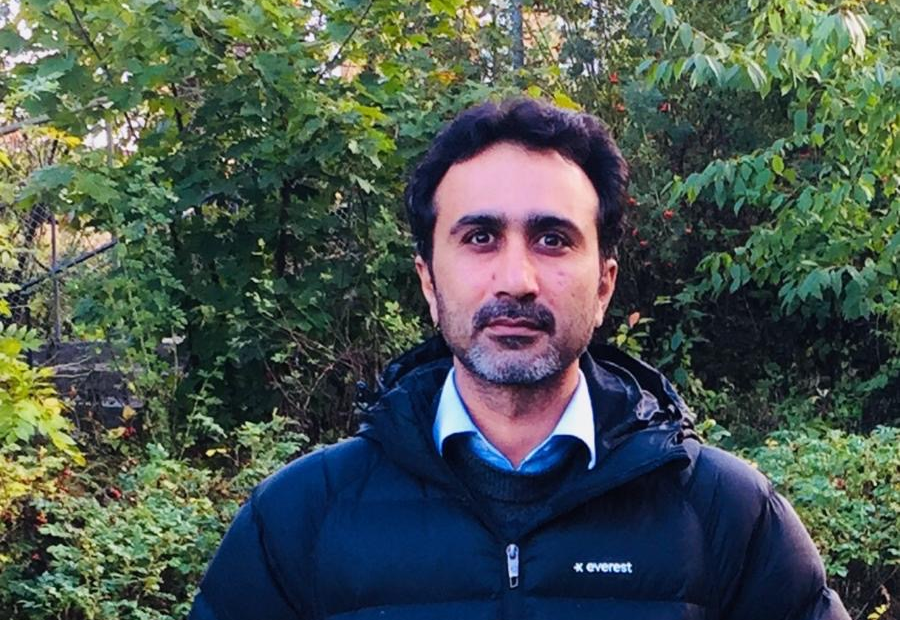
I loved the style. Like Hanif, Sajid was primarily a journalist, engaged with the people but not of a political party. He had taken up a philosophy, nonetheless: one of solidarity and sympathy with ordinary Baloch — like Fanon, he reported on the lumpen-proletariat. The former drug addict turned guerrilla fighter, the veterinary turned animal-rights advocate even in the midst of guerrilla war, the unbending uncle who despite torture continued to be political — the stories, writing style and subject matter were simply breathtaking. Sajid could write about it all because he was born into it. The activists he wrote about were his neighbours, his relatives, and in his social habitat.
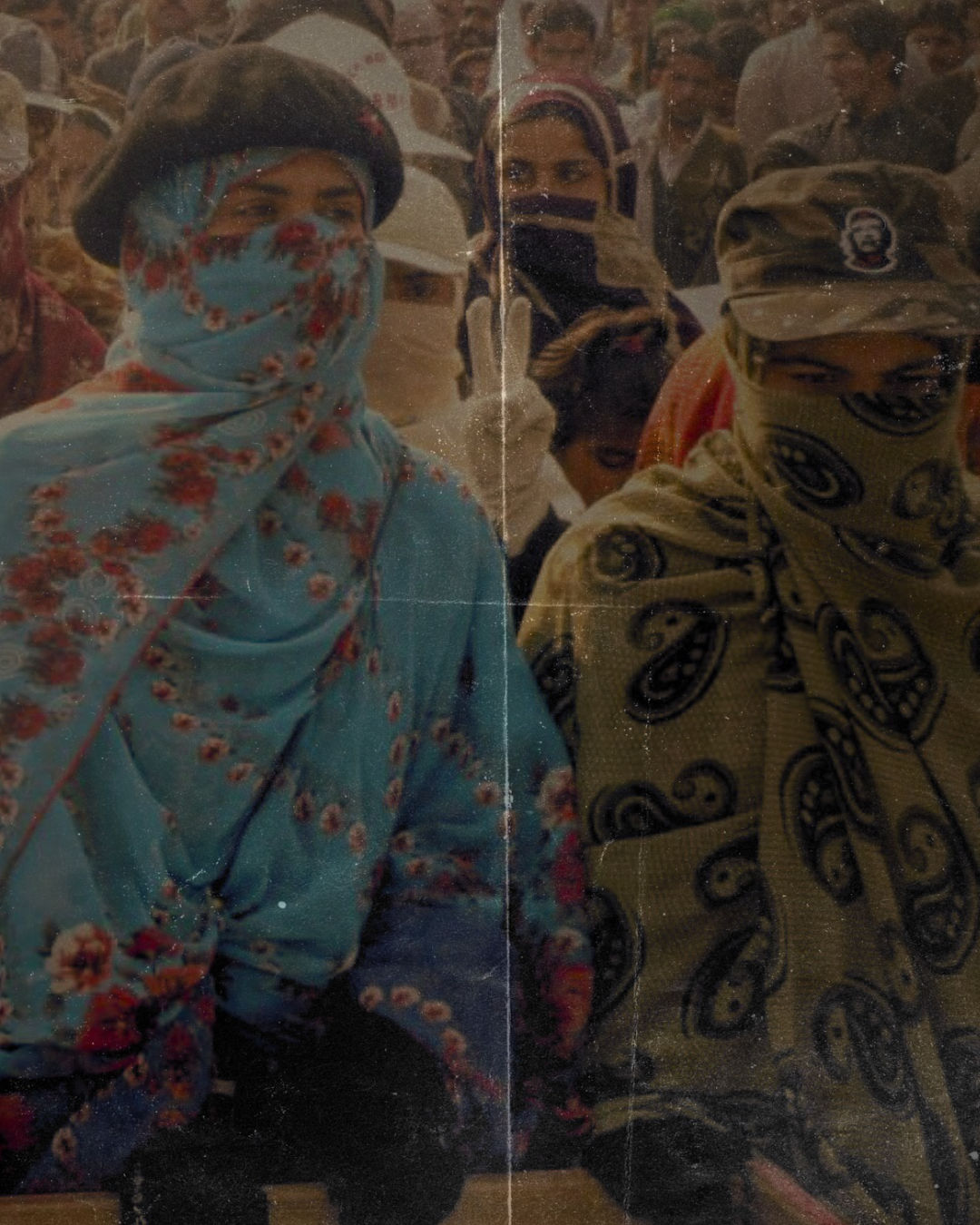
Everyone, for a time, in Awaran, where he was from, was an activist. In schools the flag of Balochistan flew, the Pakistani anthem was banned and students aligned with Balochistan Students Organisation–Azad (BSO-A), a famous student organisation, arranged book festivals, study circles and held themselves up as model citizens. They were not allowed to take drugs or smoke, they were seen with books in hand, often were the top students in school. Parents, noting this, encouraged their children to be like them. They wore a beret with a red star to align with the look of Third World decolonial thinkers such as Mao, Ho Chi Minh, Che and Fanon.
Sajid too joined BSO-A. The founder of BSO-A was Dr Allah Nazar, a veterinary doctor turned student leader. After devouring the articles of Sajid, I wrote to him through the contact form on his blog. I told him about Naked Punch and how I wanted him to write for us on Balochistan. He replied a few days later and said he would. We agreed on two pieces, both on the middle-class nature of the Baloch movement, both on guerrilla fighters.
The first was about Muhammad Bux, whose guerre de nom was Jagoo, a drug addict turned militant fighter from Kech. Jagoo was from the Sheedi community of Balochistan, descendants from Africa. Balochistan and neighbouring Sindh have the largest population of people of African descent in South Asia (nearly a million). Many Sheedi members have in recent years joined the guerrilla war, and Jagoo was one of the most famous.
The article, titled “Balochistan’s Leaderless Resistance,” showed that unlike previous rebellions of the Baloch, this current one did not have elite leaders but was horizontally led. Sajid tells us of how Jagoo joined the Balochistan Liberation Front (BLF):
Jagoo belongs to a new breed of Baloch guerrilla fighters: those beyond anyone’s control. For the first time in Balochistan’s history, the nationalist movement is not being controlled by tribal chiefs, or even by the much-hyped middle-class leader Dr Nazar, the head of the BLF. The Baloch have fought five wars against Pakistan security forces since Balochistan’s forcible annexation in March 1948. But the previous four insurgencies had been fought in the isolated tribal areas of eastern Balochistan.
Previously, the insurgencies were led by tribal elders. Tribesmen would pick up arms at the behest of their sardars (chiefs) and lay them down when the sardar said so. But this time leadership rests with an educated middle class whose participation is based on ideological grounds, and not tribal allegiance.
— Sajid Hussain Baloch, “Balochistan’s Leaderless Resistance”
Guerrilla warfare, or “taking to the mountain,” has been an ancient and persistent form of rebellion by the Baloch and continues today. The first such resistance started the day Pakistan annexed Balochistan, led by Prince Abdul Karim, the younger brother of the Khan of Kalat. The second was that of Nouroz Khan, against the administrative amalgamation of Balochistan with the rest of Pakistan in the 1950s. The third was that of Sher Muhammad Marri in the 1960s, for similar reasons. This was followed by a near-decade-long and highly organised rebellion of the Baloch People’s Liberation Front in the 1970s. The 1980s and 1990s saw a lull in guerrilla warfare, but in 2006, Nawab Akhtar Bugti, head of the Bugti tribe, aggrieved by the state’s extortion of Baloch resources, again took to the mountains. His camp was bombed and he was killed. His death sparked a new wave of guerrilla movements that continue until today.
The grievances of the Baloch throughout have been the same. They are ruled over by Punjabis and are not citizens in any meaningful way. Elections are rigged, their resources of gold, copper, gas, oil, the sea and its treasures are sold to international capital or taken to Punjab in the case of gas, with the Baloch receiving nothing. It is, though, ultimately, a simple question of sovereignty.
In theory, Pakistan is a federation with provinces given autonomy over many issues. In actual fact, Pakistan is structured on a racial/ethnic hierarchy that sees Punjabis at top and the Baloch at the bottom.
There is a historical reason for how this hierarchy came about. In summary: the Sikh Khalsa Army, consisting largely of Punjabi soldiers, was defeated by the British Indian Army in the First Anglo-Sikh War, which concluded in 1846 at the Battle of Sobraon. A mere eleven years later, the sepoys of the Bengal Army rebelled in 1857. The British enlisted soldiers from Punjab and used them extensively to suppress the freedom fighters. The military recruitment proved useful and successful, and the British then embarked on transforming Punjab into the central hub of military recruitment for the Empire.
Punjabi soldiers were rewarded with land and, effectively, bonded labourers from low-caste Punjabi workers upon service and retirement. Punjab was perhaps the only place in the British Empire where substantial rewards were given not only to the created ruling elite but also to the lower peasantry. Loyalty, it was hammered home, meant land and all that owning land implies: dignity, status, wealth, upward mobility. Punjabi soldiers fought in the First World War and the Second World War; they were in Burma. Punjab and the Punjabi soldier were central to the coercive apparatus of the British Empire. For example, in one canal colony project, over 40,000 acres were reserved for rewarding spies.
By the time of the creation of Pakistan in 1947, the Punjab- and Punjabi-dominated army was by far the strongest organised grouping in the nascent state, wielding coercive power and ready to take over not just the military but the country. A famous joke goes: “Every country has an army, but in Pakistan, the army has a country.” To really understand Pakistan, you have to add that the army is Punjabi — or, more accurately, upper-caste Punjabi.
Pakistan was not and still is not a federation. It is, however, a physical space that encompasses many civilisations and nations. The domination of the army and the upper-caste Punjab does not sit well with this civilisational history. The Baloch resist because they are one such civilisation — they have a culture, language, and histories that span centuries and motivate them to fight. They don’t forget, and their poets don’t let them forget.
Jagoo was kicked out of the BLF for animal abuse. The BLF, founded by a veterinarian, did not allow members to ride animals or overload them. Jagoo did both. Once kicked out, he created his own organisation, the Balochistan National Liberation Front. Sajid’s point was to note that the insurgency was not centralised or controlled by tribal heads. Jagoo illustrated his case.
The other piece Sajid submitted was an interview with the most wanted person in Pakistan — then and now — Dr Allah Nazar. After founding BSO-A in 2002, Dr Allah Nazar made it the pre-eminent organisation of Balochistan. The state was not happy, and he was abducted along with six other Baloch activists from Karachi. He was tortured for months and released in a fragile condition — no one thought he would survive. He did. He went into hiding and re-emerged as the head of the BLF. Sajid somehow got in touch with him, requested an interview, and waited a month until Dr Allah Nazar called him from a satellite phone.
Sajid Baloch When you decided to turn to militancy, why, instead of joining the Baloch Liberation Army (BLA), did you and your comrades form the Balochistan Liberation Front (BLF)? Many believe that you wanted a middle-class organisation, as the BLA was being led by a tribal chief.
Allah Nazar Not really. For now, our struggle is for national independence and it’s not class-based. At this time, we need unity among all the classes to get our independence. We are all — be it a sardar or a common man — slaves. Once the Baloch get their independence, they will be free to choose a social and political system for themselves through a democratic process.
Allah Nazar I agree that the tribal system has lost its significance in today’s world. The current tribal system is not the one our ancestors practised. The Baloch cultural tribal system was distorted by Robert Sandeman during British rule. He introduced a new system by allocating absolute powers to sardars in order to control the Baloch masses. After the withdrawal of the British, Pakistan nourished the so-called Sandeman System. Authorities used sardars to counter the Baloch uprising against Balochistan’s forcible accession to Pakistan. Still, most Baloch tribal chiefs, except for Khair Bux Marri, are the stooges of the ruling establishment. So people have lost faith in this system, and tribalism is dying a natural death. In many areas of Balochistan, it has vanished for good.
A few months after the interview and article, I wrote to thank Sajid and tell him how well received both pieces had been. He replied that many journalists had contacted him to get access to Allah Nazar. Over the subsequent months, Sajid was often quoted in international papers as an expert on Balochistan. I was delighted that he was getting the attention his talents deserved. He founded Balochistan Times, a much-needed magazine covering all things Balochistan.
This attention, however, also drew the gaze of the Pakistani state agencies. They had harassed him out of his job as a journalist and eventually out of Pakistan. He was living in Sweden and about to undertake further studies when we first learned of his disappearance and, later, his death. Newspapers reported him to have drowned. The Swedish authorities remained quiet and formal.
It didn’t feel like suicide. I asked his roommates and others who knew him in the days leading up to his death, and none felt it was a suicide. They suggested criminal elements had been hired to murder him.
His death occurred in April 2019 in Uppsala, Sweden. This followed the assassination of Jamal Khashoggi in October 2018 in Istanbul, Turkey. That set an international precedent that governments could and would assassinate dissenters, even in exile. The method has become clearer over the subsequent years: they hire diasporic criminal elements and pay them to carry out murders.
Only a few months later, Karima Baloch, a former leader of BSO-A and another leading Baloch voice in the international media, was also found drowned. She went for a walk in her country of exile, Canada, in December 2020, never to return. What was happening to the Baloch in Canada and Sweden was not unusual for the Baloch — except only the geography of it.
The Birth of Pakistani Necropolitics
Karima and Sajid had both been members of BSO-A and are among hundreds of its former and current members extra-judicially killed. They made it to their thirties. Most are killed while still students. Locally, this form of governance is known as “kill and dump” and the “missing persons issue.” It has a pattern: a person is abducted by plainclothes or uniformed men — usually in pickup trucks with dubious number plates. Most often, the abductors are from Military Intelligence (MI), Frontier Corps (FC), or Inter-Services Intelligence (ISI). The victim is taken to a black site. There, they are tortured. The agencies use a colour-coded system: green for release, amber for continued torture and interrogation, and red for indefinite detention or death. It is a brutal system that dominates governance in Balochistan.
In academia, we can call this mode of governance necropolitics, a concept developed by Achille Mbembe. You find necropolitics wherever people are reduced to disposable bodies: Black men in the US killed by police, those droned in Waziristan, Palestinians bombed and besieged, victims of genocide, Pakhtuns extra-judicially murdered by Pakistani policemen, and those tortured in black sites during the “war on terror.”
To be governed by necropolitics is to be abandoned by all institutional recourse. You do not exist as a citizen. Courts do not respond to you but merely gaslight you. The media does not report your truths. Intellectuals who might speak for you have themselves disappeared. Bureaucracies deny your existence. What remains is a dark state architecture: surveillance, checkpoints, spies, secret prisons, black markets, and — as local rights activist Manzoor Pashteen put it — “Vigo dala rule” (the rule of a Toyota pickup truck used by the intelligence agencies).
Necropolitics in Balochistan is a contemporary invention of the Pakistani state. It is the state’s primary technology for governing Balochistan. Its victims number in the tens of thousands.
Two earlier victims of necropolitics were Qambar Chakar and Ilyas Nizar Baloch.
Qambar Chakar had been a student leader in the BSO-A. A friend of mine met him years ago at Balochistan University, in a study circle on the campus lawn. “He had fire in his eyes,” my friend told me. “He knew he would be killed, but he refused to stay silent. He said, ‘I will speak my truth for the homeland.'”
We never agreed to be part of Pakistan; we were forced to join. Since then, we’ve been ruled like a colony. Our natural resources are plundered. Our leaders, poets, and professors are killed: Akbar Bugti, Lala Munir, Habib Jalib, Saba Dashtyari. The Pakistani state has murdered them all.
We demand independence. And while comrades say that would make us pawns of US imperialism, I ask — are we not already slaves of slaves? Pakistan follows the dictates of the US in the War on Terror. Let us at least choose our own slavery, if that means independence.
— Qambar Chakar
Ilyas Nizar Baloch too was a member of BSO-A. He mentored younger students and edited Darwart, a Balochi children’s magazine. On December 21, 2012, while travelling to Turbat from Quetta, he was dragged off a bus at a security checkpoint.
Later, I interviewed Sangat, who knew both and was present when their bodies were discovered:
I’d seen many dead bodies dumped on Mard Road. They usually came in sacks, with tags to identify them. When I heard two more had been found, I feared the worst — it had to be Ilyas and Qambar. I didn’t leave the van. I was too afraid. The ambulance staff went to collect the bodies. They were tortured beyond recognition. We found tags in their clothes. It was them.
— Sangat
I asked Sangat, hesitantly, to describe what was done to the bodies, for necropolitics only allows us tangled bodies by which to understand its workings: Qambar’s upper body was torn apart — his chest was ripped open by repeated gunfire at the same spot. He had 28 more bullet wounds. His body had burns. Ilyas had also been tortured. He had been shot in the head and chest.
Qambar and Ilyas are just two of the 700 BSO-A members killed between 2009 and 2017. Why were they killed? Because they belonged to a peaceful student organisation that demanded Baloch rights. They were killed for advocating for better education, for basic facilities, and against land theft and disappeared persons, and for Baloch self-determination. Much like Palestinian groups, Kashmiri rights movements, or the Scottish and Catalan independence movements. Bar Israel and India, other countries tolerate such movements. Some even allow referendums. Pakistan does not.
But why does the state of Pakistan use this necropolitical technology rather than allow democratic disagreement? The Pakistani state creates for Baloch a Zone of Non-being. They are the colonised “other” of the Pakistani state. To understand what happens in Balochistan is to understand the nature of the Pakistani state stripped of its self-proclamations — proclamations that unravel because of the contradictions between what is announced and said and what is done on the ground.
This shaky ideological apparatus of the State of Pakistan collapsed after the assassination of Akbar Bugti in 2006. Since then, many Baloch have aligned with the discourse of the Baloch National Movement. The state tried arrests. It tried using feudal lords. It tried torture-and-release. It didn’t try changing itself; it didn’t try negotiating. So, of course, nothing worked. Then it created its version of necropolitics.
Necropolitics was formally unleashed on 3 April 2009. Baloch activists consistently refer to this date as the beginning of the systematic use of kill and dump. That day, Lala Munir, Ghulam Mohammad Baloch, and Sher Mohammad Baloch — key activists in Turbat — were abducted by men in plainclothes belonging to state agencies after being released by an Anti-Terrorism Court. They were taken from the office of Advocate Kachkol Ali. Five days later, their bodies were found 40 km from Turbat. Tortured. Shot.
It is a method of rule that has been systematised, and once invented in Balochistan, it is now the go-to method of rule by the state for all political movements it disagrees with.
To end this crisis, Pakistan must abandon necropolitics. It must initiate a new social contract with the Baloch — one that is drafted by the Baloch, not imposed on them. A good start would be to release the thousands of imprisoned and missing Baloch activists.
It is our collective responsibility to speak out on 20,000 or more “missing persons” in Balochistan and the thousands extra-judicially killed. As we protest Israel’s necropolitics in Palestine or India’s necropolitics in Kashmir, we must also protest Pakistan’s necropolitics in Balochistan.