On Inherited Unfreedom in Pakistan
A few days ago I was in Lahore. We walked to Aiwan-e-Iqbal in the evening, air thick with smoke from grills and passing cars. The day wound down with freckles of orange light sprinkling across Mall Road, gentle against the rush of the city. The endless sprawl of asphalt and steel made it look resilient, more permanent than it was. At the entrance walls of the monument, I saw a man on the ground, leaning back, face unreadable, and in front of him, or emerging from him I realised in a moment, was a charred black outgrowth at the knee. What might have been at some point a limb was a swollen mass, past any recognisable human contour, suggesting long festering rot.
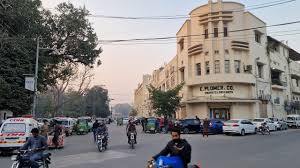
No one helped him. No one stopped for more than a second glance. I did not stop. The city continued around him with that pleasant apathy that cities do.
I have been trying, since that evening, to name what kind of feeling that was: not revulsion, not guilt exactly, but a kind of structural numbness the city seemed to share with me. How human beings come to accept the world they inherit as simply given is not a new question.
In 1845, Henry David Thoreau moved to a cabin he had built near Walden Pond in Massachusetts and spent two years attempting to live, as he put it, deliberately. The word is precise. Thoreau was not fleeing civilisation so much as he was trying to find out what it meant to actually choose one’s life, as opposed to simply falling into it. What he found, watching the people he had left behind in Concord, was that most of them had never faced this question at all. They had inherited their values, their routines, their definitions of necessity and comfort, from the culture into which they were born, and they were so consumed by the business of meeting those inherited obligations that the possibility of examining them never arose. He writes that people accept the common mode of living because they honestly think there is no choice left. This is the key phrase. The absence of choice is not felt as an absence. It is felt as the nature of things.
Thoreau’s illustration is the farmer who inherits his father’s land. The farm appears to be a gift, a ready-made livelihood, a head start. Thoreau insists on seeing it differently. The farm is not a gift to the farmer. The farmer is a gift to the farm. The mortgage, the livestock, the equipment, the debts and duties accumulated across generations, all of it now runs through him. The land will determine when he wakes, what he worries about, what he is able to think about. He will labour his whole life in service of an arrangement he did not design, in pursuit of a security that the arrangement itself perpetually defers. And he will do this without, in any serious sense, having chosen it. The cultural machinery around him, the expectations of neighbours, the norms of the community, the market price of grain, will never permit the question of choice to become legible.

This is not a nineteenth-century American problem. It is the constitutive condition of modernity, and it operates in Pakistan with an intensity that Thoreau, writing from a small New England town, could not have imagined. The young man waking at six to catch a van to a call centre where he will speak in a flattened American accent for ten hours did not, in any meaningful sense, choose this life. The choice was made for him, by the family that needed his salary, by the economy that offered nothing better, by the colonial education system that trained him for service rather than creation, by the cultural consensus that equates this kind of employment with respectability. He is as bound to his particular arrangement as Thoreau’s farmer was to his, and equally unlikely to have had the latitude or the stillness to notice it.
The problem Thoreau identified was not poverty. It was the prior dissolution of the conditions under which genuine selfhood becomes possible. People do not make their lives from nothing. They make them inside arrangements that precede them, that they did not author and cannot easily see. A person who has never had the freedom to examine what they value cannot be said, in any full sense, to have lived. They have been processed by the conditions of their existence.
Thoreau diagnosed the phenomenon. But the phenomenon takes specific forms in specific places, and Pakistan’s form requires a structural account of why inheritance here is so dense, so totalising, so resistant to interrogation. The question is not whether unfreedom exists. It is who built it, for whom, and to what end.
The Apparatus
Hamza Alavi, writing in 1972, identified a structural peculiarity in the postcolonial state that remains the most penetrating framework for understanding Pakistan. The standard Marxist model held that the state was the instrument of a ruling class, the legal and coercive apparatus through which dominant economic interests secured and reproduced their position. Alavi’s argument was that this model did not obtain in the postcolonial case, and that applying it unreflectively obscured something more consequential. The state inherited at Partition was not the instrument of any domestic class because no such class existed in a form capable of wielding it. The landlords were numerous and locally entrenched but fragmented, lacking the organisational coherence required to operate a modern state. The industrialists were embryonic. What existed instead was a military-bureaucratic apparatus, constructed by the British not to articulate the interests of a subject people but to administer them, to extract revenue, enforce order, and project imperial power across a vast and restive territory. This apparatus was, in Alavi’s precise formulation, overdeveloped relative to the social formation it presided over. It had been built at a scale and with a degree of internal consolidation that outstripped anything the nascent Pakistani economy or civil society could match. At independence, rather than being captured by a domestic ruling class, it became its own ruling stratum. It arbitrated between competing propertied interests, landlord, industrialist, comprador, playing them against one another while ensuring that none achieved the ascendancy that would subordinate the apparatus to external direction. The state, in short, belonged to itself.
The ramifications of this extend well beyond the political. A state that derives its legitimacy from its own perpetuation, rather than from popular mandate or class interest, develops a particular relationship to the population it governs. That population is not its constituency. It is its subject matter. The apparatus must manage the population, tax it, conscript it, periodically appease it, but it is not structurally answerable to it. Democratic forms may exist and may even occasionally produce governments, but the apparatus persists beneath and beyond electoral cycles, and the terms on which it operates, the conditions under which foreign capital is received, the allocation of defence expenditure, the disposition of strategic assets, remain largely insulated from democratic reach. The vast majority of Pakistanis inhabit a relationship to the state closer to Thoreau’s farmer than to anything resembling citizenship. The arrangement was not designed for them. It runs through them.
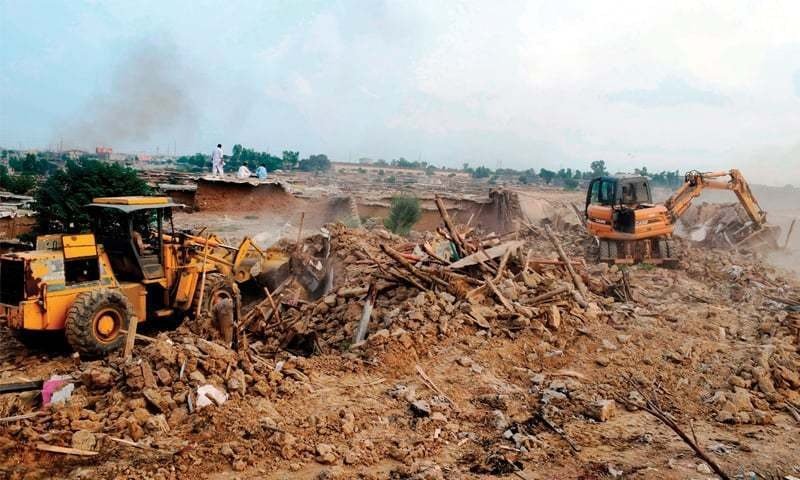
Arif Hasan’s decades of fieldwork in Karachi render this structural logic legible at the level of the street, the water pipe, and the land title. Hasan’s signal contribution is to demonstrate that what presents itself as urban dysfunction, the inadequate water supply, the absent sanitation, the vast informal settlements without services, is not the residue of deficient planning or scarce resources. It is the outcome of planning that has operated precisely as designed, for the population it was designed to serve. Resources move through the state in a direction that is systematic and undeviating: land is compulsorily acquired from the poor and regularised for elite housing schemes; infrastructure is routed to serve the cantonment and the Defence Housing Authority before it reaches working-class neighbourhoods that have waited decades for a functioning sewage line; water tanker mafias, whose existence is predicated on the failure of the public water network, operate with the tacit sanction of officials who benefit from the arrangement. The signal-free corridor does not pass through the cantonment. The heritage restoration budget reaches the monument but not the community living in its shadow, which has been petitioning for basic services since before the monument was gazetted as heritage.
What distinguishes Hasan’s account from a catalogue of grievances is its insistence that these outcomes are not attributable to incompetence or indifference in any ordinary sense. They are the product of a system allocating correctly, according to its operative priorities, which diverge markedly from those it publicly espouses. The city is not failing to develop. It is developing in a determinate direction, for a particular population, at the expense of another. The informal settlement is not a symptom of the city’s dysfunction. It is the city’s necessary underside: the spatial form that surplus labour assumes when a state built on Alavi’s model processes it. The man at Aiwan-e-Iqbal was not a failure of the system. He was its output.
Taken together, what Alavi and Hasan describe is a formation in which neither the state nor the city functions as neutral infrastructure, available in principle to all. Both are instruments of class consolidation operating beneath the sign of development and order, and the consolidation is so thoroughly naturalised, so seamlessly continuous with the ordinary texture of daily life, that it does not present itself as a political arrangement at all. It presents itself as the way things are. Which is precisely Thoreau’s observation, transposed to a different register: the absence of choice does not feel like an absence. It feels like the nature of things.
The Standing Reserve
Heidegger argues that the danger of modern technology lies not in any particular machine but in the mode of disclosure it imposes on the world. Modernity does not merely use the natural world as a resource. It reconstitutes the natural world as a resource, as a standing reserve of materials, energies, and capacities available for extraction and optimisation. This reconstitution is total. A river is no longer a river; it is potential energy. A forest is timber yield. A mountain is mineral reserves. And a human being is labour capacity, a consumer, a unit of demographic data.
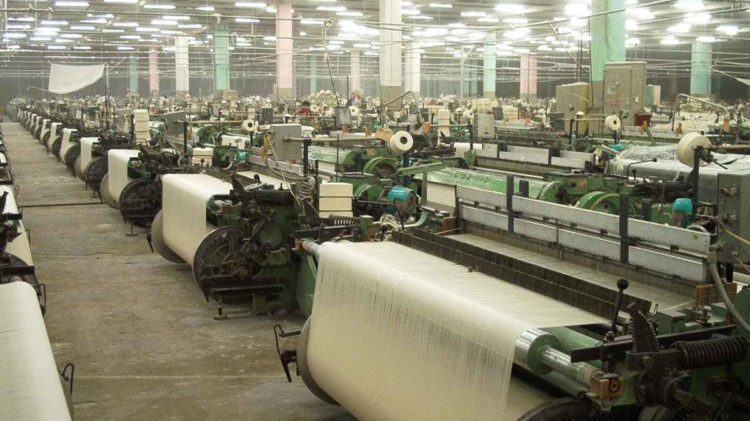
What makes this germane to Pakistan is not the abstraction but the application. The textile worker in Faisalabad exists, within the global supply chain, as unit cost. She is the reason a German retailer can sell a shirt at the price point a German consumer will accept. Her twelve-hour shift, her absence of benefits, her inability to organise, are not unfortunate byproducts of a process aimed at something else. They are the process. Her reducibility to unit cost is the competitive advantage. And the Pakistani state, which regulates labour and sets the terms under which foreign capital enters, has determined that sustaining this reducibility is worth more than the alternative. Here Alavi’s overdeveloped apparatus and Heidegger’s standing reserve converge: a state constitutionally indifferent to its citizens is also, it turns out, an ideal instrument for converting those citizens into extractable resource.
Heidegger’s point reaches further than political economy. He argues that the enframing logic of technology does not remain in the factory. It colonises the entire relationship between humanity and the world. Once the natural world has been reconstituted as a standing reserve, the human beings within it begin to apprehend themselves in the same terms. We begin to optimise ourselves. We measure our worth in productivity. We speak of investing in ourselves, of building our personal brand. We experience time as a resource to be allocated, attention as a commodity to be managed. The interior life, the life of values, of genuine questioning, of what Thoreau called deliberate living, becomes first peripheral and then illegible. There is no metric for it. It does not appear on any balance sheet.
This is the point at which Thoreau and Heidegger converge. Thoreau’s farmer cannot examine his life because the land will not wait. Heidegger’s resource cannot ask what it is for because asking is not among its functions. In both cases, the structure of the situation forecloses the very possibility of the question. And in both cases, what is lost is not productivity or comfort but something antecedent to those: the capacity to relate to one’s own existence as something chosen rather than simply undergone.
The Biradari
In Pakistan, this foreclosure operates at two levels simultaneously, which is what makes it unusually resistant to clear thinking.
At the global level, Pakistan is integrated into an international division of labour in which it occupies a particular position: supplier of cheap textile and agricultural exports, recipient of debt-conditioned development finance, exporter of labour to the Gulf. This position was not freely chosen. It was inherited from colonial trade arrangements and subsequently entrenched by the structural adjustment programmes of the 1980s and 1990s, which compressed the space for industrial policy, curtailed public expenditure on health and education, and reorganised the economy around the servicing of external debt. The Pakistani state, already structurally unaccountable to the majority of its citizens in Alavi’s account, found itself additionally constrained by external creditors whose conditions actively precluded the kinds of redistribution that might have made accountability conceivable. The result is an economy that generates considerable output while concentrating the proceeds of that output within a narrow elite, and that depends, structurally, on keeping labour cheap and the majority of the population economically marginal.
At the local level, this global integration is mediated through kinship structures, the biradari, the extended family, the network of patron-client relations, that are neither purely traditional nor purely capitalist but some compacted alloy of both. These structures do not stand outside the global economy. They are its local nervous system. The call centre worker’s salary flows to the family. The family’s standing within the biradari is partly a function of its economic position. The biradari’s solidarity is what permits the family to absorb the precarity of an informal economy with no welfare state beneath it. Capital does not dissolve these structures, as classical Marxist theory anticipated it would. It routes through them, instrumentalises them, and in doing so intensifies them. The biradari is simultaneously a mutual aid network and a disciplinary apparatus. It sustains; it also exacts. And what it exacts, above all, is conformity to the roles, the expectations, the valuations the structure has assigned.
What this produces, at the level of the individual, is the condition Thoreau described: a life in which the possibility of genuine choice has been so comprehensively foreclosed, at so many levels, that it does not even present itself as a possibility. You do not choose to keep the family farm running. You do not see the choice. The farm is the world.
What Deliberate Living Is For
Thoreau’s experiment at Walden was not, as it is sometimes misread, a fantasy of self-sufficiency or a withdrawal from the social. He went back to Concord when he was done. He never claimed the cabin was a solution to anything. What he claimed, more modestly, was that the act of stripping his life back to its essentials had allowed him to see it clearly for the first time, to discern what he actually valued, as against what the culture enjoined him to value.
It would be easy, and wrong, to read this as a private prescription. To imagine that the answer to inherited unfreedom is for each person to retreat into some Pakistani Walden and examine their life. The latitude for that kind of withdrawal, for stepping back from the exactions of daily survival long enough to scrutinise them, requires a minimum of material security that most Pakistanis do not possess. The examined life, understood as a personal practice, is to a considerable extent a class privilege. This cannot be dissolved with a gesture.
But the value of Thoreau’s argument was never primarily therapeutic. It was epistemological. The point of seeing the arrangements clearly is not personal liberation. It is political legibility. You cannot dismantle what you cannot see. A society in which the arrangements remain invisible, in which they are received as the nature of things rather than apprehended as decisions made by particular people for particular reasons, cannot change them. The structures Alavi and Hasan describe are not natural features of the landscape. They were built. They are being remade, every day, through the decisions of institutions and elites. They are also sustained, in smaller ways, by the passive acquiescence of everyone who receives them as given.
In a society organised to foreclose precisely this kind of attentiveness, by the relentless pace of daily survival, by the social cost of dissent, by a media landscape that converts everything into noise, the act of thinking carefully about one’s circumstances is already, in a modest way, a political act. Not sufficient. Not redemptive. But necessary. The condition of inheriting a world one did not make is universal. The condition of being unable to see that the world was made at all is not. That second condition is the one this essay is concerned with, and the one that can be changed.
What Alavi describes as structural indifference, what Hasan traces in the routing of water and roads, what the global division of labour enforces through price and debt, and what the biradari cements through obligation and reproach: these are not discrete systems. They are the same system operating at different scales. And together they produce, at the level of the individual, the condition Thoreau identified as the deepest form of unfreedom: a life so thoroughly administered by arrangements not of one’s choosing that the very question of choice recedes from view. These arrangements were made. They are being remade, every day, through the decisions of institutions and elites. They are also sustained, in smaller ways, by the passive acquiescence of everyone who receives them as the nature of things.
The marble at Aiwan-e-Iqbal will outlast most of what surrounds it. The arrangements that produced the city around it are more fragile than they appear. They depend, among other things, on not being seen clearly.