A personal meditation on Trump’s threat of civilizational death, and on what it means when power turns catastrophe into speech.
It was one of those evenings when waiting ceased to feel passive and became an ordeal. I felt it first in the body: a recoil, a fatigue, a kind of emotional depletion that seemed almost disproportionate until one remembered the sentence that had produced it. How could a single line do this, hold the world in such strained suspension, leave millions on tenterhooks before anything had even begun? That, perhaps, was the first violence of it. Not only what it threatened, but the way it made dread immediate.
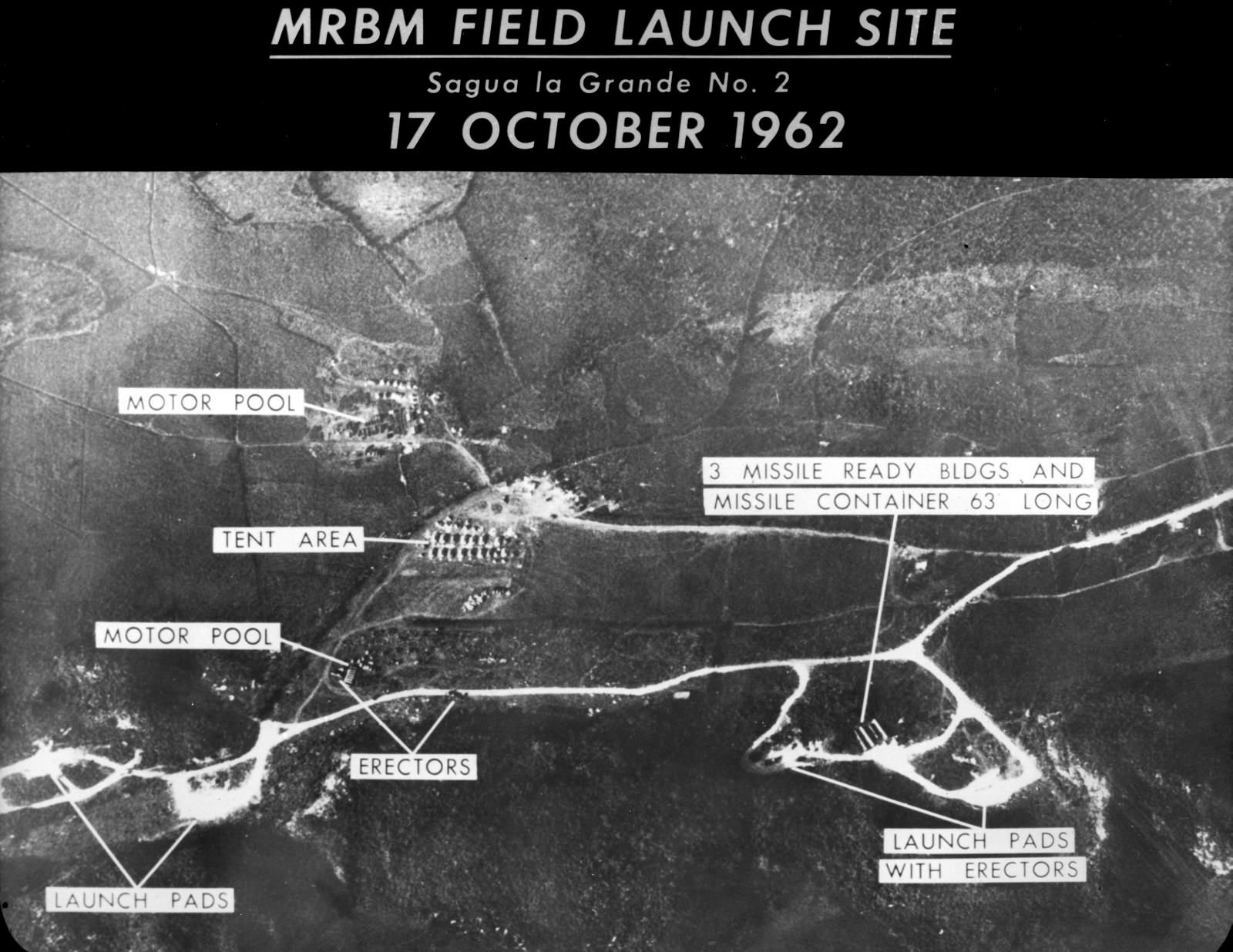
My mind went back, unexpectedly, to the mid-1980s, when I was studying the Cuban Missile Crisis. As students, we read the memoranda, the timelines, the transcripts of deliberation, the cool architecture of catastrophe. Much of it was overwhelming in scale, but still somehow distant, held at the safe remove of the seminar room and the page. It belonged to history in the bookish sense: grave, consequential, but already sedimented into knowledge. Yet that long day, lived under the hanging menace of a single sentence, altered those old materials. 1962 no longer felt sealed in the archive. It returned with a different force, as though the nerves had understood something the intellect had once kept at bay. For a strange moment, the pedagogic past and the anxious present collapsed into one another, and one was left with the bleak thought that history does not only repeat itself as spectacle or warning; it also returns as a test of whether anything has been learned from the nearness of ruin.
What alarmed the world was not merely the scale of the threat, but the spectacle of a man speaking as though the death of a civilization were already available to language, already half-converted into rhetoric, posture, and event.
And still, one must hold onto the deeper truth buried inside the moral decay of the moment. A civilization can indeed be broken. Not absolutely, perhaps, not in the total way tyrants fantasize, because memory survives in stubborn and fugitive forms, but broken enough that continuity between generations is torn, broken enough that what was once ordinary becomes archaeological. That is why the sentence should not be dismissed as mere bluster. The public reaction itself registered that something more than ordinary menace had been uttered. Reuters reported that the line shocked global leaders and even unsettled some Republicans and White House aides, while officials moved quickly to frame it as a pressure tactic rather than a literal signal of annihilation or nuclear intent. AP and Reuters both foregrounded Pope Leo XIV’s rebuke, with the Pope calling the threat “truly unacceptable” and warning that attacks on civilian infrastructure violate international law. ABC placed the remark within a wider pattern of threats against bridges, power plants, and desalination facilities. The press, in other words, did not hear mere hyperbole. It heard apocalyptic speech, a sentence that pushed public rhetoric to the edge where war begins to borrow the language of extermination.
There is something almost unbearable in that sentence, and not only because of what it imagines. “A whole civilization will die tonight, never to be brought back again.” One hears in it not grief but theatre, not mourning but the intoxication of standing near the switch and speaking as though one were merely the witness to necessity. The sentence arrives draped in the language of lament, yet its deeper structure is sovereign. It performs the oldest imperial trick: to announce catastrophe in the tone of reluctant foresight, as though the speaker were not implicated in the world he predicts, as though prophecy could absolve power.
To situate the sentence properly, one must read it not only as geopolitics, but as a failure of moral, historical, and civilizational speech.
That is what makes it so chilling. The horror lies not simply in the thought of civilizational death, but in the ease with which such death can be made into a sentence. A civilization, that long accumulation of memory, gesture, prayer, grammar, stone, inheritance, wound, music, ruin and renewal, is reduced to something that can be contemplated in advance, almost administratively, as an impending event in the night. The phrase carries the grandeur of the tragic, but without tragedy’s moral burden. Aeschylus knew that ruin enters history trailing guilt, kinship, curse, consequence. Here, by contrast, ruin is stylized as spectacle. The speaker does not stand inside the shattered house. He stands outside it, narrating its collapse in the language of a man who would like credit for having noticed the fire.
One is reminded of Walter Benjamin’s insight that there is no document of civilization that is not at the same time a document of barbarism. But the sentence seems to go further, and lower. It suggests that in our time barbarism no longer needs to hide beneath civilization’s finery. It can speak in civilization’s name. It can present itself as concern. It can invoke the loss of an entire world while remaining strangely untroubled by the machinery that makes such loss imaginable. That is the distinctive vulgarity here: the moral outsourcing of violence. The destruction is foreseen, even almost savoured as possibility, but the speaker still wishes to appear as the man who did not want it.
This is not merely hypocrisy. It is a metaphysics of power. It assumes that whole peoples may be gathered into a civilizational abstraction, then placed rhetorically on the edge of extinction, as though they were pieces on a board arranged for one final move. The sentence does not encounter a living plurality of persons. It contemplates a totality. And once a people becomes a civilizational object, once it is spoken of in this grand and terminal register, the ground is prepared for every obscenity. The individual disappears into the monument. The mother, the child, the old man in the doorway, the student, the bookseller, the body under concrete, all are swallowed by the category. This is one of modern politics’ most enduring crimes: it kills in the singular and speaks in the aggregate.
Hannah Arendt understood something essential about this when she wrote of the dark prestige of historical necessity. The truly dangerous politician is often not the one who rages most crudely, but the one who places human plurality under the shadow of an allegedly inevitable process. “It probably will.” Those four words matter. They complete the moral evasion. They transform decision into drift, responsibility into weather. It is the grammar of the shrug elevated to the scale of world history. Such language is never innocent. It does not merely describe events. It prepares the soul to accept them.
And yet the phrase “a whole civilization” also reveals another pathology of the present: our inability to think civilizational life except at the point of its disappearance. We have become curiously eloquent about annihilation. We speak of worlds ending more readily than of worlds requiring justice. We know how to aestheticize ruins before the dust has settled. In that sense the sentence belongs to a wider condition, one in which apocalypse has become a style of political speech. The end of the world is invoked not to deepen responsibility but to magnify the speaker’s stature. He becomes the man at the edge of history, the lonely seer of irreversible nights. It is kitsch eschatology, imperial melodrama.
But civilizations do not die only when their monuments are flattened or their populations scattered. They also die, more quietly, when language ceases to bear truth, when words like civilization are used not to protect the fragile accumulated life of a people but to cast their destruction in grand, almost biblical light. That is a more intimate death, and perhaps a more revealing one. The corruption of language is never secondary to violence. It is one of its habitats. Orwell said as much in plainer terms. Adorno, in darker ones, understood that culture after catastrophe cannot remain innocent of the catastrophe. The sentence in question belongs to that zone where political speech has already internalized devastation as a permissible horizon.
Against such language, one thinks of Cavafy, who knew that civilizations fall not only by invasion but by moral exhaustion, by the inner hollowing of a world that has forgotten how to distinguish pomp from greatness. Or of Mahmoud Darwish, for whom the threatened world is never an abstraction but a lived intimacy: coffee, dust, a mother’s bread, a place whose loss cannot be redeemed by grand historical rhetoric. That is what this sentence cannot see. A civilization is not an aerial object. It is the texture of the ordinary raised over centuries into a form of life. To speak of its death lightly, strategically, theatrically, is already to stand at a great distance from human reality.
If the sentence claims the scale of civilization, it must also be judged at that scale. Placed beside Persian epic, lyric, and philosophical thought, the statement is stripped of its borrowed tragic grandeur. To hear that sentence through Persian literature is to hear not simply the threatened destruction of a state but the profanation of the language in which a civilization remembers itself. Akhavan Sales stands nearest, in the very shadow of a work called The End of the Shahnameh, where the epic survives only as a late echo, burdened by historical exhaustion. Behind him is Ferdowsi, for whom kingship is never mere command but an ordeal of justice, and whose tragic vision does not belong to isolated episodes alone but suffuses the whole moral weather of the Shahnameh. Hafez would have recognized at once the old stain of counterfeit gravity: power borrowing the accent of sorrow while remaining faithful to force. Suhrawardi lets the phrase darken further, since the night invoked here is not only temporal but ontological, a dimming of intelligibility itself, as though public speech had already lost its light. And then Hedayat’s The Blind Owl opens beneath the sentence like an inward abyss. There the ruin is no longer monumental but psychic: repetition without release, memory without consolation, a world so estranged from itself that dread becomes its native atmosphere. Read in that Persian constellation, the line ceases to sound prophetic. It sounds spiritually vulgar. It is civilizational language after its own collapse: barbarism speaking in the cadence of elegy.
The most terrible line may be the last: “I don’t want that to happen, but it probably will.” In another age, this might have been heard as the language of tragic helplessness. In ours, it sounds like the final degradation of public responsibility. One declares proximity to power, intimates knowledge of the abyss, then claims the clean hands of reluctance. It is Pontius Pilate rewritten as geopolitical commentary. The basin is invisible now, but the gesture remains.
What does one do with such a sentence? Perhaps the first task is not to be hypnotized by its scale. Not to accept its framing. Not to let “civilization” become the alibi through which actual people vanish. Philosophy begins, sometimes, with refusing a false grandeur. A civilization is not redeemed by being named at the edge of extinction. Nor is power ennobled because it can speak in tragic cadences. The sentence is not profound because it invokes irreversibility. It is merely revealing. It shows a political imagination for which the destruction of worlds is thinkable, speakable, even legible as a form of posture.
And still, one must hold onto the deeper truth buried inside the corruption. A civilization can indeed be broken. Not absolutely, perhaps, not in the total way tyrants fantasize, because memory survives in stubborn and fugitive forms, but broken enough that the continuity between generations is torn, broken enough that what was once ordinary becomes archaeological. That is why the sentence should not be dismissed as mere bluster. It should be read as a symptom of an age in which the possibility of civilizational injury has become banal in the mouths of men who mistake domination for destiny.
To hear such words without surrendering one’s moral bearings is to understand that power does not prophecy catastrophe from outside it. It speaks from within the field of its own consequences. To name the death of a civilization in such a voice is already to participate in the work of making that death imaginable, and therefore more possible.
And now the parleys have begun in Islamabad, that strange after-scene in which a world first held hostage by a sentence must submit itself once more to the slower, faltering grammar of negotiation. The threat has not been withdrawn so much as translated into procedure. Under lockdown and armed quiet, with delegations moving through a city turned almost spectral for the occasion, the conference table offers not redemption but reprieve. Perry Anderson, writing of the wider Western disorder, remarked that “all is disorder under the heavens,” and there is little sign of a return to order as those accustomed to rule once understood it. That is the atmosphere in which these talks begin: not peace, not settlement, but an interval wrested from the brink. The sentence still hangs in the air, diminished perhaps, but not undone. Islamabad does not cancel what was revealed. It only reminds us that history sometimes resumes not with wisdom, but with exhaustion, and that a civilization is never saved by the men who first make its ruin speakable.