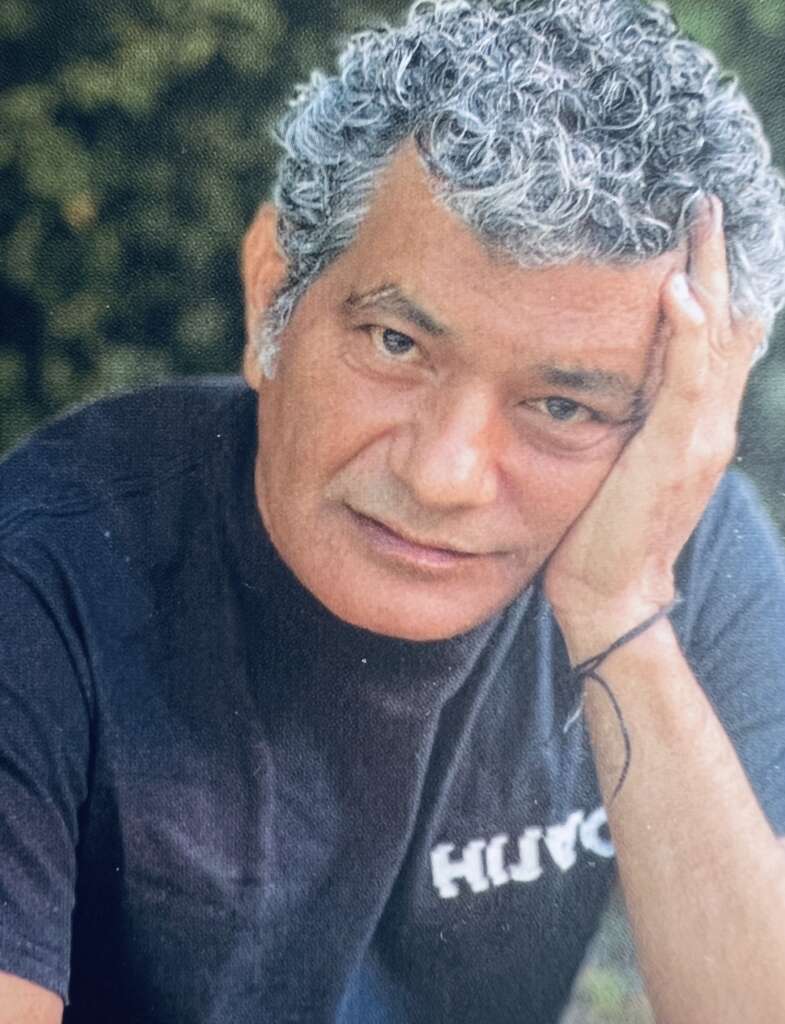
The state wrote the best epigraph for Mohammed Hanif. A Case of Exploding Mangoes lived happily enough in English for years, mixing offence and admiration. Then it reached Urdu, the national language, the ungated room. Men arrived at the publisher’s office and took the books away. The message did not require a memo.
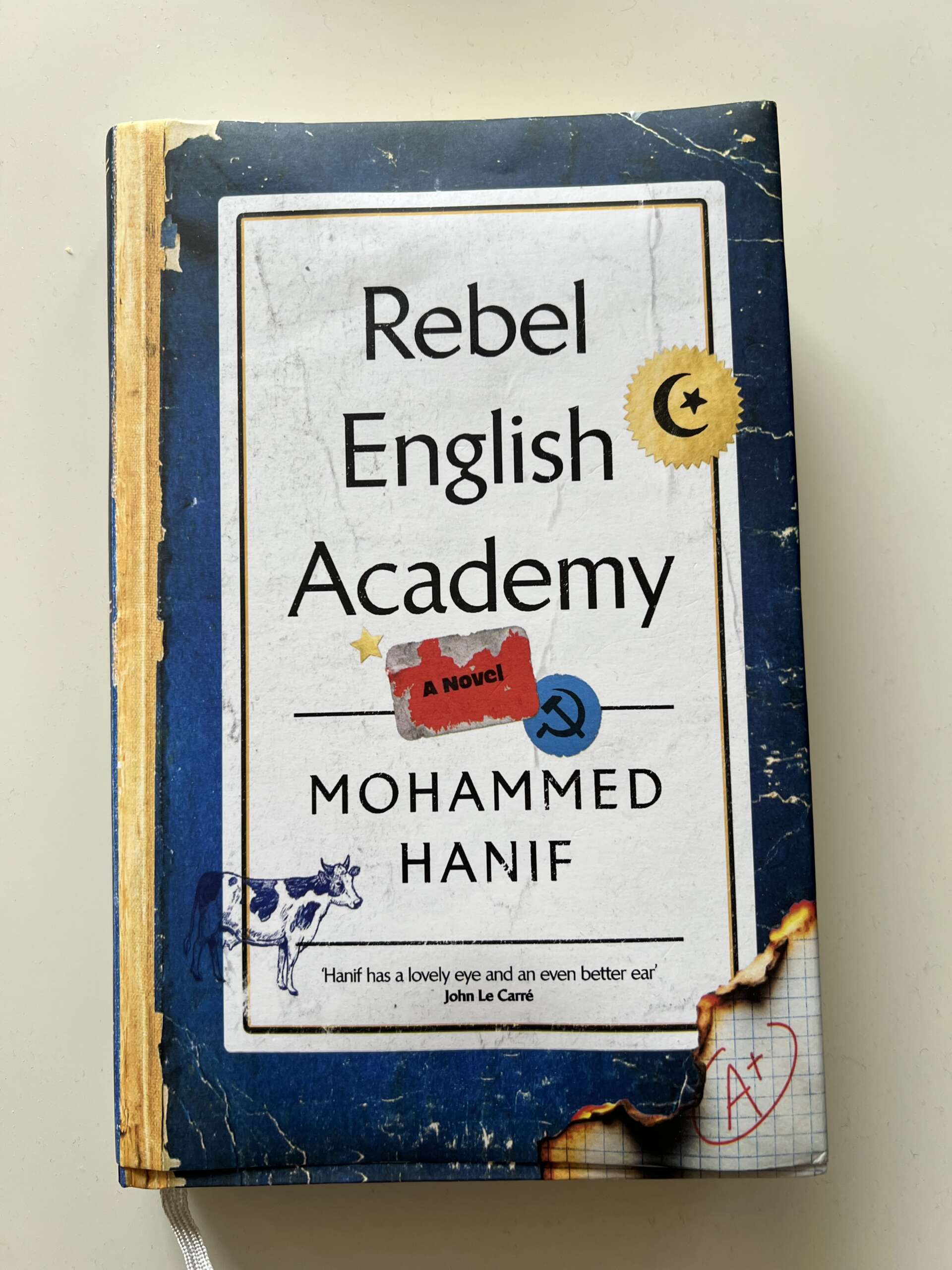
Rebel English Academy (Danyal English, 2026) reads like a rebuttal to that incident. English quarantines satire in the class that can afford it. Urdu changes the rate of contagion. It moves the joke out of the gated enclave, into common speech. Words travel without permission. Confiscation is criticism by other means, telling you exactly which publics the state can tolerate.
It is hard to miss the implication. In Pakistan, permission is never abstract in practice. It is routed through class, accent, institution, and the distribution system of language itself. English can take risks. Its audience is presumed to be self-policing, already trained in the etiquette of restraint. Urdu makes the risk collective, less containable, and more likely to become ordinary talk. A raid is therefore a literary judgment: on reach, not merit.
Mohammed Hanif always knows where power gives itself away: in procedure, vanity, and the indecencies that make violence feel like paperwork. Tom Wolfe once argued that the journalist had to reclaim the novelist’s equipment—scene, dialogue, status detail, the social grain of a room—because power is not best seen as a thesis. Hanif writes from that risk. His fiction reports in a different way. It does not “explain” Pakistan. Instead, it stages it. Procedure, tone, and humiliation carry the argument. The laugh is a method of recognition: the point where authority’s moral theatre collapses into its true materials. Rebel English Academy returns to the late 1970s, to Bhutto’s hanging and what followed—disbelief, dread, performative loyalty, new pieties, changed ambitions. It reads like a prequel in time, a deepening in method. The sentences still show his style: defiant, detached, kinetic, comic, searing. What sharpens here is that language is not just a medium. It is fate.
Hanif has been building toward this book for years. Our Lady of Alice Bhatti took the political novel off the parade ground and into the hospital ward. Here, class, misogyny, sectarian suspicion, and minor official sadisms are routine. The institution becomes a miniature state: permissions, forms, humiliations, the violence of “normal.” Red Birds widened the frame again. It moved from internal institutions to war and the humanitarian industry. In this world, suffering is managed, and morality learns the language of logistics. In both, comedy is not relief. It exposes power when it thinks it is being reasonable.
The novel begins with the hanging of Zulfikar Ali Bhutto. The General is in power. The elected politician becomes a body the state must still manage: move, measure, photograph, file. Hanif refuses the embalming register that public history reserves for important men. There is no theatrical sky. No historical hush, no atmosphere drafted in to certify destiny. There is work to be done. Men are woken. A barber is summoned. An imam is fetched. A plane waits. A coffin must be improvised. The ugliness is procedural. That is what makes it convincing. States kill through arrangements, irritations, omissions. Petty men do ugly things efficiently before breakfast. A regime reveals itself most fully when it believes it is operating normally.
Then comes a detail only Hanif can handle easily: the officer arranges to photograph Bhutto’s genitals to settle a sectarian rumour. The result is grotesque, vulgar, absurd, exact. The circumcised body proves Bhutto was not Hindu—a small letdown for those who needed him to be. In a few strokes, Hanif shows an entire political psychology: panic disguised as duty; gossip turned into evidence; humiliation masked as governance. Shame becomes protocol. Protocol becomes training for the living.
From the scaffold, the novel moves to OK Town. This marks a shift from public spectacle to private burden. History inflates easily in capitals. In smaller places, it must live among those forced to bear it. Captain Gul, an intelligence officer on a punishment posting, arrives to contain the afterlife of Bhutto among the jiyalas and the restless faithful. The leader is dead, but not socially dead. Rumour persists that the work grief has begun. Martyrdom grows its own weather. Hanif shows how politics becomes a cult, a cult becomes a livelihood, and a livelihood an economy of belief.
Around this charged atmosphere he builds the book’s structure: Sir Baghi, a former radical and refugee from his own revolution, an atheist and gay, running an English coaching centre for the children of peasants and shopkeepers; Imam Molly, his old friend, who allows the academy to operate inside the mosque compound; Sabiha Bano, a young widow on the run, carrying a hidden gun and a history of abuse the world would rather misfile; Noor Nabi, lawyer and palmist, managing present and future with the instincts of survival and surveillance; and a swarm of other figures — opportunists, mourners, zealots, hustlers — living off the same air of fear and possibility.
Hanif locks them into the same compound and lets the air do the work. The military, the mosque, the leftovers of the left, female precarity, class hunger, martyrdom’s theatre, the prestige of English — everything that claims to be separate in public — presses shoulder to shoulder. He has never trusted the tidy binaries by which Pakistan is routinely made legible. Faith is never pure in his work; politics rarely stays secular; the state borrows piety; piety borrows the state’s methods; ideology travels with appetite. Even rebellion acquires manners, and those manners start looking like complicity.
The title is sharper than it first appears. English in Pakistan has never been merely a language. It is a social instrument: schooling, class passage, embarrassment, confidence, official access, self-invention. It is the interview and the ministry. It is the child corrected into polish. It is the door-opening line and the posture required once inside. Hanif knows this too well to sentimentalise English as a form of liberation. He knows it too well to reduce it to colonial residue. English has long sorted the country into the nearly visible and the barely admitted. Baghi teaches it to children whose parents have lived outside the sentence of authority. The rebel academy sits inside the contradiction and refuses to tidy it. English furnishes escape, then teaches the posture required by the room.
The last two decades have given Pakistani writing in English extraordinary visibility. This has sparked talk of “global voices” and exportable moral objects. Kamila Shamsie has carried Pakistan’s story across borders without erasing its complications: war, migration, complicity, and the long afterlife of empire. She writes with the confidence of someone who refuses the comfort of moral innocence. In contrast, Mohsin Hamid has mastered another kind of travel: parables with passports, sleek on the surface but quietly coercive. Here, class anxiety and global finance press on the self like fate. Around these writers, a literary field has thickened: social portraiture that treats class as a domestic regime; lyric intensity that makes politics feel like weather; and the sense that home is not refuge but archive. Now, Pakistani Anglophone writing reads less like a set of exceptions and more like a literature with an internal argument.
Hanif sits inside that visibility and resists its comforts. He treats English less as a neutral window than as part of the building’s architecture — credential, access, humiliation, posture, a way of learning the manners demanded by the room. His comedy does not perform Pakistan for international approval. It refuses the solemn, saleable Pakistan, the version rendered legible through suffering polished into a moral spectacle. He keeps returning to institutions and their small men, to procedures that call themselves order, to piety discovering usefulness, to violence administered with bureaucratic calm. That is why his satire travels. It refuses the reader the option of pity without recognition.
OK Town becomes a stage where everyone has been assigned a part by history, and nobody quite believes the script. The men perform rebellion, piety, surveillance, and virility; they improvise zeal where they lack courage and manufacture seriousness where they lack consequence. Sabiha Bano is the disturbance in that theatre. Baghi gives her “homework” and, almost by accident, gives the novel its counter-record: a woman writing under pressure, refusing to be turned into rumour, lesson, symbol. Her pages do not decorate the plot; they cut through it. She writes from a life handled roughly by men and by institutions, and the prose carries that roughness without pleading for pity. Around her, the town swirls with cults of martyrdom, recycled loyalties, desire disguised as doctrine, and the establishment’s fantasies of power that reach beyond the province to the world’s larger rooms. Sabiha’s writing keeps returning the book to the cost—paid privately, demanded publicly, never refunded.
This matters because Hanif understands something political fiction often forgets: states control truth through force, and they control it through form. They decide what counts as evidence, what counts as scandal, what counts as rumour, and what counts as women’s talk. They decide which kinds of pain receive official recognition and which remain in the shadows, available for gossip and moral policing. The school assignment, that old colonial relic, becomes, in Hanif’s hands, a way to enter the record without asking the state’s permission. Homework becomes a minor technology of witness. It is not a manifesto. It is a ledger: injury, survival, refusal of misfiling.
Sabiha won’t be sorted. She won’t do the work allegory demands. Her presence resists the neatness that political fiction so often imposes on female pain. She is as stark as memory and as scarred as reality. Clarity becomes a form of danger in Hanif’s Pakistan. Her destination is modest: a life not requisitioned by martyrdom, a country not demanding flames as a credential. When she runs toward what she believes is freedom, she leaves behind a nation corroded by the Book and the jackboot.
Hanif refuses to let the political novel become a museum of slogans. He knows ideology lives inside appetite. He knows the officer’s swagger is a form of need. He knows the preacher’s libido is not an incidental scandal; it is one of the routes through which authority circulates in societies fluent in piety. He knows the leftists’ exhaustion is its own historical document. He knows martyrdom can become theatre, theatre can become a credential, and a credential can become a kind of social capital. The comedy keeps these truths from hardening into a sermon. It denies the reader the comfort of indignation without recognition.
There is a risk, and it sits inside Hanif’s greatest strength: the pleasure of the theatre. He writes grotesques and misfits with such gusto that the reader can feel the carnival’s pull even as the book insists that carnival is one of the ways power survives. Pakistan has long lived inside spectacle: martial spectacle, religious spectacle, ideological spectacle, the endless staging of seriousness. Hanif writes inside that staging and shows its costs. He shows how a society is trained to adopt a tone. He shows how fear becomes manners. He shows how the sentence learns evasions and begins to pass them off as wisdom.
Hanif’s satire does not console. It strips and denies power the dignity it claims for itself, and leaves it looking like what it is: a bureaucracy of shame with a taste for holiness. A Case of Exploding Mangoes detonated the regime’s lies; Rebel English Academy watches the damage settle into habit. The country learns new manners. The sentence learns new evasions. The academy teaches English, and English teaches the posture required by the room. What remains is not redemption but a record.