Dave the Rave has all the moves. Verily, is he the Lord of the Dance. Yet no one or their cat noticed the sky turning black upon his return. Only I saw the devil on his back as he leads us towards post-Brexit temptation.
But something is afoot. Mark my words. These tea-guzzling-biscuit-gobbling Fat Cats…
A personal meditation on Trump’s threat of civilizational death, and on what it means when power turns catastrophe into speech.
It was one of those evenings when waiting ceased to feel passive and became an ordeal. I felt it first in the body: a recoil, a fatigue, a kind of emotional depletion that seemed…
The state wrote the best epigraph for Mohammed Hanif. A Case of Exploding Mangoes lived happily enough in English for years, mixing offence and admiration. Then it reached Urdu, the national language, the ungated room. Men arrived at the publisher’s office and took the books away. The message did not require a memo.
Rebel English…
A note on the Gulgee Museum, and the handbook that refuses to settle Gulgee
By Narendra Pachkhédé
Art history is where a nation’s cultural life becomes a border regime. It grants entry, issues credentials, seals certain practices with the stamp of “modern,” and files others into quiet nonappearance—present in rooms, absent on the page. The…
Victor Mallet’s Far-Right France is a field guide to how the RN becomes ordinary: centre exhaustion, party professionalisation, media-driven fear, and grievance turned into destiny. France’s “moment de bascule” is not just French; it is a European threshold with Atlantic consequences, and it helps decode what’s unfolding south of our border, where immigration enforcement in…
From Cold War montage to contemporary capture, on the persistence of imperial form.
Why intervention no longer argues its case, but edits it.
“Nothing is lost if one has the courage to proclaim that all is lost and we must begin again.”
— Julio Cortázar. Around the Day in Eighty Worlds.
Translated by Thomas Christensen.…
Béla Tarr’s films transformed slowness into an ethical demand. Refusing narrative relief and political optimism, he made endurance of time, history, and looking the condition of cinema itself.
“There is no way out.”
—László Krasznahorkai, The Melancholy of Resistance, trans. George Szirtes (New York: New Directions, 1998), passim.
There are filmmakers whose deaths feel…
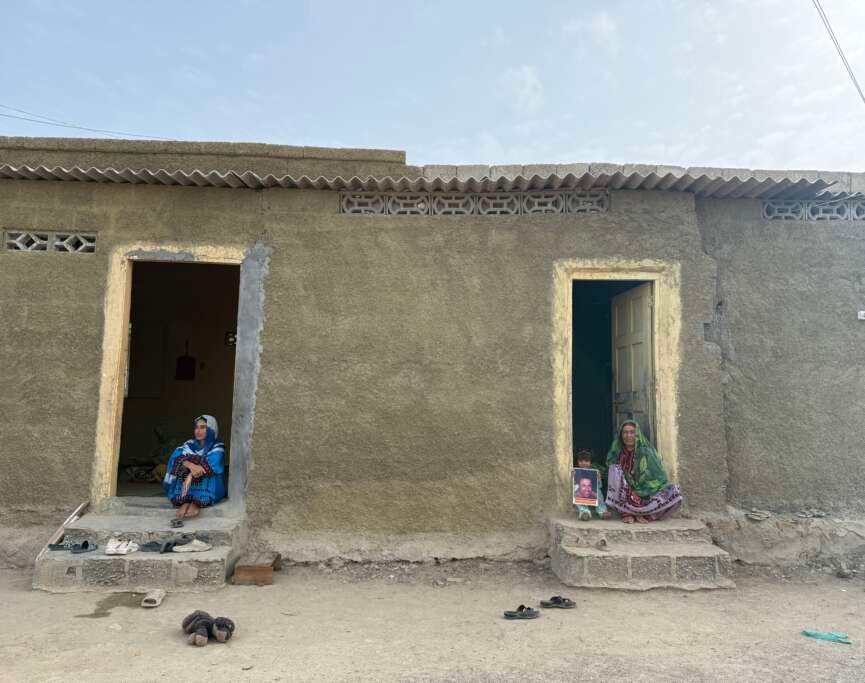
"Even today, in difficult times, the movement’s ability to stand firm owes much to martyrs like Kamber Chakar. Without their ultimate sacrifice, future generations would not inherit such a strong spirit of resistance." —Darapshaan Baloch, former chairman, Baloch Students Organization (Azad), 2024
Kamber Chakar (1987–2011) remains one of the most iconic figures in Balochistan’s struggle…
Mohammad Bakri’s death marks more than the loss of a major actor and filmmaker. It exposes the conditions under which Palestinian cinema has been forced to exist.
“Even the dead will not be safe from the enemy if he wins.”
— Walter Benjamin, Theses on the Philosophy of History (1940), Thesis VI
…
PART TWO
In this intimate conversation, Sultan Somjee traces a quiet revolution in how peace is understood and practised, drawing on the philosophy of Utu to challenge bureaucratised reconciliation and recover peace as a relational, embodied act grounded in memory, land, and communal life.
READ PART ONE
The Path of Peace
I asked…