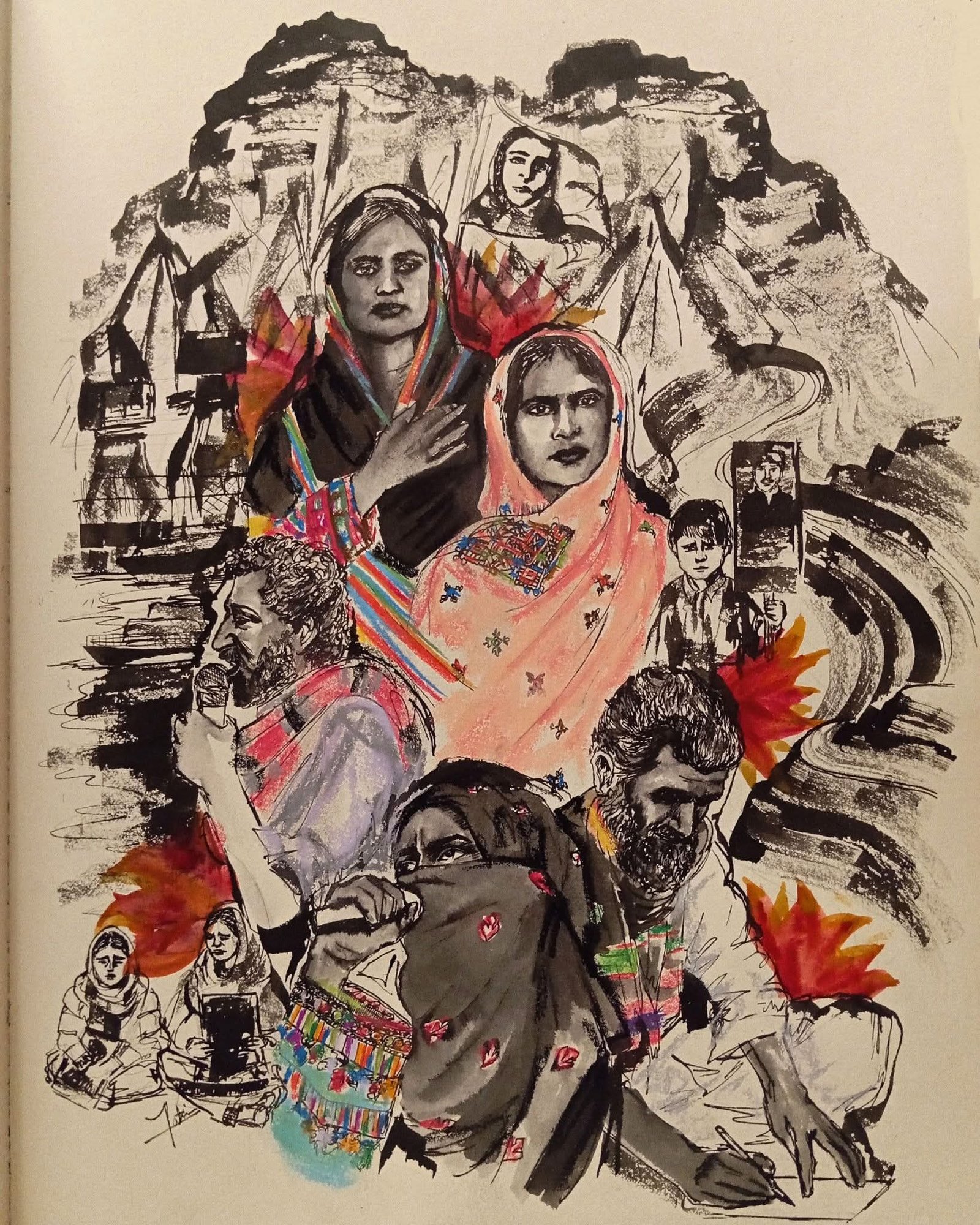
On the night of March 19, 2025, 13 unidentified bodies were buried in Quetta’s Kasi graveyard in darkness, days after a train hijacking incident by separatist groups some 117 km from Balochistan’s capital. No names. No families present. No explanation.
In a video that was circulated across social media, a man is heard saying the graves were dug overnight and alleges that the bodies were brought by security officials in their vehicles. The footage showed coffins with blood stains scattered across the cemetery. The man walks across the graveyard, filming one grave after another.
The question of those thirteen dead bodies, and what followed when a rights group and families of Baloch missing persons demanded answers, is the story of how Balochistan’s most recent rights movement was dismantled by the statement – and yet also why, a year after the imprisonment of most of its leadership, it continues its advocacy. Balochistan’s government claimed the militants were killed in an operation with security forces in the Mushkaf area of Bolan, where the rail hijacking incident took place.
Balochistan: Pakistan’s untold war
Balochistan, Pakistan’s largest but least populated and most impoverished province, has been embroiled in an armed insurgency for decades. Separatists groups have fought government forces over greater political autonomy, over resources, and political autonomy since 1948, when the province became a part of Pakistan. Baloch people have long complained of rights abuses, political and economic marginalization, despite the region’s vast mineral wealth. The province has some of the lowest human rights indicators in the region.
Running parallel to the insurgency is a well-documented and reported pattern of enforced disappearances. Anyone remotely suspected of links to separatist groups or being sympathetic to them is at the risk of being abducted, held without charge, and in many cases never returned. Rights groups have recorded these cases for decades. Families have marched, protested and campaigned for years.
The Baloch Yakhjeti Committee (BYC) emerged from the lack of accountability by state and increasing cases of extrajudicial killings and enforced disappearances of Baloch students, activists, leaders and citizens. A rights movement, led primarily by Baloch women, it built its campaign on advocacy, activism, documentation, and protest, bringing international attention to the question of rights and accountability in the province.
The BYC gained national visibility during the 2023 Baloch Long March, which started in Turbat, passed through Quetta, and continued to Islamabad, where families of the disappeared — led in large part by women — held a prolonged sit-in demanding accountability at the country’s capital.
Human rights groups said the protest faced harassment and restrictions from authorities, even as it drew wider attention to the issue of disappearances.
What made the movement especially significant was that it was led so visibly by Baloch women, including women from families directly affected by disappearances. In a political landscape where nationalist movements have historically been male-dominated, their leadership marked an important shift: women were no longer only portrayed as victims of abuse, but as central political actors and human rights defenders documenting violations, organising protests, and speaking publicly about state violence despite growing risks.
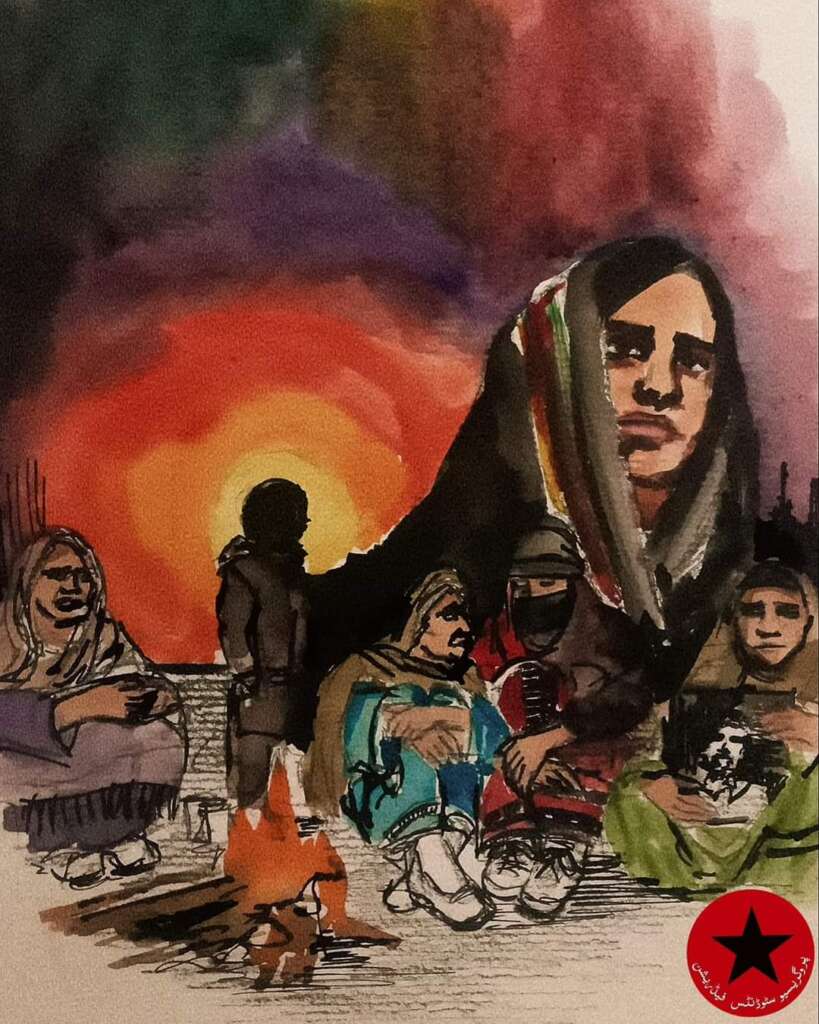
For Sammi Deen Baloch, one of BYC’s central members, this is not abstract. She has spent more than half of her life protesting and campaigning for the safe release of her father, Dr. Deen Muhammad Baloch, who was allegedly picked up by security officials in 2009. Sammi has spent Eids, the Muslim festival, protesting outside Karachi Press Club. She walked from Quetta to Islamabad during the 2013 Baloch Long March and knocked on the door of justice. Yet, after 17 years, Sammi still doesn’t know if her father is alive or dead. Over years, her struggle became more than the fight for answers about her father as she emerged as a leading activist. In her activism, she has been arrested, surveilled, threatened, and subjected to what she describes as “abusive campaigns on social media, fabricated images meant to destroy dignity.”
She was arrested again on March 24, 2025, outside Karachi Press Club, protesting the detention of BYC’s leadership.
“We know the threats are real,” she said. “We know we may be jailed, targeted, or worse. But we also know that silence guarantees nothing except continued injustice.”
Staged encounters
In order to understand the events of March 2025 when BYC’s leadership was arrested, it is important to understand what came before.
In 2023, a 24-year-old man named Balach Mola Bakhsh was picked up by the Counter Terrorism Department (CTD) in a midnight raid on his home in Turbat. For 22 days, his whereabouts were unknown. He was eventually presented in court after the CTD claimed he had been found in possession of explosives. The day before his bail hearing, the CTD announced it had killed four terrorists from a “proscribed organization” — a Pakistani legal designation for banned groups — in Turbat. Bakhsh was one of the dead. His family immediately alleged a staged encounter.
Bakhsh’s killing sparked the 2023 Baloch Long March from Turbat to Islamabad. But his killing was not isolated. The Pakistani state’s use of extrajudicial killings, in which missing persons reappear in official announcements as militants “neutralized” in operations, has been documented case after case by rights organizations. In some instances, families have been able to come forward to identify their loved ones only because rights groups had kept records.
It was a killing of a similar nature that resulted in the formation of BYC. In 2020, Malik Naz Baloch was killed by members of a local death squad, with alleged ties to the Pakistani military, while resisting them during a robbery at her home. Her four-year-old daughter, Bramsh, was left injured and motherless.
Jaffer Express Incidents and unmatched numbers
On March 11 2025, the Baloch Liberation Army (BLA), one of the separatist groups fighting for an independent Balochistan, hijacked a passenger train traveling from Quetta to Peshawar, the capital of the northwestern Khyber Pakhtunkhwa province.
After two days of clashes between the group and the military, the Inter-Services Public Relations, the media wing of the Pakistani military, announced that the hostage crisis aboard the Jaffer Express had ended. “Clearance operation successful. All 33 attackers neutralized,” the statement read. The BLA, however, released photographs of only 12 of its fighters killed in the attack. The discrepancy was never publicly explained, leading families to ask: could these be missing persons, killed in another staged encounter and relabeled as militants? The Chief Minister of Balochistan, Sarfaraz Bugti, said the bodies belonged to militants killed in an operation in the Mushkaf area of Bolan, where the hijacking had taken place. Families were not allowed to identify the bodies. Hospital staff blocked identification for three days. Then came the overnight burials. Unmarked graves were not unheard of. In 2014, mass graves were discovered in the Tootak area of Khuzdar district.
On March 19, BYC held a press conference at the Quetta Press Club, detailing the profiling and harassment faced by its members. During the session, Mahrang Baloch — a physician, BYC’s most prominent leader, and a nominee for the 2025 Nobel Peace Prize — was questioned about the 13 unidentified bodies.
Her answer was direct.
“Whoever they are, the families have the right to identify them,” she said. “And we, the BYC, stand with the families of missing persons.”
By evening, families once again gathered outside the Civil Hospital. Within hours, police arrived and baton-charged the protestors and arrested five women, who were later released after two days.
The following day, a joint team of CTD and police officials raided the home of Bebarg Zehri – a disabled activist and BYC member who has been wheelchair-bound since a grenade attack in Khuzdar in 2010 by state forces – and took him and his younger brother Hammal, a PhD scholar in biotechnology, without a warrant.
In response to the events, BYC called for a protest on one of the city’s main roads, Saryab Road on March 21. The protest was once again met with state violence. Police opened fire. Three people were killed, among them thirteen-year-old Naimat Baloch. To demand justice, BYC continued their protest with the dead bodies of those killed.
The sit-in continued through the night and was raided by police at 5 a.m. The bodies were taken by force with several participants detained, including Mahrang Baloch.
The government alleged that the protest “quickly turned violent as BYC protesters and their armed accomplices resorted to stone-pelting, indiscriminate firing, and attacks on law enforcement personnel.” It further alleged that “three individuals lost their lives due to the firing by armed elements accompanying BYC leadership.”
BYC denies this.
“We have footage. We know who initiated firing, who had the guns, who held the power,” Dr. Sabiha Baloch, a central BYC member said. “And it wasn’t us.”
One Year of Detention
It has now been a year since the imprisonment of BYC leadership – Mahrang Baloch, Bebarg Zehri, Beebow Baloch, Shah Jee Sibghat Ullah, and Gulzadi Baloch, in what the group calls “multiple fabricated cases.” Initially held under the Maintenance of Public Order Ordinance, 1960 (MPO), their detention orders expired on 22 June 2025.
They were presented in an anti-terrorism court on 8 July but since then they have been charged with multiple cases under Pakistan’s Anti-Terrorism Act, 1997.
Jadain Dashti, the lawyer representing the detained activists, said more than twenty FIRs have been registered against Mahrang Baloch and BYC leadership on charges including sedition. “No evidence has been produced to support these allegations,” he said. “The underlying basis of the multiple FIRs is dissent.”
On March 16, 2026 Amnesty International urged the Balochistan government to release all five detained activists being “held for trumped up charges under the Anti-Terrorism Act to prolong their detention, denying them their right to liberty, right to fair trial, freedom of expression, association and peaceful assembly.”
The group added: “These detentions are part of a larger crackdown in the province on peaceful protests and the right to freedom of expression.”
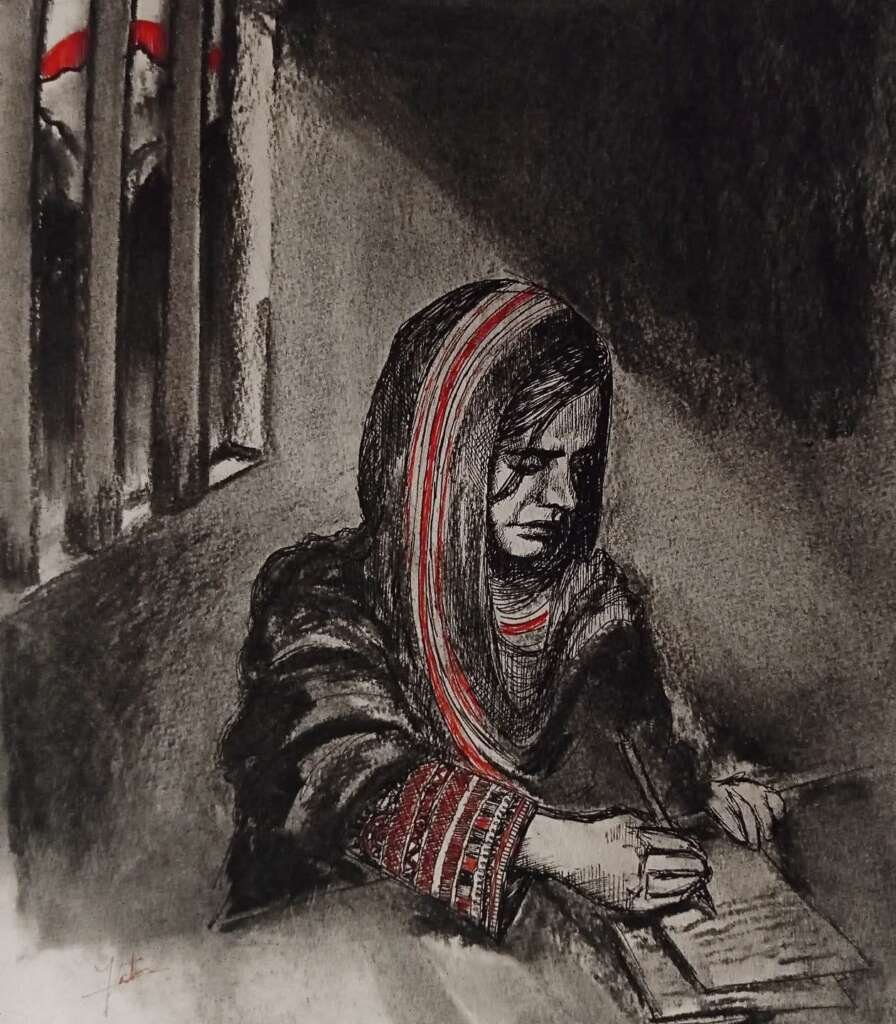
The detained activists have been denied adequate medical care throughout their imprisonment, Amnesty said.
“For six months, Dr. Mahrang Baloch suffered severe back pain while her repeated requests for medical care were ignored, forcing her to self-medicate,” said her sister, Advocate Nadia Baloch. She was finally transferred to hospital on February 18 only after her condition became critical, and neither her family nor her lawyers were informed.
Her medical tests revealed a serious spinal condition that could permanently affect her mobility if left untreated. Nadia Baloch further alleged that when she was taken to Sheikh Zayed Hospital, the entire facility was cleared and the transfer was carried out in complete secrecy. She also claimed that hospital staff were instructed to remove the MRI report from the record.
Doctors advised complete bed rest and physiotherapy to prevent further damage to her spine, “but these recommendations were allegedly denied by the jail superintendent. We are exhausted from filing applications and requests again and again, and have now stopped pleading.” she added.
Zehri’s health also worsened during one year of detention during which he developed an infection that resulted in him having to get surgery. “While the family was satisfied by his surgery, he has been denied access to post-operation care and follow-up visits with doctors,” Amnesty said.
Beebow Baloch was transferred without explanation to District Jail Pishin in late April 2025, where she was allegedly subjected to custodial torture as the only female prisoner, before being shifted to CMH hospital and eventually returned to Hudda Jail.
Her brother, Balakh Sher, said she developed serious health complications in detention and alleged that her treatment in custody put her life at risk. “Her condition became critical. She was tortured in custody and was not given proper medical attention in time,” he said. He also alleged that she was held as the only female prisoner in the facility and that surveillance cameras were installed in both her cell and the washroom, raising serious concerns about her dignity, privacy, and treatment in custody.
Sher said that when she was transferred to District Jail Pishin, she was “pulled by the hair, beaten and dragged,” and was later admitted to hospital without the family being informed. According to him, it was only after local residents in Quetta who recognised Beebow at the hospital alerted the family that they learned of her condition.
“This movement belongs to the people”
Abdullah Abbas Baloch, Executive Director of Human Rights of Balochistan, said BYC’s work has “undeniably drawn significant international attention to Balochistan.”
“Through sustained advocacy, protests, systematic documentation, and digital outreach, BYC has disrupted the long-standing marginalization of Baloch voices,” he said. “Rather than allowing the situation to remain framed solely as a domestic security issue, the campaigns have reframed it within the language of rights, accountability, and political agency.”
Dr. Sabiha Baloch said the crackdown of the rights group has both short-term and long-term impacts on Baloch people. In the short term Baloch people “may feel disappointed, frightened, or hopeless; they may distance themselves from the struggle.” In the longer term, closing off peaceful forms of resistance risks pushing people toward the conclusion that peaceful struggle is futile.
“Once the alternative options are closed,” she said, “armed struggle may remain the last option.”
Professor Nida Kirmani, a scholar of gender, politics, and social movements, said the large-scale participation of women in the Baloch Yakjehti Committee (BYC) took many observers by surprise, especially because nationalist movements in South Asia and elsewhere have historically been dominated by men.
“The participation of thousands of women in the BYC was surprising for many observers,” she said, noting that many had assumed women in Balochistan would be less likely to join a political movement because of the province’s underdevelopment and the widespread perception that Baloch women are “more oppressed” than women in other parts of Pakistan.
She said the visible presence of women at BYC protests, rallies, and marches — and the fact that young women have emerged as leaders of the movement — has challenged those assumptions. According to Kirmani, many women were drawn to the BYC because it reflected their pain, particularly those whose sons, brothers, husbands, and fathers had allegedly been forcibly disappeared.
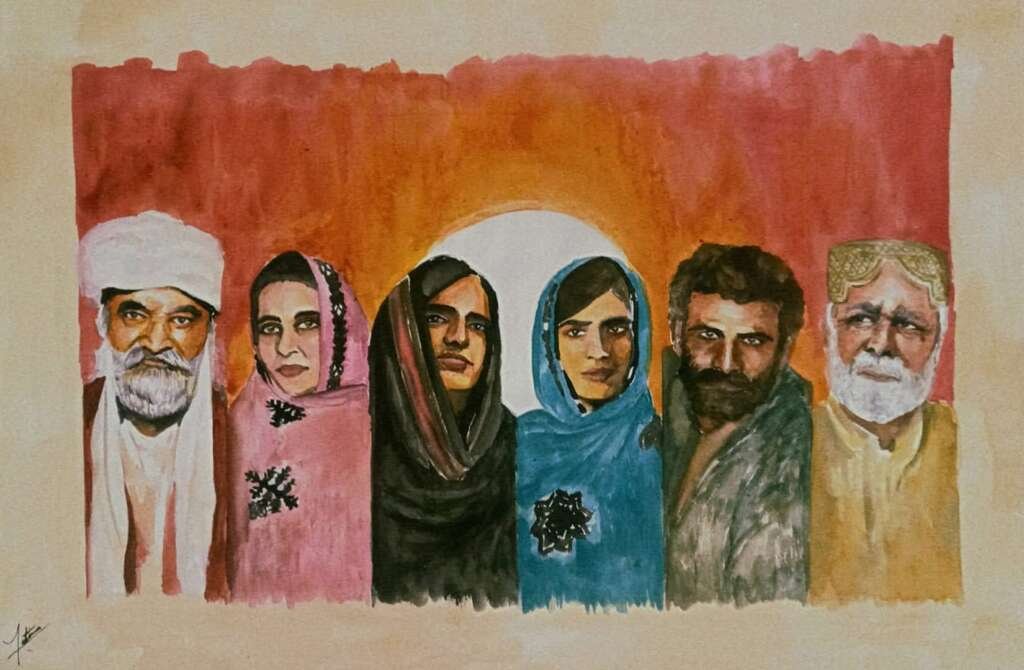
But, she added, the movement’s appeal goes beyond grief. “The BYC also raised other concerns that resonate with Baloch women, including their right to political participation and education,” she said.
Kirmani said that although many had assumed women would be relatively shielded from direct state violence, the crackdown has increasingly targeted them as well. Beginning even before the arrest of BYC’s main leadership last March, she said, this represents a troubling shift that risks undermining the gains the BYC has made in normalising women’s political participation in Balochistan and more broadly across Pakistan.
Mir Mohammad Ali Talpur, a veteran Baloch nationalist said BYC emerged to fill the leadership vacuum among Baloch masses and “assumed its historical role of leading the Baloch political and human rights struggle.”
He added that through actions such as the Islamabad Long March, The Baloch National Gathering in Gwadar and then in Dalbandin, and various sit-ins, the BYC “unequivocally demanded Baloch rights” and “came to represent the will of the Baloch nation.”
According to Talpur, the movement’s ability to raise political and social consciousness to an “unprecedented and ineradicable level” made it a threat to the state, prompting the ongoing crackdown. Referring to the continued detention of leaders, he said the state now faces a dilemma: “Repression and imprisonment only increase resentment, and that resentment further raises national and political consciousness.”
With its leadership behind bars, BYC continues to function. Whether the movement holds depends, as Sammi Deen Baloch puts it, on the Baloch people themselves.
“This movement belongs to the people, and they will not step back from it,” she said.
“If we do not speak, who will? If we accept silence, what future remains?”
This story was produced with support from the Asia Pacific Forum on Women, Law and Development’s Feminist Media Fund for Alumni.
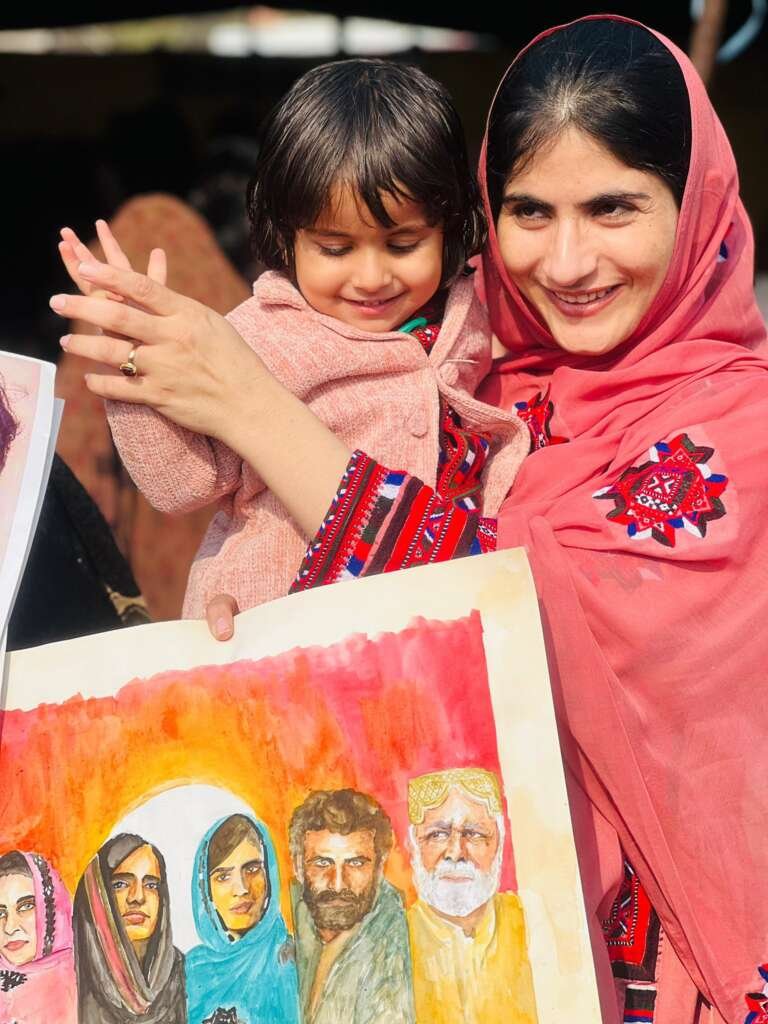
All the artwork by Fatima Shahzad