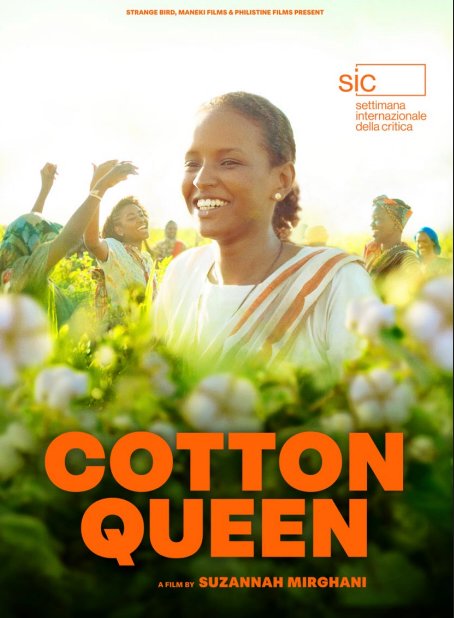
A girl in a cotton field, a bungalow set alight, a nation in exile that still insists on seeing itself. In Cotton Queen, Suzannah Mirghani turns Sudan’s most familiar landscape into a site of refusal, memory, and fragile futurity.
Cotton in Sudan has always worn a mask. At dawn, a field looks harmless enough: wisps of white above dark soil, women moving in slow concert, the air full of chaff and low conversation. From a distance, it appears pastoral, even tender. Yet anyone who has lived within that landscape knows the softness is a disguise. Beneath the light drift lies the geometry of an imperial project, the arithmetic of tenancy and debt, and the intimate labour of women whose bodies have long carried history’s weight. It is this doubleness that Suzannah Mirghani takes as both subject and method in Cotton Queen, a film that begins in enchantment and closes in fire, reflecting Sudan’s complex history of colonialism, independence, and ongoing socio-political struggles.
Mirghani’s earliest memory of cotton was of an “almost mystical” place where fibre floated like a visitation. She gives that memory to her teenage protagonist, Nafisa, whose first movements through the field are full of unselfconscious delight. Cotton is, at first, texture and light, the backdrop to whispers with friends and secret poems. The field is a playground, not yet a system. That innocence, personal and political, is the film’s opening note. It fades quickly.
A coming-of-age drama, Cotton Queen, ninety-four minutes long, marks the first feature film shot by a female Sudanese director. Mirghani’s debut gathered quiet but steady recognition, receiving the ArteKino Award at L’Atelier de la Cinéfondation at the Cannes Film Festival (2022). It later premiered in Critics’ Week at the Venice Film Festival, before winning the top prize at the Thessaloniki International Film Festival. A modest but meaningful affirmation of a filmmaker beginning to find a wider audience.
The Softness That Bites
Cotton in Sudan has never been only cotton. When the Anglo-Egyptian Condominium launched the Gezira Scheme in 1925, the plain between the Blue and White Nile was carved into a vast irrigation grid built to serve British mills. Canals cut through ancestral lands; tenancy contracts bound families to quotas; new railways and market towns followed the demands of distant looms. Sudan’s economy became an extension of Lancashire’s industry. An architecture of extraction always secured the serenity of the cotton field.
Cotton Queen shows the afterlife of colonial history, encouraging the audience to reflect on Sudan’s ongoing struggles with legacy and resilience rooted in the land.
The title itself carries an archive. In the 1930s, northern England staged “Cotton Queen” beauty pageants, crowning mill workers as mascots of industrial might and sending them abroad as ambassadors of the empire. The spectacle travelled to Sudan, symbolising colonial aspirations and cultural impositions. In Mirghani’s hands, this fragment becomes a key: the cotton queen transformed from ornament into emblem, a figure caught at the junction of commodity, patriarchy, and imperial desire, embodying Sudan’s layered history of resistance and complicity.
Girls at the Edge of History
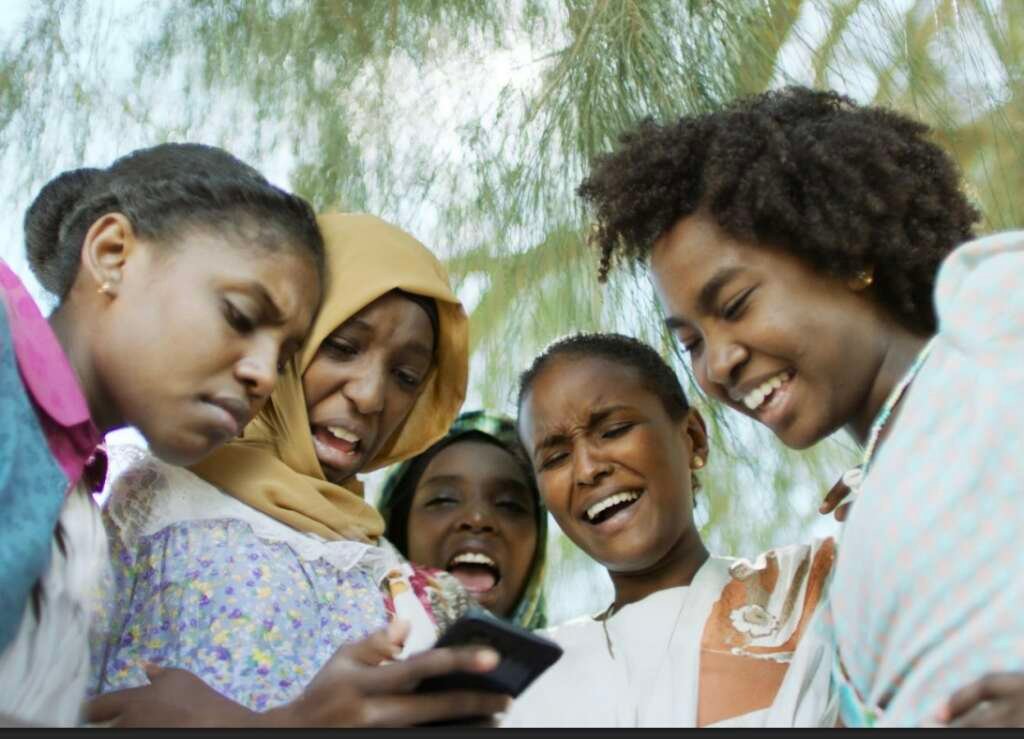
Nafisa inherits this history without ever hearing it. Her girlhood is ordinary and luminous. She teases friends in the fields, swims in the river, writes poems she is too shy to share. Adolescence, which Mirghani calls the most complex period of a life, narrows quickly in a Sudanese village. It is the corridor between fantasy and duty, between private longing and the structures that close around a girl’s body. Nafisa senses this shift long before she can name it.
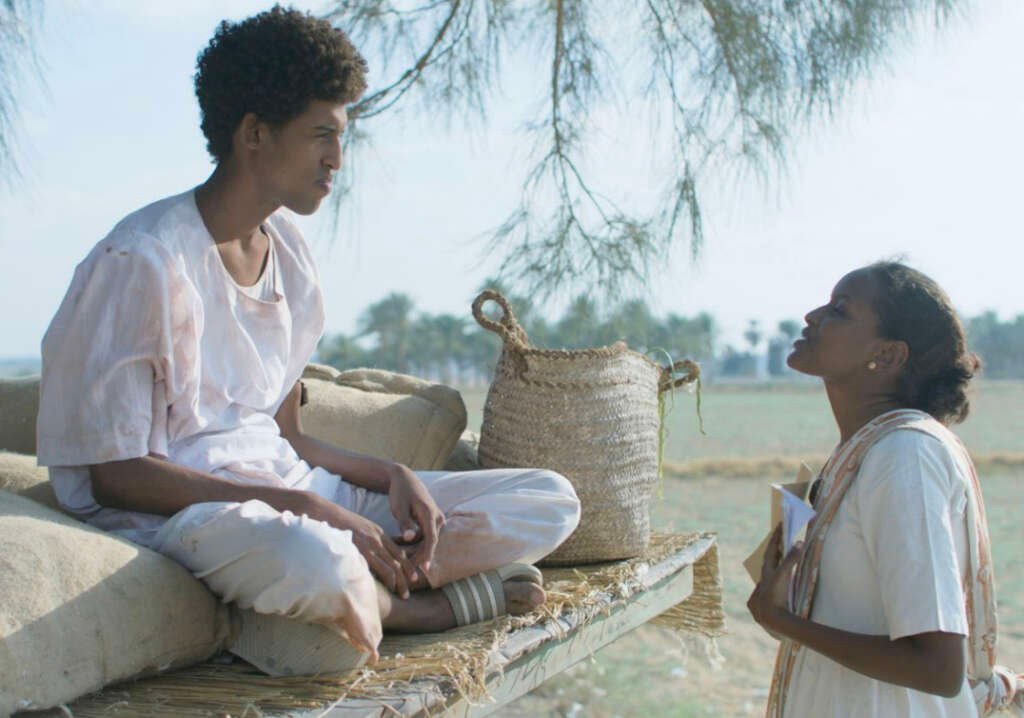
The disturbance arrives with Nadir, an England-returned entrepreneur who comes with two ambitions: to marry Nafisa and to “modernise” the village by introducing genetically engineered seeds tied to multinational firms. The ambitions are inseparable. In taking Nafisa, he hopes also to take the fields, grafting himself onto matrilineal networks that have long organised labour and inheritance. His charm and development rhetoric repeat a familiar script. Empire returns in local skin, promising prosperity while demanding surrender.
Nafisa is the first to sense the danger. Her hesitation is not childish obstinacy but a moral intelligence shaped by proximity to the land. She knows the offer is not simply a new seed but a deeper dependency. Her clarity anchors the film. In her refusal, Mirghani locates the outline of another Sudan, one that does not mistake novelty for progress.
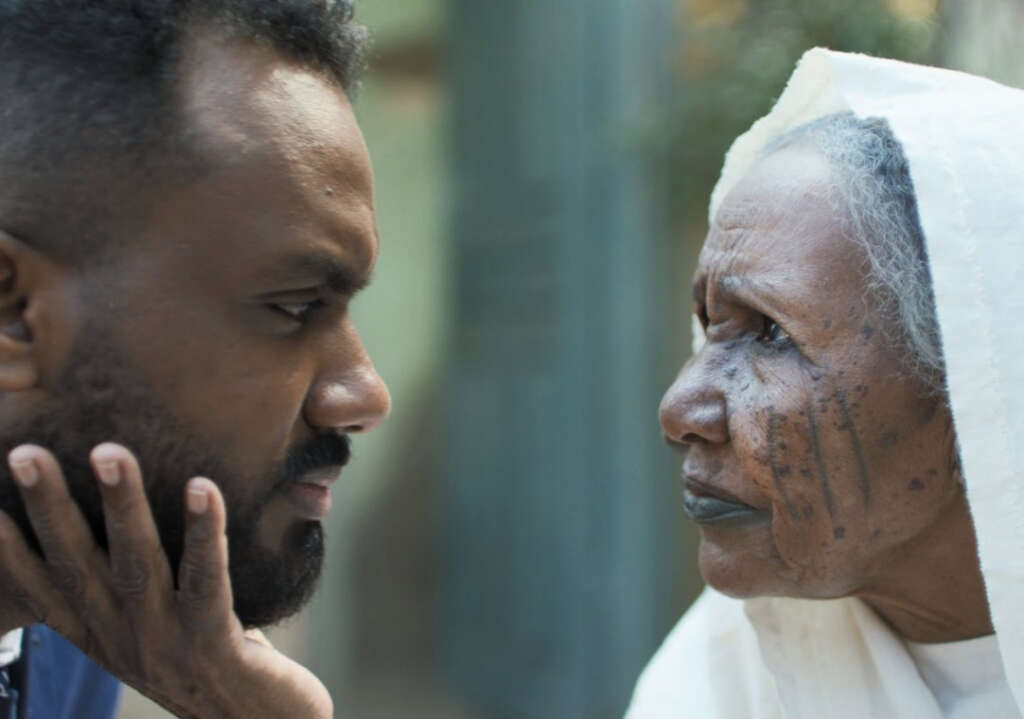
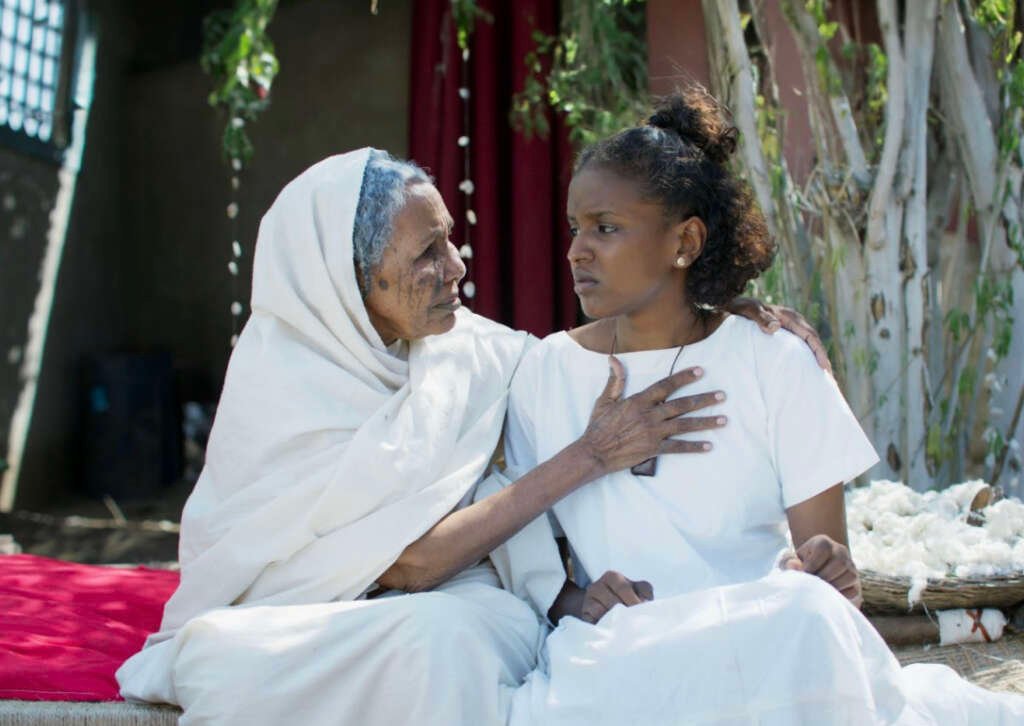
The film maps an intimate triangle between three generations: the grandmother, Al-Sit, whose authority in the household is formidable; the mothers, practical and fearful; and the girls, suspended between obedience and self-recognition. Rabha Mohamed Mahmoud’s Al-Sit is both repository and instrument of history: the matriarch who decides futures but once had no say in her own. Power here is circular, inheritance as much as decision.
Mirghani avoids romanticising matriarchy. The grandmother’s influence protects and constrains. The mothers seek stability, sometimes mistaking control for care. The girls navigate small rebellions and compromises that reveal both the cost and comfort of tradition.
The film approaches the subject of female genital mutilation with restraint. Recently outlawed after the 2019 revolution, it persists in many communities. Mirghani refuses voyeurism and condemnation. FGM appears within the domestic textures that sustain it, enacted by women who believe they are safeguarding rather than harming. The horror is in the quietness, the way fear and love occupy the same room. Empathy, not denunciation, shapes the film’s moral stance.
The film’s aesthetic language mirrors this seriousness. With cinematographer Frida Marzouk, Mirghani composes images that move at the tempo of labour: long takes following the stoop of the body, the slow walks along dusty paths. Light marks time more than plot. The sound design is spare. No score instructs emotion. Silence becomes a form of attention, keeping the viewer inside the acoustic world of the village.
Mirghani’s childhood memories of Sudan, “surreal” in their intensity, inflect the film with quiet magical realism. The shimmer lies in the ordinary: cotton glowing at dusk, the river’s stillness, Al-Sit’s face holding an unwritten novel of endurance. Sudan becomes both wound and fable, and the film inhabits that double register without surrendering to fantasy.
The film’s origins deepen this resonance. The 2019 revolution briefly opened Sudan to possibilities—censorship loosened, women’s rights expanded, and cinema reawakened. Cotton Queen emerged from this fragile renaissance, in continuity with Mirghani’s earlier short Al-Sit, which mapped the moral terrain of a cotton-farming household.
Cinema After the Field
Then, in April 2023, war returned. Fighting in Khartoum spread across the country, sending millions on the road. The Gezira plain, once a centre of irrigation, became a corridor of flight. Wad Madani, long associated with the cotton economy and its music, was overwhelmed by the influx of refugees. Filming in Sudan became impossible. Mirghani moved the production to Egypt and rebuilt Sudan from memory.
This choice is not a production footnote but one of the film’s quiet subjects. The cotton fields on screen are Egyptian, yet they are worked by Sudanese migrants whose gestures and speech carry the cadence of home. Since April 2023, more than 1.2 million Sudanese have crossed into Egypt, and the film’s sets feel shaped by this immense movement of bodies and memory. They are not replicas of Sudan but invocations—provisional homelands built on borrowed soil. The viewer perceives two narratives at once: Nafisa’s village, and the off-screen struggle of a displaced crew trying to remake, through cinema, the world from which they have been driven.
Sudanese cinema has long existed in precarious conditions. Under Al Bashir, archives decayed, and theatres closed; only in the last decade did a fragile revival begin with works such as Hajooj Kuka’s Beats of the Antonov and Amjad Abu Alala’s You Will Die at Twenty. Cotton Queen belongs to this rising movement, even as war interrupts it. Filming in Egypt turns exile into a method. The camera becomes a tool of preservation, carrying endangered visual memory across borders.
The film enters into conversation with the broader cultural history of cotton in Sudanese art. Abdelaziz Baraka Sakin’s novel The Jungo (Stakes of the Earth) renders the cotton belt as a moral geography of itinerant labour. Tayeb Salih’s Season of Migration to the North is saturated with the residue of irrigation and colonial encounter. Dance-band music of Omdurman and the voice of Ibrahim al-Kashif from Wad Madani emerged from infrastructure financed by cotton. In this continuum, Cotton Queen occupies a distinct place, gathering threads from literature, song, and propaganda and rewiring them around a girl whose act of refusal collapses a century of history into a single blaze.
Mirghani’s Cotton Queen aligns itself with those rare films that treat the intimate as a vessel for political fable. Like Guillermo del Toro’s Pan’s Labyrinth, it recognises that a young girl’s gaze can refract power with a clarity unavailable to adults, turning private awakening into quiet insurgency. Its measured attention to daily gesture recalls the moral stillness of Abderrahmane Sissako’s Timbuktu, where the smallest routines bear the imprint of history. Amjad Abu Alala’s You Will Die at Twenty offers a Sudanese kinship, blending prophecy, communal expectation and the tremors of self-assertion. And in Mati Dion’s Atlantique, as in Mirghani’s work, naturalism slips almost imperceptibly into the spectral, revealing how love, labour and dispossession linger beneath the visible world. Together, these films form a constellation in which Cotton Queen establishes its own distinct gravity.
“I will determine my future.”
That blaze is the climax. Nafisa burns Nadir’s bungalow, the house presiding over the fields and embodying his promise of genetic modernisation. Its architecture recalls the colonial trader’s residence; its symbolism is clear. It represents the arrogance that land and people can be reorganised at will by those with capital and the proper rhetoric.
Mirghani films the burning without spectacle. Flames rise against the night. Wind replaces crackle. Villagers remain silent. The camera holds Nafisa’s face, steady in the firelight, neither triumphant nor penitent but lucid. This is judgment, not impulse.
In destroying the bungalow, Nafisa breaks an inherited pattern. She refuses both the colonial ancestor and the neoliberal heir. Her gesture does not resolve economic precarity but reclaims authorship. For the first time, a significant event is initiated by a girl rather than by elders or external forces. History, long descending upon her generation as circumstance, is briefly seized and redirected.
After the fire, the land remains. The cotton persists. What changes is the moral ecology. The ending is neither triumphant nor bleak; it settles into the register of hard-won possibility. A girl has made herself visible as a force.
Across Cairo, Doha, London, and Toronto, the Sudanese diaspora is reinventing cinema as an act of cultural salvage, rebuilding Sudan’s visual memory from fragments carried in exile. With archives destroyed and theatres shuttered at home, filmmakers turn displacement into a method and transform scattered lives into a cinematic language of endurance and return. In their hands, Sudan becomes not a vanished place but a remade one, imagined through restoration and the quiet insistence that a nation can be filmed back into being.
To situate Cotton Queen within Sudan’s wider cotton history is to see continuity and transformation. The Gezira Scheme once embodied imperial mastery; later writers exposed its cruelty; musicians turned its towns into songs of longing. Now, a film made in exile returns to the same fields and finds not only exploitation but also resilience there. Cotton was once the emblem of Sudan’s subordination to global markets. In Mirghani’s hands, it also becomes an emblem of memory, a medium through which a displaced people can see themselves again.
The cotton field becomes a space of reclamation. By centring women and allowing their gestures and silences to define meaning, Mirghani restores narrative authority to those who have long tended the crop. Al-Sit keeps the past. Nafisa carries the outline of a future not yet authorised.
In the final image, as dusk dissolves into night and cotton catches the last light, the field appears spectral. The whiteness glimmers like small ghosts, reminders of those who worked the land under other regimes and those now watching from afar. The shot suggests ending and beginning. What has burned cannot return as it was. What remains must be imagined anew.
In the end, Cotton Queen is a film about Sudan’s right to complexity. It refuses the binaries that flatten the country’s realities. It recognises that matriarchy can shelter and confine, that law can signal both progress and abstraction, that development can deepen older wounds. It insists that girlhood is not prologue but history’s frontline.
At a time when Sudan is again fractured by conflict, and many have been driven into exile, Cotton Queen accomplishes what neither policy nor communiqué can. It gives the country an image of itself that is neither propaganda nor obituary. In Nafisa’s steady gaze, in the persistence of the field, and in the controlled fury of the final fire, Mirghani imagines Sudan as if liberation were still possible. In Nafisa’s own words, “I will determine my future.”
Narendra Pachkhédé is a critic and writer who splits his time between Toronto, London and Geneva.